Customer & Project Background:
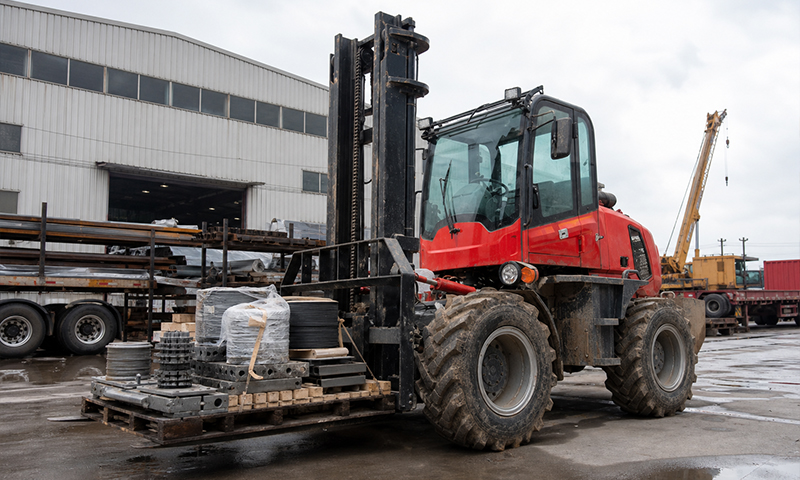
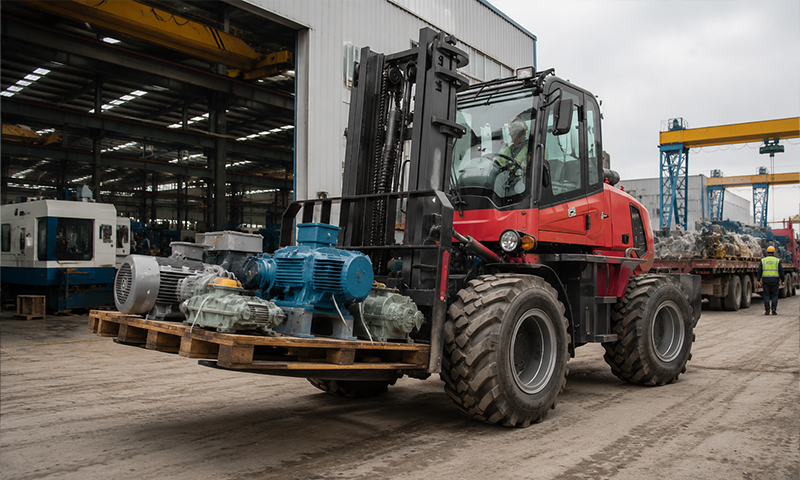
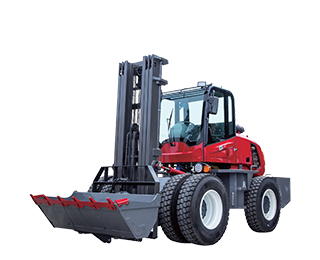
In a heavy warehouse and production environment, a rough terrain forklift is used to move large palletized loads, bulk materials and equipment between indoor storage, production areas and outdoor yards. The machine supports continuous logistics across mixed surfaces, including smooth concrete, asphalt and gravel.
With large pneumatic tyres, high ground clearance and robust construction, the rough terrain forklift can work where standard warehouse forklifts are limited. This helps keep material flow stable even when operations extend beyond the warehouse building.
Customer & Site Background
The customer operates a heavy warehouse and production facility handling dense products such as metal parts, construction materials or industrial components. The site combines indoor racking, covered loading docks and open yards for bulk storage.
Materials often arrive and leave through outdoor loading zones and must be transferred quickly to production lines or storage locations. The facility required a forklift that could bridge indoor and outdoor areas without changing equipment.
Challenges
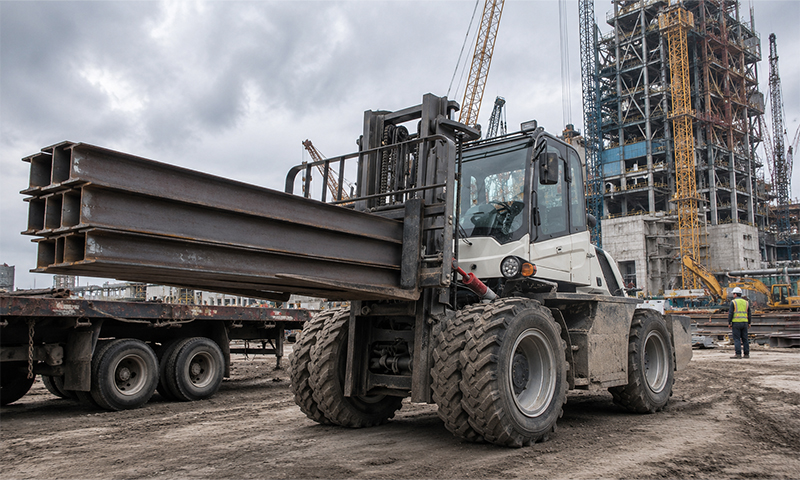
Many loads are heavy and sometimes oversized, so the forklift must offer sufficient lifting capacity and mast stability. Loads must remain secure to avoid tipping or damage during movements between areas.
Outdoor sections of the site can include gravel, uneven concrete, drainage channels and occasional mud, which require traction and ground clearance beyond what a standard smooth-tyre forklift can provide.
Logistics routes run through warehouse aisles, dock areas and yard lanes, demanding good manoeuvrability and clear visibility for operators in both tight and open spaces.
Production relies on just-in-time delivery of materials, so any disruption in internal logistics can cause delays on the line or at shipping docks.
Equipment Solution from HAMAC:
The facility selected a diesel-powered rough terrain forklift with four-wheel drive, deep-tread pneumatic tyres and a reinforced chassis. The machine is designed for off-road and mixed-surface material handling.
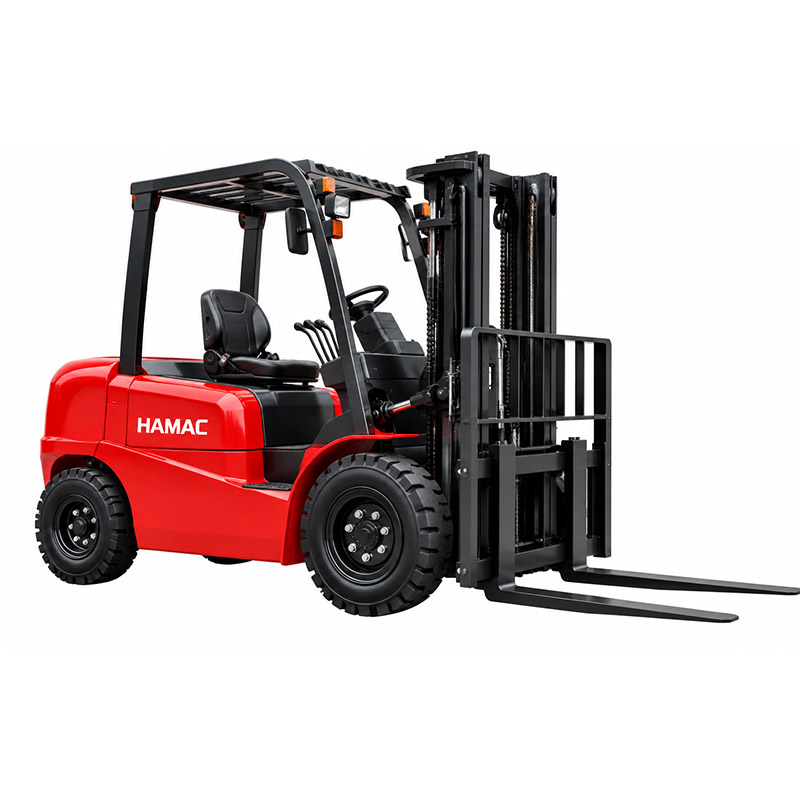
With a medium-to-high lifting capacity, it can handle typical heavy warehouse loads such as large pallets, bulk containers and equipment crates. The mast and fork carriage are configured for good forward visibility and precise load placement.
Application on Site
In daily operation, the rough terrain forklift unloads trucks in outdoor or semi-covered areas, then transfers materials directly into the warehouse or to staging zones for production. Its tyres and ground clearance allow it to work safely on uneven approaches.
The machine supplies production lines by moving heavy pallets and containers from storage racks to line-side buffers, supporting continuous manufacturing. It also returns finished products to warehouse or shipping areas.
When stock needs to be rearranged, the forklift moves heavy items between indoor and outdoor locations, helping the warehouse adjust layouts and manage seasonal or project-based changes in inventory.
The same machine is used for occasional support tasks such as transporting maintenance equipment, handling bulk packaging materials and assisting facility upgrades that involve heavy components.
Safety & Operating Practices
Operators are trained on the specific handling characteristics of rough terrain forklifts, including driving on transitions between smooth floors and rough yards. They keep loads low during travel and adjust speed to suit surface conditions.
Daily inspections focus on tyres, mast, forks, hydraulics and brakes to ensure safe handling of heavy warehouse loads. The facility defines clear traffic routes and separates forklift paths from pedestrian walkways where possible.
Special care is taken at building entrances and dock transitions, where changes in level can affect stability. Spotters may assist when moving oversized loads through narrow aisles or busy loading zones.
Results & Benefits
Using a rough terrain forklift improves reliability of material flow between warehouse, production and yard areas, reducing delays caused by weather or surface conditions. The facility can maintain operations without frequent equipment changes.
The machine reduces the need for separate indoor and outdoor forklifts, simplifying fleet management and operator training. It also increases flexibility in how loading docks and yard areas are used.
Overall, the rough terrain forklift enhances safety, productivity and resilience in heavy warehouse and production support environments by combining strong lifting performance with the ability to operate on challenging surfaces.