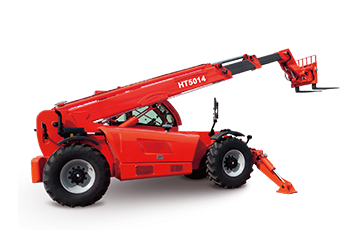
HT5014
Telehandlers
Lifting capacity: 5,000 kg
Max. lift height:=14.0 m
Consult now






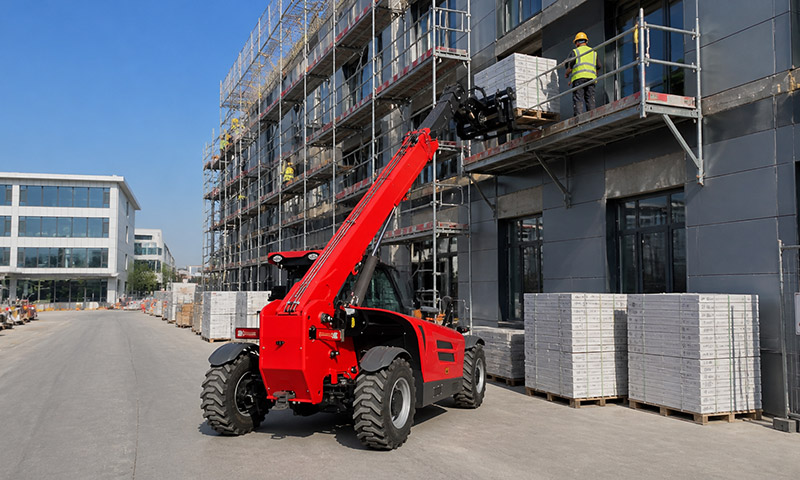
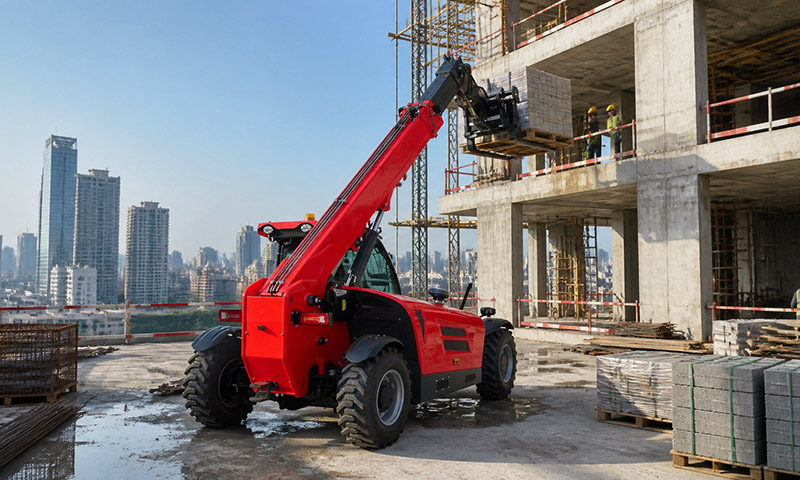
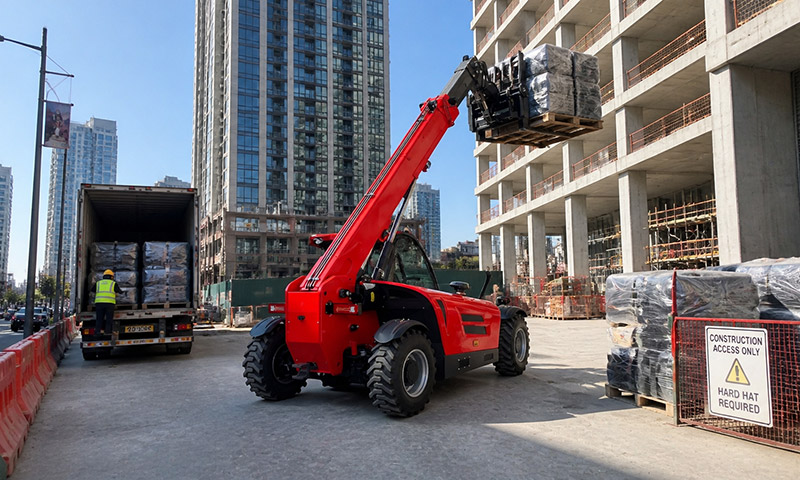
HT2506 telehandlers are used on a high-rise building project to lift and place pallets of bricks, blocks, roofing materials and facade components to upper floors and roof decks. The contractor chose HT2506 instead of relying only on tower cranes or internal hoists, so that everyday material moves to multiple elevations could be handled quickly and independently of crane schedules.
The customer is a commercial building contractor constructing a multi-storey mixed-use tower in a dense urban area. The project includes several podium levels, office floors and a roof with mechanical and facade equipment, all requiring regular deliveries of materials at different heights.
Due to tight site boundaries, limited loading dock space and restricted crane hook time, the contractor needed a flexible way to move pallets from street-level staging areas to temporary platforms, floor edges and roof work zones. An HT2506 telehandler, with a 2.5 ton capacity and 6 m lift height, was selected as the primary high-rise material placement machine for lower and mid-level decks, working in coordination with tower cranes and hoists.
Limited space at ground level for staging pallets and manoeuvring equipment near the building made conventional material handling difficult.
Materials had to be placed at different elevations and along the facade, including balconies, slab edges and temporary platforms, which required reach and precise positioning.
Crane time was reserved for structural lifts and major assemblies, leaving everyday pallet movements competing for limited hook access.
Strict safety requirements for work at height demanded stable lifting and accurate placement of loads near exposed edges and temporary work platforms.
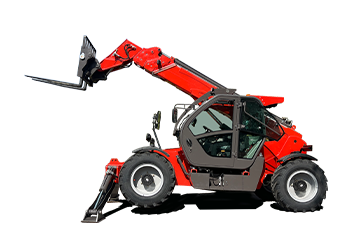
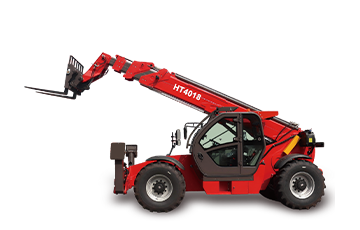
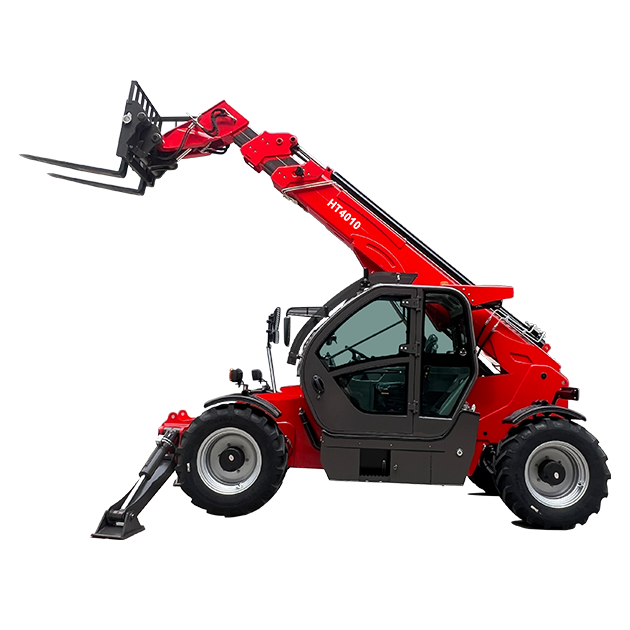
HAMAC supplied an HT2506 telehandler configured for urban high-rise construction logistics. The machine combines the mobility of a forklift with the reach of a small crane, using a telescopic boom to lift and extend loads to multi-storey work areas.
The configuration includes a 2.5 ton rated capacity for pallets of masonry units and facade materials, a 6 m maximum lift height for podium slabs and lower decks, and a compact 4×4 chassis with multi-mode steering to manoeuvre in tight access roads and staging areas.
At ground level, HT2506 unloads pallets from trucks and moves them from the street-side staging area to designated lifting positions at the building perimeter. Its compact footprint and steering modes allow the telehandler to approach slab edges, temporary loading platforms and podium ramps without obstructing other site traffic.
For podium levels and lower floors, the telehandler uses its telescopic boom and pallet forks to lift materials directly from ground level to floor edges or temporary platforms. Operators extend the boom to place pallets just inside the slab, where site teams can break down loads and distribute materials across the floor.
As construction progresses, HT2506 supports facade and roofing works by supplying materials to access platforms and scaffold decks built around the building. With a jib or hook attachment, the telehandler can lift bundled facade frames or small steel elements to specific points along the perimeter, and place pallets onto podium roofs as intermediate staging for roof work.
All HT2506 operators on the project are trained and certified, familiar with the telehandler’s load charts, attachments and site-specific procedures. Before lifting, operators confirm load weight, required height and reach, and ensure that the planned boom position remains within the rated capacity.
Ground conditions, obstacles and pedestrian routes around the staging area and slab edges are checked regularly, and lifting operations near open edges are coordinated with supervisors. Materials are placed on secure platforms or within edge protection systems to maintain stability and protect workers.
Using the HT2506 telehandler for high-rise building material placement significantly reduces dependency on tower cranes for routine pallet lifts and allows cranes to focus on structural and heavy component installation.
Material supply to podium and lower floors is faster and more predictable, improving cycle times for masonry, formwork and facade trades working on these levels.
The telehandler’s ability to manoeuvre in confined urban spaces and reach over obstacles enhances logistics efficiency, while stable boom operation and trained operators improve safety when placing loads near slab edges and temporary platforms.
"If you have projects with similar lifting requirements, our team can recommend the right HAMAC telehandler or forklift configuration."
Please fill out the form, and we can satisfy any of your needs including equipment selection, scheme design, technical support, or after-sales service. We will contact you as soon as possible.