Customer & Project Background:
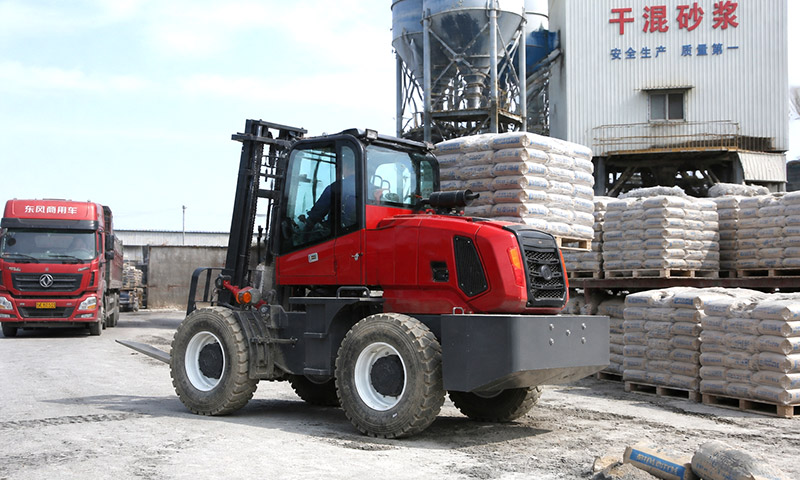
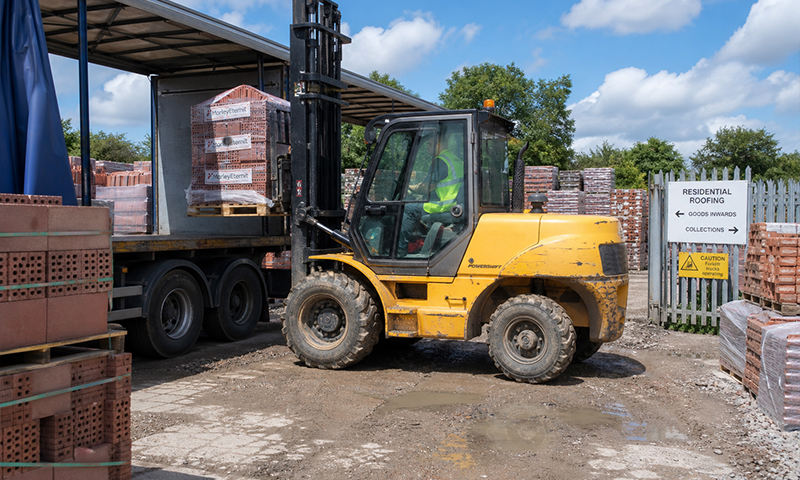
In dry mortar and bagged cement logistics, a rough terrain forklift is used to move palletized bags, mortar products and bulk-bag materials across outdoor yards. The machine helps operators transfer materials between delivery trucks, storage rows and outbound loading positions.
With rugged pneumatic tyres, high ground clearance and outdoor handling capability, the forklift supports unloading, storage and truck loading in yards where the ground may be uneven or compacted. This makes it a practical solution for dusty, weather-exposed material handling operations.
Customer & Yard Background
The customer is a dry mix mortar and building materials supplier that stores bagged cement, mortar blend products and bulk-bag consumables in an outdoor logistics yard. Stock is arranged on pallets so it can be picked quickly for contractor deliveries and site orders.
The yard includes receiving zones, pallet storage lanes and outbound loading areas. Because the operation serves both retail and project customers, the equipment must handle frequent load changes and keep product flow organized throughout the day.
Challenges
Bagged cement and dry mortar pallets are dense and must be handled carefully to avoid torn packaging, bag rupture or unstable stacking.
The yard surface may include dust, compacted soil, gravel and wet patches after rain, so a standard indoor forklift is not ideal for the environment.
Pallets often need to be stacked and retrieved quickly as orders change, which requires stable lifting and good visibility for the operator.
The business also needs to keep truck loading efficient while maintaining safe movement around workers, drivers and stored materials.
Equipment Solution from HAMAC:
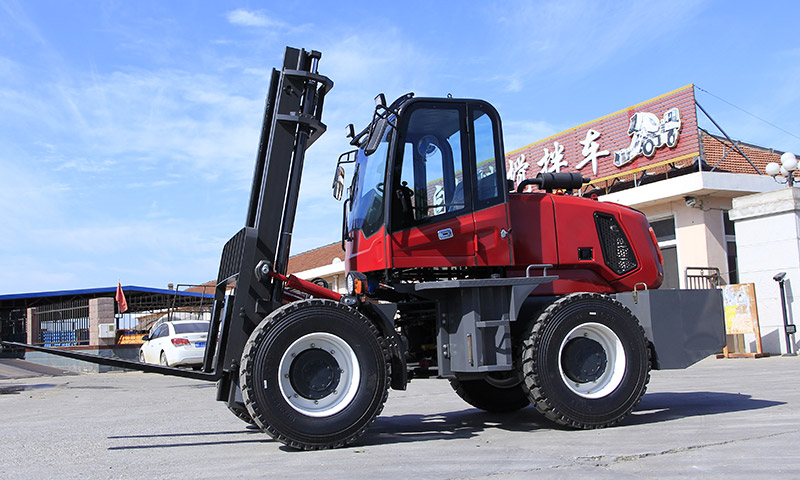
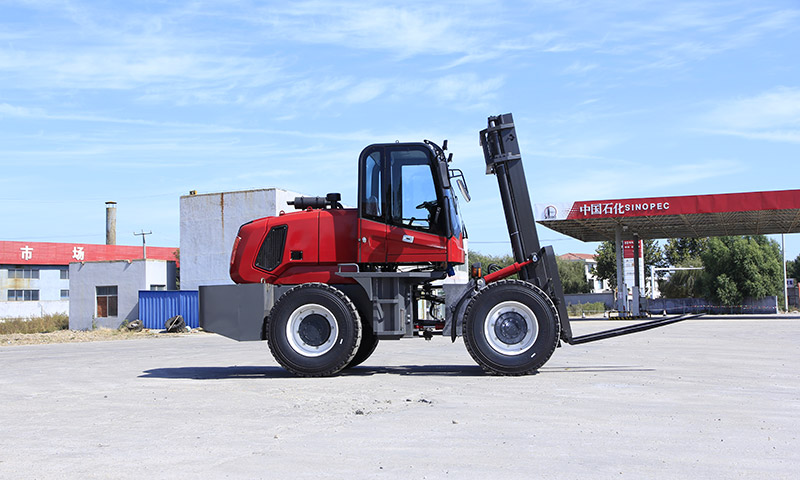
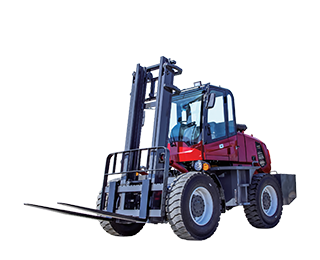
The customer selected a rough terrain forklift with diesel power, pneumatic tyres and a lifting capacity suitable for palletized bagged materials. The machine is built for outdoor use and provides the traction and ground clearance needed in a logistics yard.
Its reinforced chassis and mast structure provide stable control when moving heavy bags and dry mortar pallets across rough or damp surfaces. The forklift can perform unloading, storage and staging tasks without requiring a separate yard machine.
Application on Site
When supplier trucks arrive, the rough terrain forklift unloads pallets of bagged cement and dry mortar and places them into the designated storage rows. This helps keep the receiving area clear and ready for the next delivery.
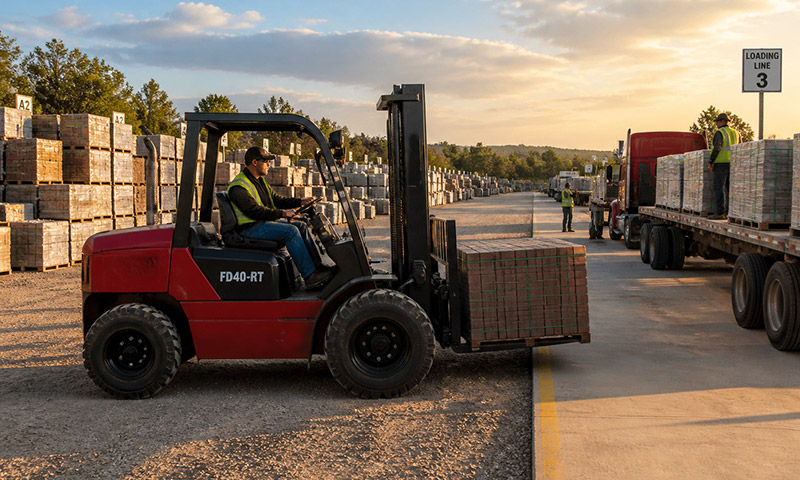
For order picking, the forklift retrieves selected pallets and transports them to the loading bay for contractor pickup or outbound shipping. The operator keeps loads low while travelling and raises them only when placing pallets into position.
The forklift also moves bulk bags and palletized accessories within the yard, helping the team reorganize stock based on demand, product type or delivery schedule. This improves throughput and reduces manual handling.
In outdoor conditions such as dust, moisture or uneven ground, the rough terrain configuration keeps the operation moving with fewer interruptions and better load stability.
Safety & Operating Practices
Operators check pallet integrity and packaging condition before lifting, especially when handling bagged materials that can be damaged by fork puncture or rough movement. Fork spacing is adjusted to match the pallet width and maintain balance.
Traffic routes are kept clear and marked to separate forklift movement from workers and delivery vehicles. Spotters are used in narrow lanes or busy loading areas.
Routine inspection of tyres, forks, hydraulics and mast components helps the forklift remain reliable under outdoor exposure, dust and frequent daily cycles.
Results & Benefits
Using a rough terrain forklift for dry mortar and bagged cement logistics improves yard efficiency by speeding up unloading, storage and outbound loading.
The business can handle more orders with less manual labour while keeping pallets organized and reducing packaging damage. This helps maintain product quality and delivery reliability.
The forklift’s outdoor capability, stable lifting performance and durable construction make it an effective tool for bagged material logistics in demanding yard environments.