Vertical Lifts
Aerial Work Platforms
Max Working Height:5.8–10.3 m
Platform Capacity:160–227 kg
Consult now






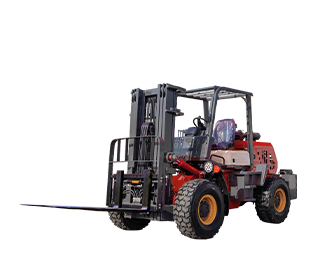
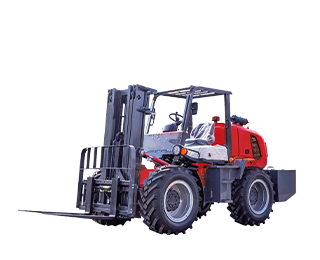
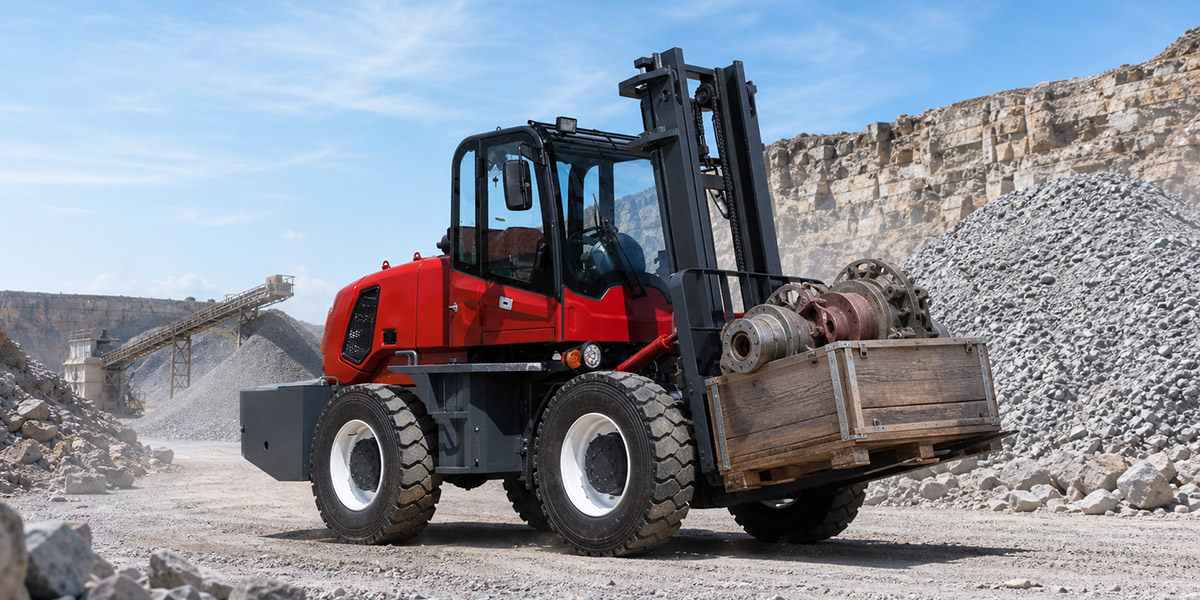
Mining and quarry operations require reliable material-handling equipment that can operate safely on gravel, rock, mud, slopes, uneven access roads, and partially developed work areas. Standard warehouse forklifts are designed for smooth, level floors, while rough terrain forklifts are engineered for demanding outdoor environments where traction, ground clearance, durability, and lifting performance are essential.
HAMAC rough terrain forklifts are designed to support mining sites, quarries, aggregate yards, stone processing plants, maintenance areas, outdoor warehouses, and remote infrastructure projects. With 4WD drive, off-road tires, strong diesel power, durable chassis construction, and capacity options from 3 tons to 10 tons, they help operators load, unload, transport, and stack heavy materials efficiently.
Mining and quarry operations rarely provide perfect working surfaces. Equipment may need to travel across loose stone, gravel, compacted soil, mud, slopes, uneven haul roads, and outdoor storage yards. Materials are often heavy, irregular, dusty, and located far from fixed loading infrastructure.
A rough terrain forklift provides a practical solution for moving palletized cargo, mining spare parts, pipes, drilling tools, maintenance equipment, stone blocks, steel materials, bagged cement, lubricants, and machinery components. Compared with conventional forklifts, rough terrain models offer stronger traction, larger tires, higher ground clearance, and improved stability for outdoor work.
| Mining Application | Typical Materials | Why a Rough Terrain Forklift Is Suitable |
|---|---|---|
| Mine-Site Logistics | Palletized supplies, maintenance tools, spare parts, lubricants, safety materials and equipment accessories | Moves materials efficiently across outdoor storage areas, gravel roads and uneven mine-site surfaces. |
| Maintenance Support | Motors, pumps, hoses, cables, gearboxes, filters, pipes and replacement components | Supports maintenance teams by transporting heavy components from storage areas to equipment locations. |
| Drilling and Exploration Support | Drilling accessories, pipe sections, toolboxes, water tanks and supply pallets | 4WD traction and off-road tires help the forklift reach remote or partially developed work areas. |
| Mine Camp and Infrastructure Work | Construction materials, containers, timber, steel frames, cement bags and utility equipment | Suitable for moving materials around temporary facilities, workshops, accommodation areas and utility projects. |
| Outdoor Warehouse Handling | Palletized cargo, crates, machinery components, bulk bags and packaged industrial supplies | Provides stable handling performance where warehouse floors extend into rough outdoor loading yards. |
| Quarry Application | Typical Materials | Recommended Forklift Capability |
|---|---|---|
| Stone Block Handling | Granite blocks, marble blocks, limestone blocks and cut stone products | High-capacity 5 ton, 6 ton or 10 ton rough terrain forklift with strong stability and suitable forks or clamps. |
| Aggregate Plant Support | Screen panels, conveyor parts, motors, rollers, tools, pallets and maintenance components | 4WD diesel forklift with durable tires, high ground clearance and good mobility on dusty gravel yards. |
| Loading and Unloading Trucks | Palletized stone, bagged materials, steel, spare parts and packed equipment | 3.5 ton to 6 ton forklift depending on the maximum pallet weight and truck-loading requirements. |
| Stone Processing Yard | Cut stone, slabs, packaged products, wooden crates and production materials | Compact articulated models for tight storage areas, or larger-capacity models for heavier stone products. |
| Remote Project Support | Pipes, generators, construction materials, steel components and equipment pallets | 6 ton and 10 ton models for heavy-duty work on remote, uneven and partially developed project sites. |
The right machine should be selected according to the complete working condition, not only the maximum load weight. Buyers should evaluate terrain, lift height, load dimensions, travel distance, working space, attachment requirements, and the expected number of operating hours.
| Selection Factor | What to Check | Why It Matters |
|---|---|---|
| Load Capacity | Maximum routine load weight, pallet size, load center and attachment weight | The rated capacity must be sufficient for the real load configuration, not only the product weight. |
| Terrain Condition | Gravel, mud, loose stone, slopes, compacted soil, potholes and unpaved access roads | Determines the need for 4WD, tire type, ground clearance and overall machine stability. |
| Lift Height | Truck bed height, storage level, loading platform and stacking requirements | Ensures the forklift mast can safely reach the required lifting position. |
| Working Space | Road width, storage aisle width, loading area and available turning radius | Compact articulated or short-wheelbase models may be more suitable for tight work areas. |
| Material Type | Pallets, stone blocks, pipes, machinery parts, steel, timber, bulk bags or irregular loads | Helps determine the correct fork length, attachment type and forklift capacity. |
| Operating Environment | Dust, rain, heat, altitude, remote location and maintenance accessibility | Influences the recommended configuration, tire selection, maintenance plan and spare-parts preparation. |
| Capacity Range | Suitable Applications | Suggested HAMAC Models |
|---|---|---|
| 3 Ton | Light mine logistics, bagged materials, tools, small pallets, cement, timber and general outdoor handling | FD30-RT, FD30-RTL |
| 3.5–4 Ton | Construction pallets, mine consumables, maintenance parts, steel materials, aggregate plant support and truck unloading | FD35-RTS, FD35-RTL, FD40-RT |
| 5 Ton | Heavy pallets, stone, timber, mining equipment parts, cement logistics and industrial outdoor handling | FD50-RT, FD50-RTS |
| 6 Ton | Pipes, large machinery components, heavy steel materials, remote infrastructure and quarry operations | FD60-RT |
| 10 Ton | Stone blocks, oversized equipment parts, large steel structures, mining machinery and heavy quarry logistics | FD10-RT |
Mining and quarry sites often include loose gravel, soft soil, wet ground, slopes and uneven access roads. A 4WD rough terrain forklift helps improve traction and mobility when conditions become difficult. Large deep-tread tires and high ground clearance also help reduce the risk of losing traction or contacting uneven ground obstacles.
However, 4WD capability does not replace safe operating practices. Operators should assess the work area, follow the rated load chart, keep loads stable, travel at a controlled speed, avoid sudden turns, and use extra caution on slopes or rough surfaces.
The right size depends on the weight and dimensions of the material. A 3.5 ton to 5 ton model can suit palletized materials and general stone-yard handling, while 6 ton or 10 ton models are better suited to heavy stone blocks, machinery components and oversized industrial loads.
Yes. Rough terrain forklifts are commonly used for mine-site logistics, maintenance support, spare parts transport, pipe handling, palletized supplies and outdoor warehouse operations. The machine must be selected according to the load, terrain, work area and site safety rules.
Quarry yards often have loose stone, dust, uneven ground and slopes. A 4WD forklift provides improved traction and mobility compared with a standard warehouse forklift operating in the same outdoor conditions.
Yes, provided the forklift capacity, load center, forks or attachment configuration are suitable for the stone block weight and dimensions. Heavy stone blocks may require a 6 ton or 10 ton forklift with the correct handling attachment.
Please provide the maximum load weight, material dimensions, required lift height, terrain photos, worksite width, attachment requirements, and whether the machine will operate on slopes, mud, gravel or unpaved roads.
Tell HAMAC about your material type, maximum load weight, lifting height, terrain condition, worksite layout and required attachments. Our team can recommend a suitable 3 ton, 3.5 ton, 4 ton, 5 ton, 6 ton or 10 ton rough terrain forklift for your mining or quarry operation.
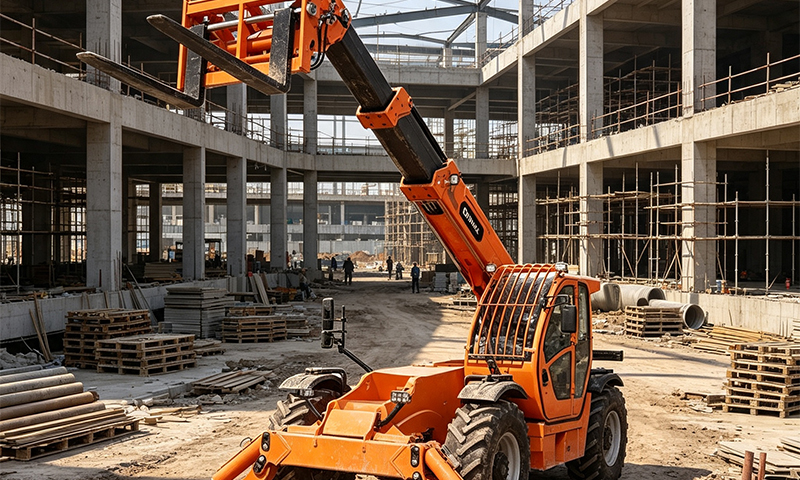
This case study describes how an HT5014 telehandler supports outdoor storage rack replenishment besid
Free Consultation >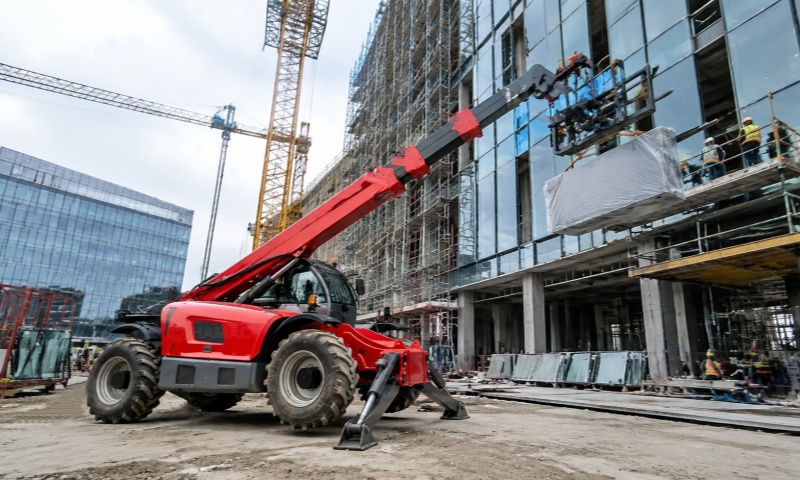
On a commercial building project, an HT4010 telehandler is used to assist facade and curtain wall ins
Free Consultation >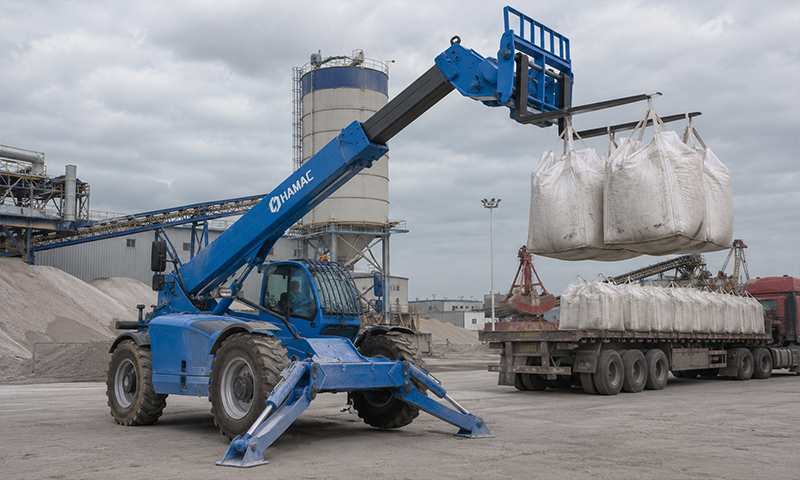
At inland port terminals, a high‑capacity telehandler is used to transfer bulk materials between tr
Free Consultation >Please fill out the form, and we can satisfy any of your needs including equipment selection, scheme design, technical support, or after-sales service. We will contact you as soon as possible.