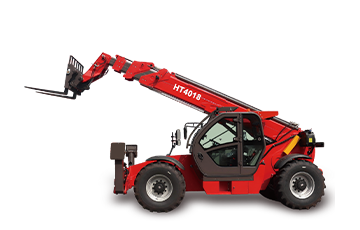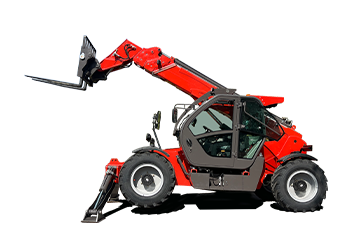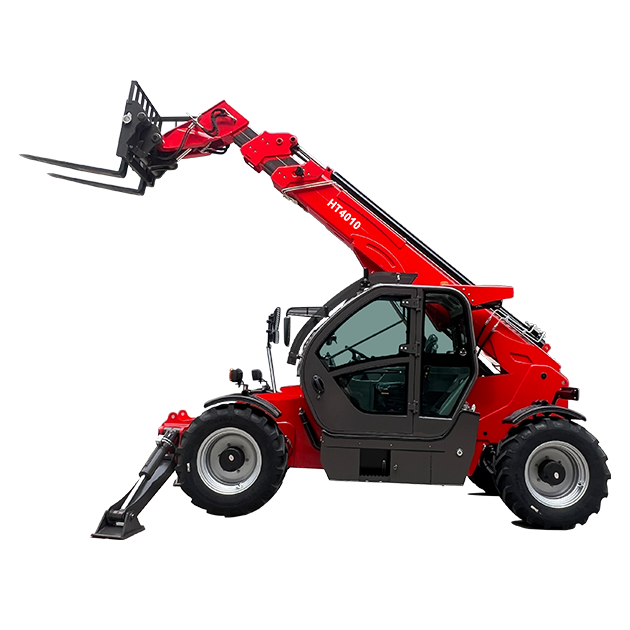
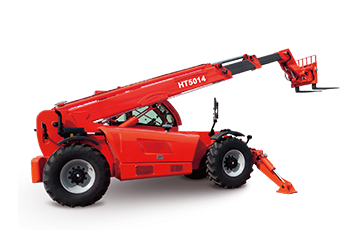
HT5014
Telehandlers
Lifting capacity: 5,000 kg
Max. lift height:=14.0 m
Consult now






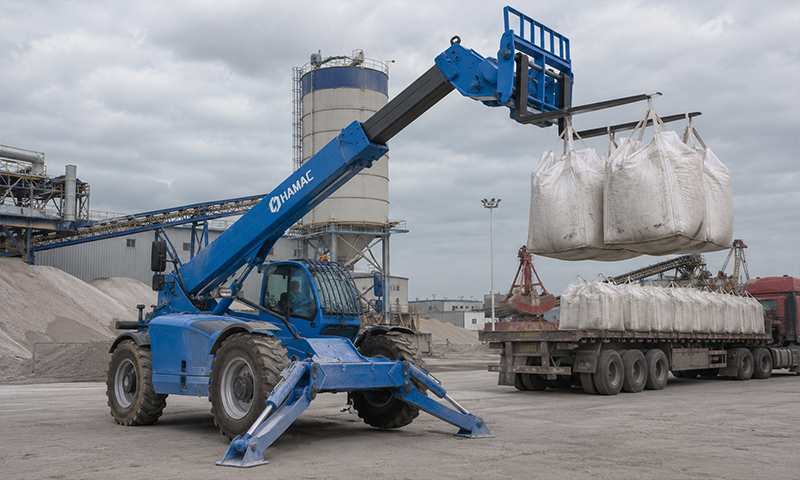
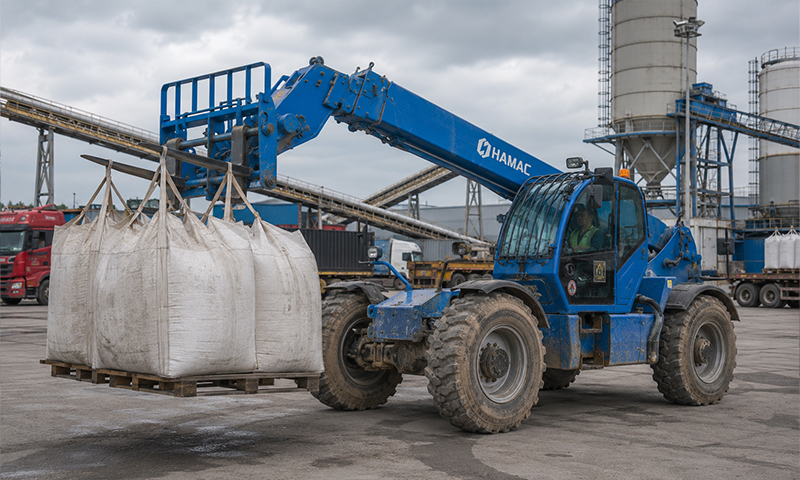
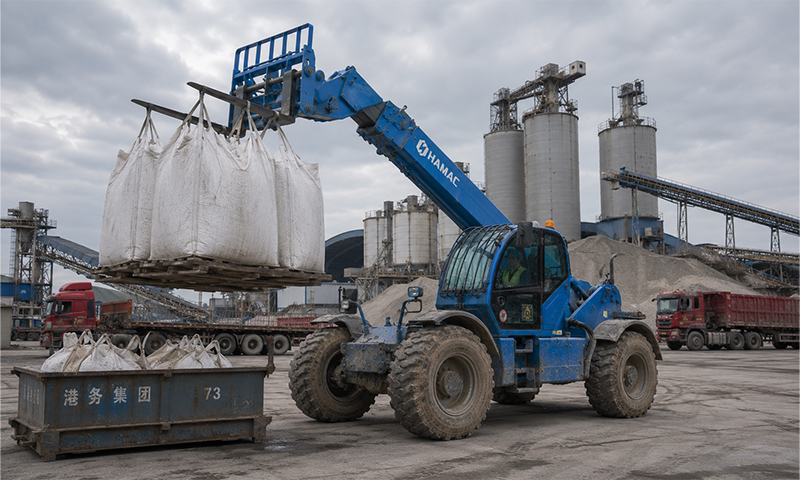
This case study describes how a telehandler supports bulk material transfer at inland port terminals where dry bulk cargo must move efficiently between different transport modes. The machine helps operators load and tidy stockpiles, feed mobile conveyors and support truck–rail–barge transshipment in confined terminal spaces.
At an inland port terminal, a high-capacity telehandler is used to transfer bulk materials between trucks, rail wagons, storage piles and barge loading equipment. The machine operates across open yards, quay-side areas and satellite bulk hubs connected to the main port.
With rough-terrain tyres, four-wheel drive and a long telescopic boom, the telehandler combines reach and mobility for bulk handling tasks. By changing attachments such as buckets or forks, it can adapt to different bulk materials and support equipment.
The customer operates an inland port terminal handling dry bulk commodities such as aggregates, fertilizers, grains or industrial minerals. The site includes truck unloading zones, rail sidings, stockpile areas and quay or riverfront loading points.
Bulk cargo must be moved between incoming trucks, storage piles and outbound transport modes while maintaining high throughput. The terminal required a flexible handling machine to support mobile conveyors, hoppers and other bulk handling systems.
Bulk materials can be dusty, abrasive and variable in density, so handling equipment must be robust and able to cope with continuous operation. Buckets and booms are exposed to wear and impact.
Terminal yards often have mixed surfaces, including concrete, asphalt and compacted gravel, with drainage channels and uneven sections. Machines must maintain traction and stability while carrying loads.
Space near quay edges, rail tracks and conveyor structures is limited, requiring precise manoeuvrability and good visibility. Equipment must work safely around other vehicles and material handling systems.
The terminal needs to keep transfer times between modes short to avoid congestion and to maximize use of quay and rail infrastructure.
The terminal selected a high-capacity telehandler equipped with four-wheel drive, rough-terrain tyres and a long-reach boom. The machine is configured to handle bulk material buckets and heavy-duty forks as required.
Its boom reach allows operators to load into hoppers, mobile shiploaders or rail wagons from a safe distance, while also shaping and trimming stockpiles. The telehandler can work as a support unit alongside larger fixed or mobile bulk handling systems.
In daily operation, the telehandler assists with unloading trucks by moving bulk material from temporary tipping points to stockpiles or hoppers. A high-capacity bucket attachment is used for fast loading cycles.
The machine supports barge or rail loading by feeding mobile conveyors or hoppers positioned near the quay or rail tracks. Its reach allows material to be placed accurately without constantly repositioning support equipment.
The telehandler also maintains stockpiles by building, levelling and trimming piles to optimize yard space and ensure safe access for other machines. This helps keep terminal surfaces organized and reduces spillage.
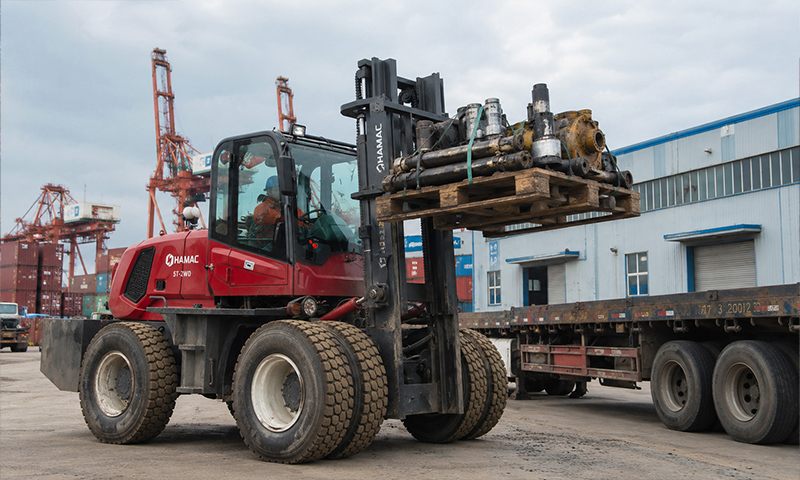
When needed, the same machine handles palletized bulk-related materials such as big-bag pallets, equipment crates or maintenance supplies using forks, increasing its overall utilisation.
Operators are trained on telehandler load charts and safe bulk handling practices, including working near quay edges and rail lines. Loads are kept within rated capacity and travel speed is adjusted for yard conditions.
Daily inspections focus on tyres, boom structure, hydraulic hoses and attachments, with attention to wear from abrasive bulk material. The terminal maintains defined traffic routes and separation zones around conveyors, hoppers and rail tracks.
Spotters may assist when working close to water, rail cars or other equipment to maintain safe clearances. Dust control measures and housekeeping routines help keep working areas safe and reduce environmental impact.
Using a telehandler for bulk material transfer improves flexibility and responsiveness at the inland port terminal. One machine can support truck unloading, stockpile management and feeding of mobile equipment across the site.
The terminal benefits from reduced reliance on fixed equipment for secondary handling, faster response to changing cargo flows and better use of yard space. The telehandler helps maintain high throughput while adapting to different bulk cargoes and operating conditions.
Overall, the telehandler enhances productivity, safety and versatility in bulk material transfer at inland port terminals by combining reach, mobility and adaptable attachments.
"If you have projects with similar lifting requirements, our team can recommend the right HAMAC telehandler or forklift configuration."
Please fill out the form, and we can satisfy any of your needs including equipment selection, scheme design, technical support, or after-sales service. We will contact you as soon as possible.