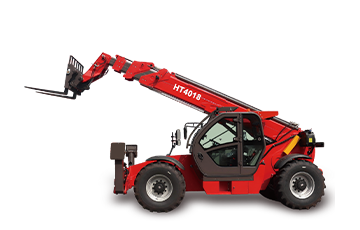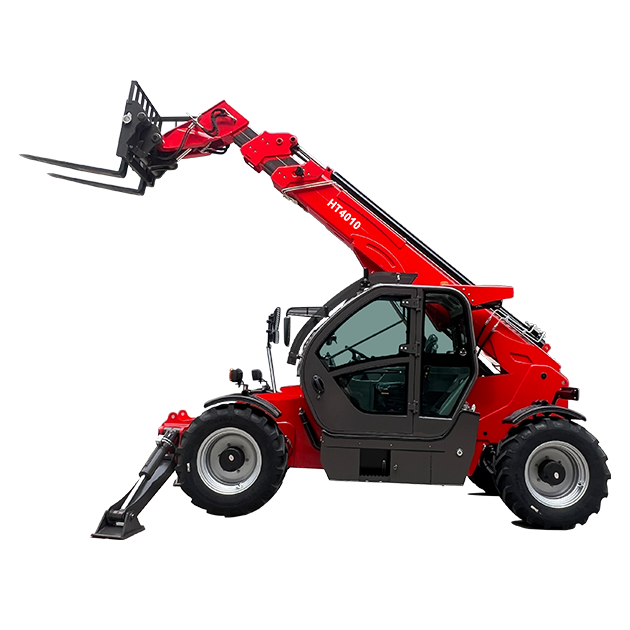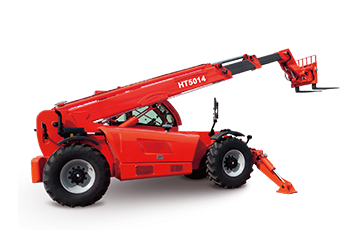
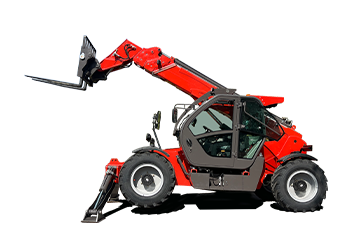
HT3510
Telehandlers
Lifting capacity: 3,500 kg
Max. lift height: 10 m
Consult now






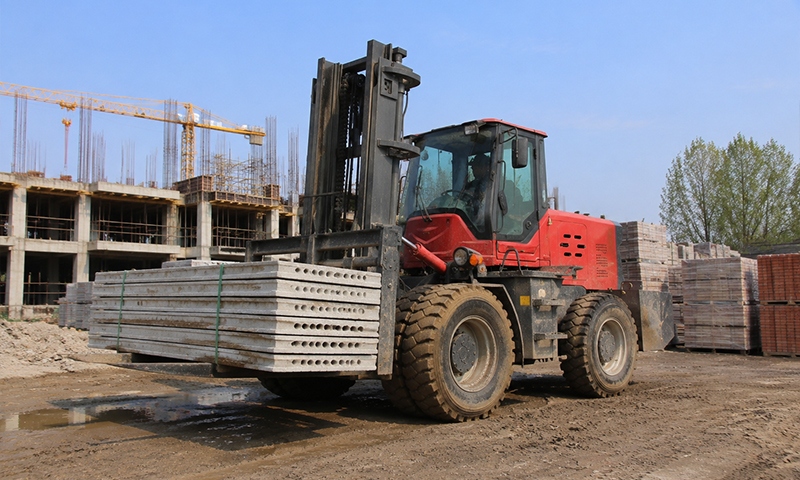
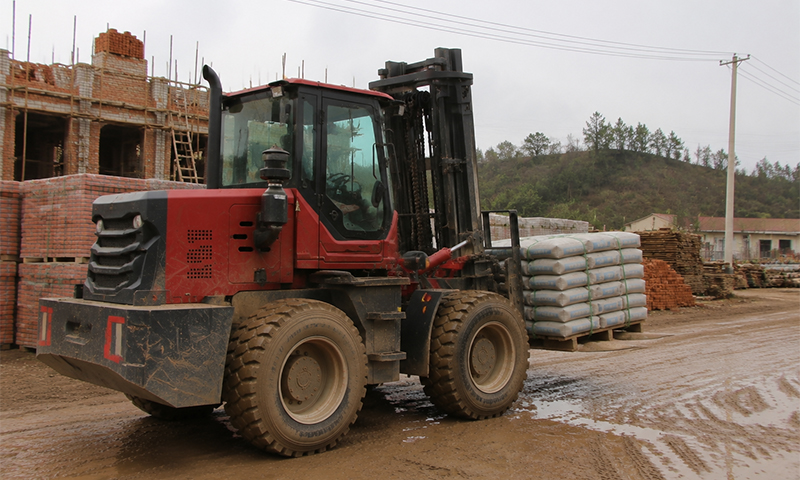
In rural construction projects, a rough terrain forklift is used to transport building materials such as bricks, concrete blocks, cement pallets and timber across uneven, unfinished ground. The machine connects unloading points, storage areas and active work fronts.
With large pneumatic tyres, high ground clearance and strong lifting capacity, the rough terrain forklift can work on dirt roads, gravel, slopes and soft surfaces where standard forklifts cannot operate safely. This makes it a key machine for rural and remote job sites.
The customer is a contractor building residential and agricultural structures in rural areas, including houses, barns and small public buildings. Sites often have limited infrastructure, with basic access roads and temporary storage zones for materials.
Building materials are delivered by truck to a central drop-off area and must then be transported to foundations, masonry work lines and upper floors. The contractor required equipment that could handle these tasks on uneven ground with limited stable surfaces.
Rural construction sites have unpaved access roads, soft soil, ruts and slopes, especially in early phases before permanent surfaces are built. These conditions make it difficult for standard forklifts to travel safely with heavy loads.
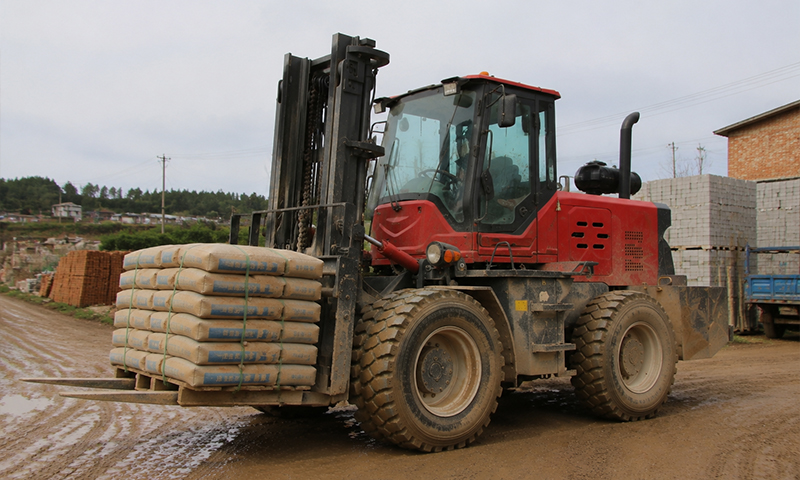
Palletized materials such as bricks, blocks and bagged cement are heavy and dense, requiring adequate lifting capacity and mast stability. Loads must remain secure to avoid tipping or product damage.
Work fronts may be scattered around the site, including areas near slopes or partially built structures. Manoeuvrability and precise placement are important to deliver materials close to where crews are working without blocking access.
Weather conditions, including rain and mud, can quickly degrade surface quality, increasing the need for equipment designed for rough terrain and all-weather use.
The contractor selected a rough terrain forklift with diesel power, four-wheel drive and deep-tread pneumatic tyres. High ground clearance and a reinforced chassis allow it to travel on dirt roads, gravel and uneven site surfaces.
The forklift is equipped with forks sized for standard construction pallets and can be fitted with fork extensions if needed for longer loads. Its lifting capacity is chosen to handle typical brick, block and mixed material pallets used on rural projects.
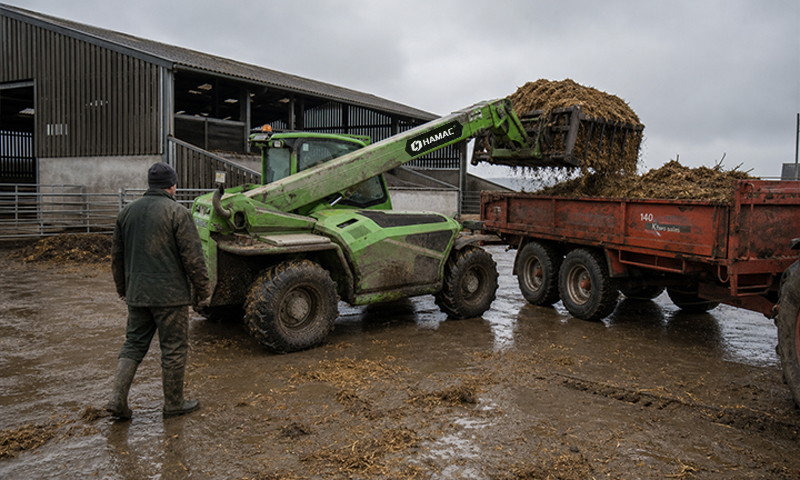
In daily operation, the rough terrain forklift unloads materials from delivery trucks at the site entrance or temporary laydown area. It then transports pallets of bricks, blocks and cement closer to foundation lines and masonry walls.
The machine positions pallets next to work fronts, reducing manual handling and wheelbarrow distances for crews. It can also move timber, roofing materials and prefabricated elements to staging positions near structures.
On multi-level projects, the forklift assists in supplying materials to upper levels by delivering pallets to scaffolding access points or temporary platforms within its lift height. This supports faster progress on walls and roofs.
Between major tasks, the forklift helps reorganize storage zones, relocate surplus materials and support small lifting jobs around the site, increasing its overall utilisation.
Operators are trained on rough terrain forklift operation, including driving on slopes, working near excavations and handling heavy loads on soft ground. Loads are kept within the rated capacity and carried low during travel.
Daily inspections focus on tyres, mast, forks, hydraulics and brakes to ensure the forklift remains safe in demanding site conditions. The contractor defines travel routes and restricts forklift access to areas with sufficient bearing capacity.
Additional caution is used in wet weather, with adjustments to routes or scheduling of heavy movements to avoid excessive rutting or loss of traction. Spotters may assist when working near trenches, embankments or partially built structures.
Using a rough terrain forklift improves material transport efficiency on rural construction sites, reducing manual handling and delays caused by poor ground conditions. Materials reach work fronts more quickly and with less rehandling.
The contractor benefits from shorter project timelines, better organization of materials and improved safety compared to improvised transport methods. The forklift’s off-road capability allows work to continue through varying site conditions.
Overall, the rough terrain forklift enhances productivity, safety and flexibility in rural construction building materials transport by combining strong lifting performance with the ability to operate on challenging terrain.
"If you have projects with similar lifting requirements, our team can recommend the right HAMAC telehandler or forklift configuration."
Please fill out the form, and we can satisfy any of your needs including equipment selection, scheme design, technical support, or after-sales service. We will contact you as soon as possible.