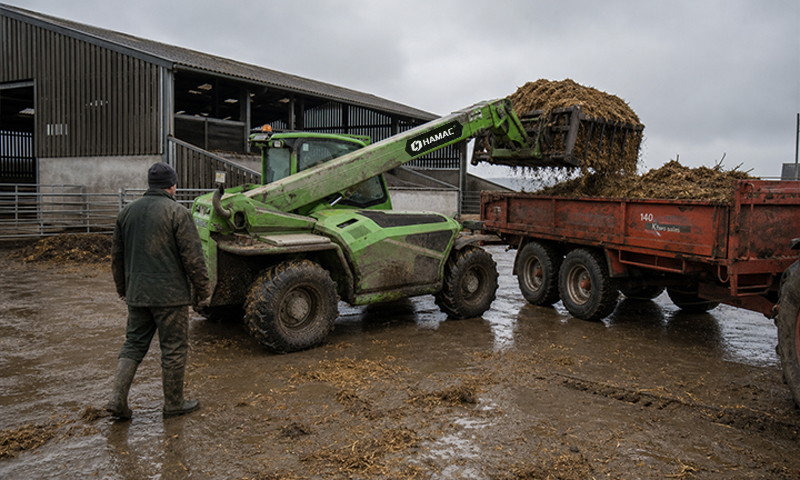
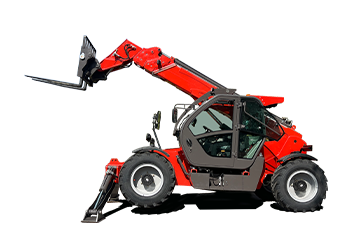
HT3510
Telehandlers
Lifting capacity: 3,500 kg
Max. lift height: 10 m
Consult now






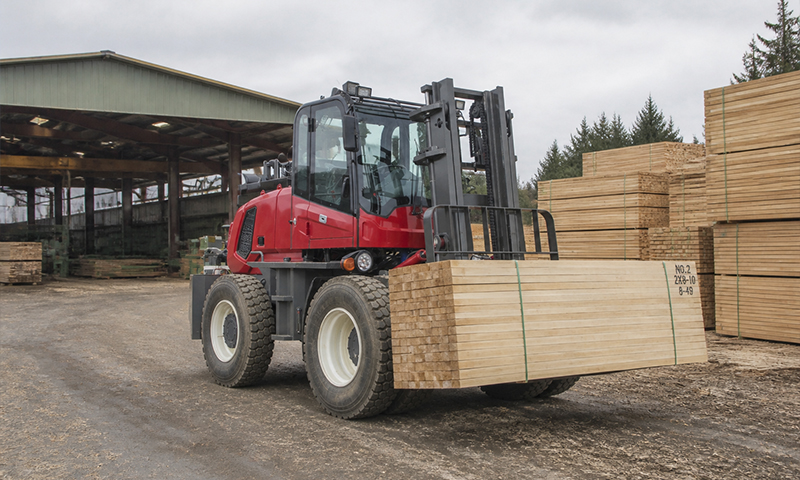
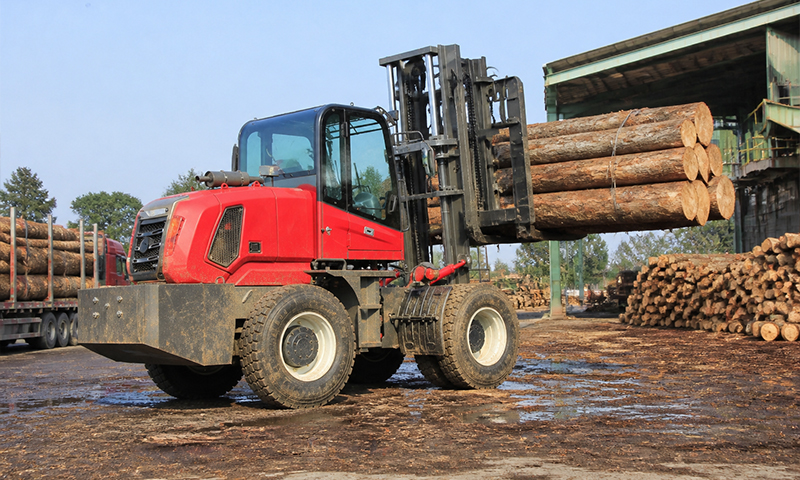
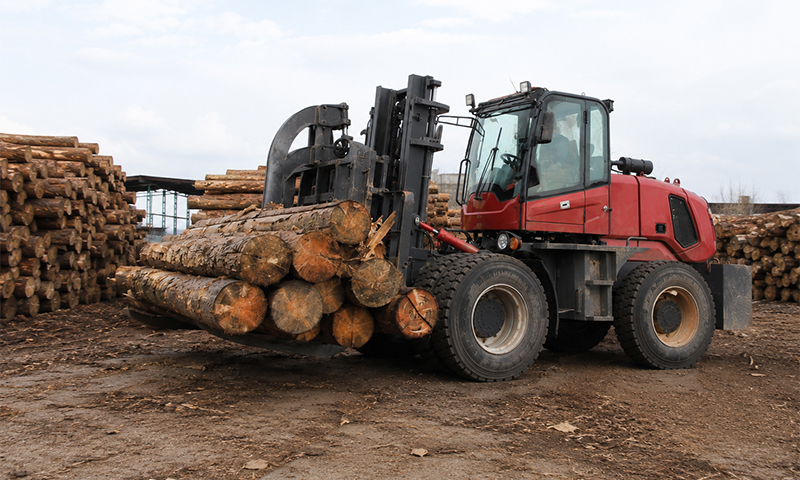
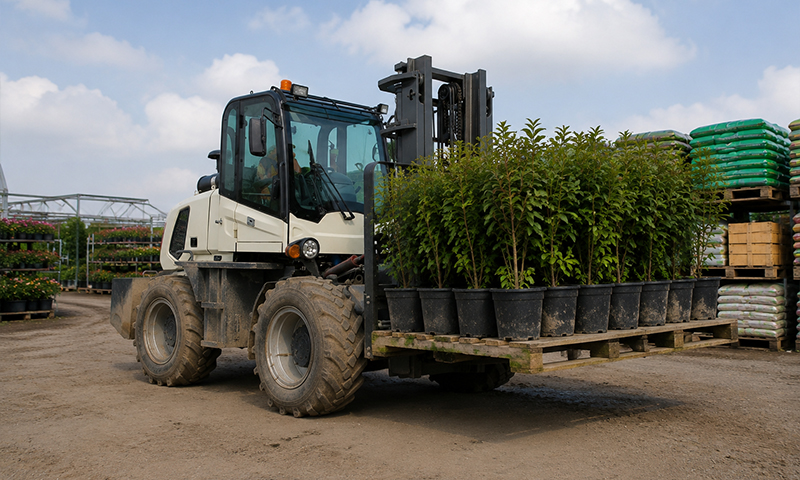
In a timber yard, a rough terrain forklift is used to handle log bundles, lumber packs and finished wood products across outdoor storage and processing areas. The machine supports daily logistics between truck unloading zones, log decks, sawmill infeed points and lumber stacks.
With large pneumatic tyres, high ground clearance and a robust frame, the rough terrain forklift can operate on gravel, mud and uneven surfaces where standard indoor forklifts cannot. This makes it well suited to demanding timber yard conditions.
The customer operates a timber yard and sawmill complex, receiving raw logs and producing sawn lumber and related wood products. The site includes log receiving areas, sorting and scaling zones, sawmill infeed decks, lumber storage stacks and truck loading bays.
Heavy and long loads must be moved regularly between these stages, often in outdoor environments exposed to weather. The operation required equipment that could handle rough terrain while providing stable control over large wooden loads.
Logs and lumber packs are heavy, long and sometimes irregular, requiring high stability and precise control during handling. Loads must be supported properly to avoid damage or shifting during travel.
Timber yards often have mixed surfaces, including gravel, compacted wood debris, mud and uneven concrete. Traction and ground clearance are essential for safe operation throughout the year.
Visibility can be challenging around tall stacks and log piles, demanding good operator sightlines and careful route planning. Weather conditions such as rain and snow further affect grip and visibility.
Throughput targets depend on efficient movement of materials between receiving, processing and storage, so handling delays can directly impact mill productivity and truck turnaround times.
The yard selected a rough terrain forklift with diesel power, four-wheel drive and deep-tread pneumatic tyres designed for outdoor use. High ground clearance and a reinforced chassis allow the machine to navigate uneven timber yard surfaces.
Specialized forks or wider carriages can be fitted to better support lumber packs and long loads. The forklift’s lifting capacity is matched to typical log bundles and lumber stacks used on the site.
In log receiving operations, the rough terrain forklift assists with moving bundled or pre-sorted logs from truck unloading points to log decks or temporary stockpiles. It can work alongside other log handling equipment as a flexible support machine.
The machine transports sawn lumber packs from the sawmill outfeed area to outdoor storage stacks or drying zones. Its off-road capability allows it to reach stacks located on uneven or partially improved ground.
When loading trucks with lumber, the forklift positions packs in truck beds or on trailers, working on yards that may include sloped or rough surfaces. It helps maintain steady loading cycles and reduces reliance on more specialized log equipment for palletized wood products.
The forklift also supports general yard tasks, such as moving pallets of consumables, handling packaging materials and assisting with yard maintenance where heavy items must be relocated.
Operators receive training on rough terrain forklift operation in timber environments, including handling long and uneven loads and driving on slopes. They follow load charts and ensure loads are properly supported and within rated capacity.
Daily inspections focus on tyres, mast, forks, hydraulics and brakes, as well as any specialized attachments used for lumber or log handling. Routes are planned to avoid unstable ground and to maintain safe distances from stacks and processing equipment.
Extra caution is used near tall lumber stacks and log piles, with spotters assisting when visibility is restricted or when working close to truck loading areas. Weather and surface conditions are monitored and may lead to route adjustments or temporary restrictions.
Using a rough terrain forklift improves flexibility and efficiency in timber yard log and lumber handling, complementing dedicated log stackers and other specialized equipment. It helps move materials reliably across challenging outdoor surfaces.
The yard benefits from better control over stockpile management, lumber stack organization and truck loading, supporting higher throughput and smoother operations. Off-road capability reduces downtime caused by poor yard conditions.
Overall, the rough terrain forklift enhances safety, productivity and adaptability in timber yard log and lumber handling by combining strong lifting performance with the ability to operate on rugged terrain.
"If you have projects with similar lifting requirements, our team can recommend the right HAMAC telehandler or forklift configuration."
Please fill out the form, and we can satisfy any of your needs including equipment selection, scheme design, technical support, or after-sales service. We will contact you as soon as possible.