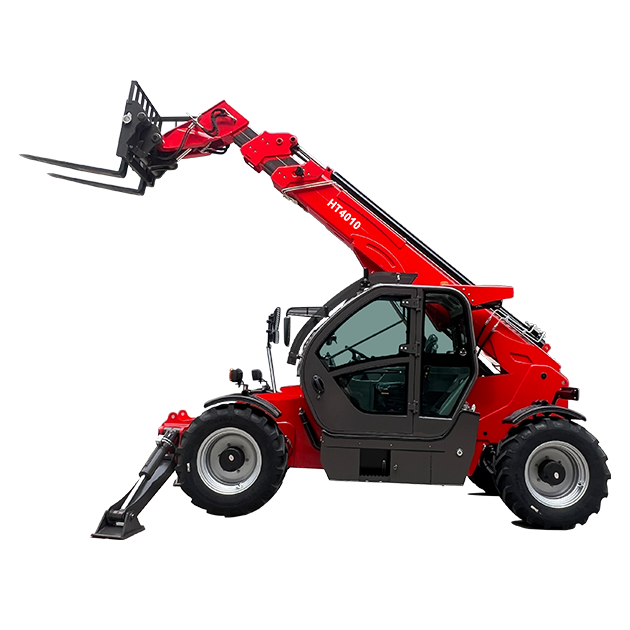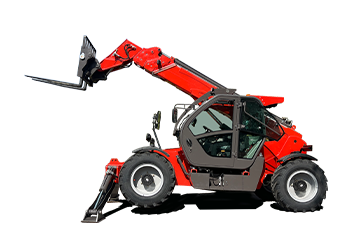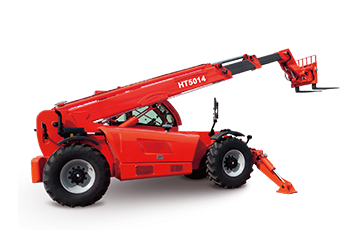
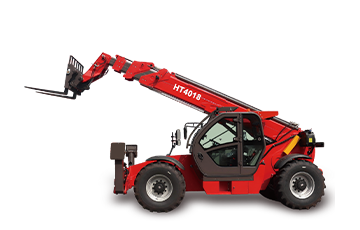
HT4018
Telehandlers
Lifting capacity: 4,000 kg
Max. lift height: ≈18.0 m
Consult now






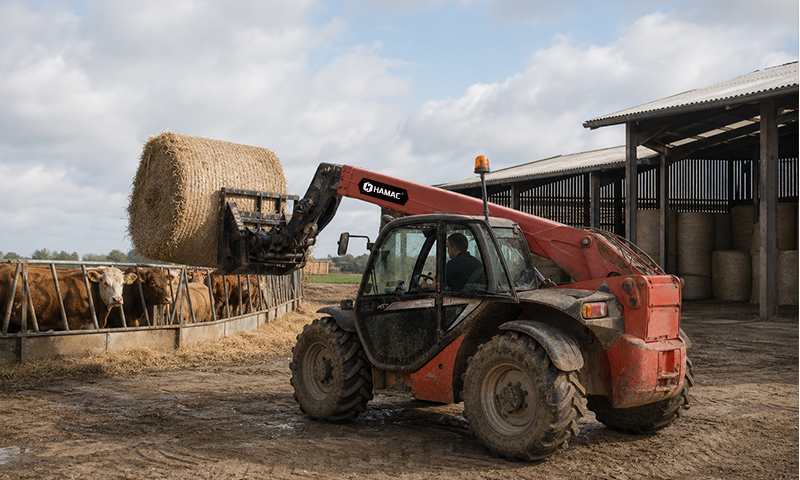
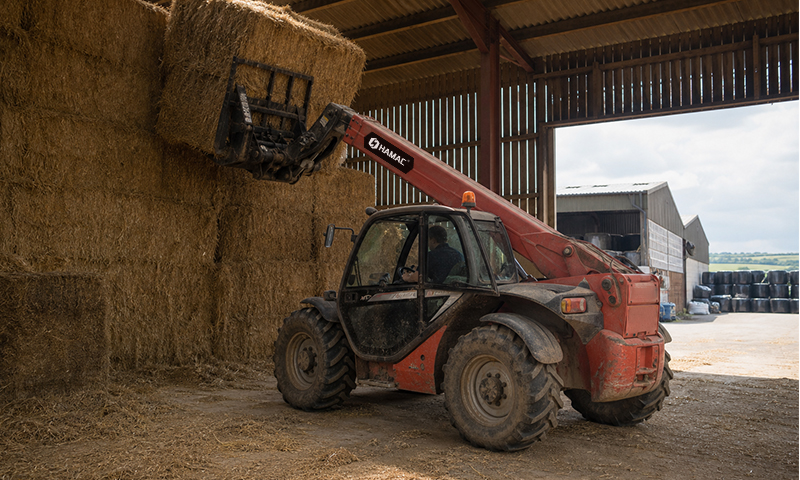
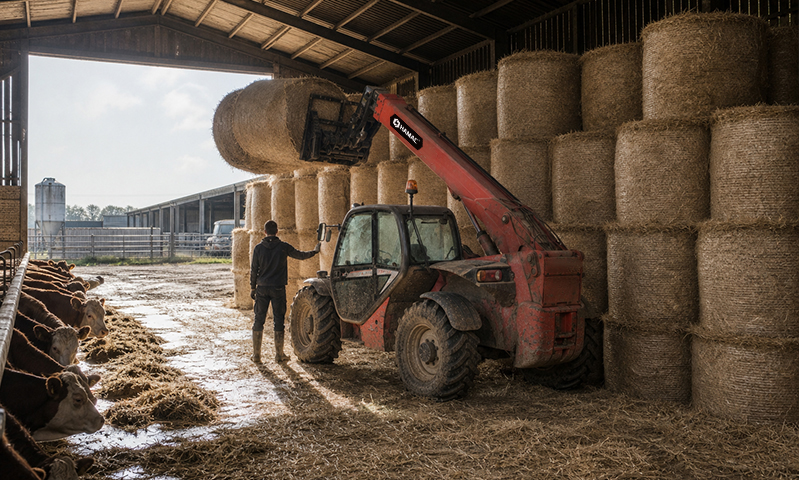
For hay bale stacking and feeding operations, an agricultural telehandler is used to move, stack and place square or round hay bales around barns, sheds and feeding areas. The machine helps farms build orderly bale stacks and deliver feed efficiently across the property.
With strong reach, stable handling and outdoor mobility, it supports bale stacking, feed transport and general farm logistics on uneven ground. This makes it a practical machine for livestock and hay production farms.
The customer is a livestock and hay production farm that stores large quantities of square and round bales for seasonal feeding. The site includes hay sheds, open bale stacks, feed lanes and barn access areas.
During busy periods, the farm needs to move bales quickly from storage to feeding zones and keep hay stacks organized for easy access. The telehandler is used with forks or bale-handling attachments to support those daily tasks.
Hay bales are heavy, bulky and often stacked high, so the equipment must provide reach and control while maintaining stack stability.
The yard surface may be compacted dirt, gravel or slightly uneven, which requires a machine that can travel safely in outdoor farm conditions.
Feeding operations often happen in tight barn lanes or around livestock areas, so the machine must be manoeuvrable and precise.
The farm also needs to move bales without damaging the hay, especially when handling dry or wrapped material intended for storage.
The farm selected an agricultural telehandler with four-wheel drive, pneumatic tyres and the boom reach needed for bale stacking. The machine is suited to outdoor terrain and can lift and position hay bales with good visibility and control.
Its telescopic boom allows the operator to stack bales higher than a standard loader and place them accurately in sheds or feeding areas. This improves storage density and makes daily handling more efficient.
When hay arrives, the telehandler unloads bales from trucks and stacks them in the hay shed or yard storage area. The operator places each bale carefully to maintain stack stability and preserve the shape of the hay.
For feeding, the telehandler transports bales from storage to livestock lanes, feed bunks or barn access points. This helps the farm supply hay quickly and reduces the manual labour needed for feeding routines.
The machine also rearranges bale stacks during seasonal changes, keeping older feed accessible and newer stock protected. This makes storage organization easier across the farm.
Because the telehandler can move across rough ground and reach into higher stacks, it supports both field-to-shed transport and indoor or semi-enclosed feeding work.
Operators inspect bale condition, forks and boom controls before lifting, especially when stacking at height. Bales are kept aligned and loads are placed with care to prevent shifting during travel.
Clear exclusion zones are maintained around tall stacks and feeding areas so workers and livestock stay away from moving equipment. The telehandler is operated at controlled speed near barns and tight access lanes.
Routine maintenance of tyres, forks, hydraulics and steering systems helps keep the machine reliable through demanding daily farm use.
Using a telehandler for hay bale stacking and feeding operations improves farm productivity by speeding up transport, stacking and delivery of feed.
The farm can build taller, more organized stacks while reducing manual handling and improving safety around hay and livestock areas. This helps keep feeding schedules consistent and storage space efficient.
The telehandler’s reach, outdoor mobility and versatility make it a strong fit for modern hay and livestock operations.
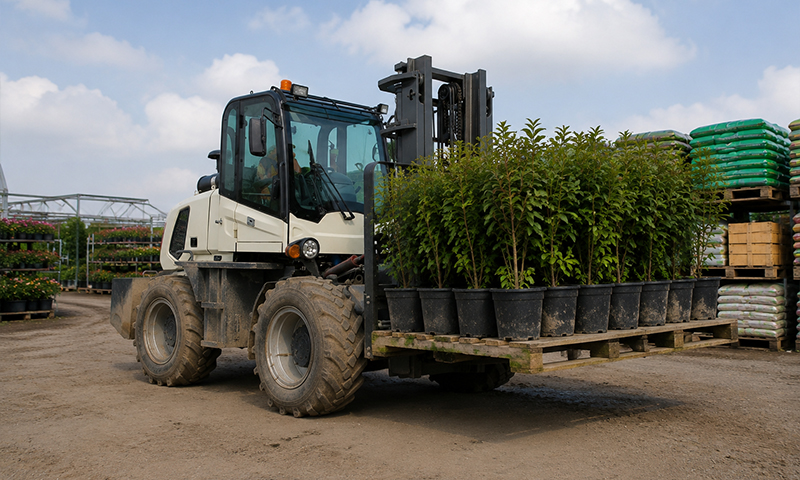
"If you have projects with similar lifting requirements, our team can recommend the right HAMAC telehandler or forklift configuration."
Please fill out the form, and we can satisfy any of your needs including equipment selection, scheme design, technical support, or after-sales service. We will contact you as soon as possible.