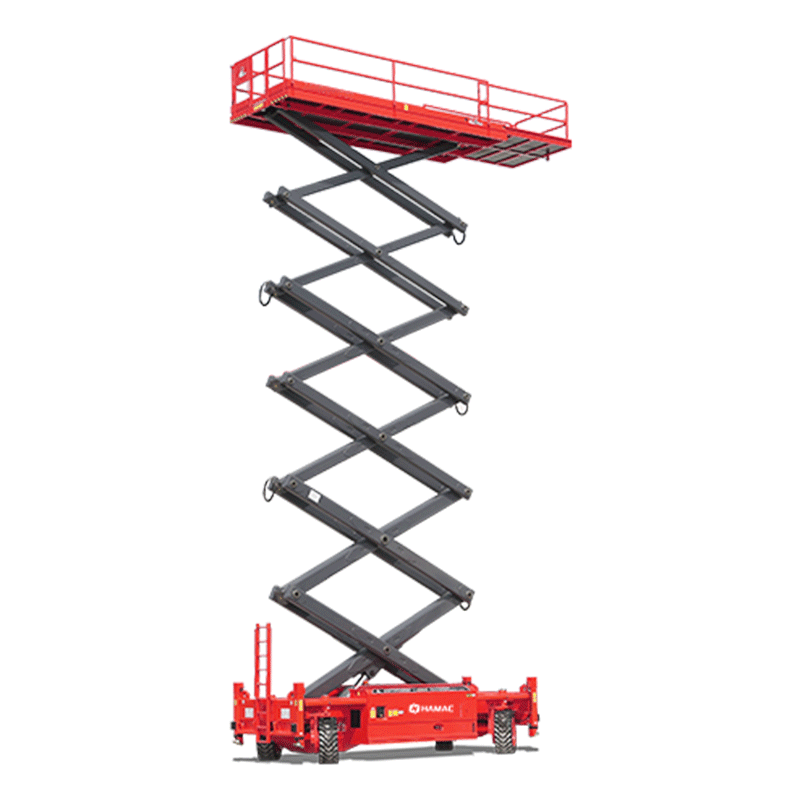
Scissor Lift
Aerial Work Platforms
Max. Working Height:6–32m
S.W.L (Safe Working Load):230-1000kg
Consult now






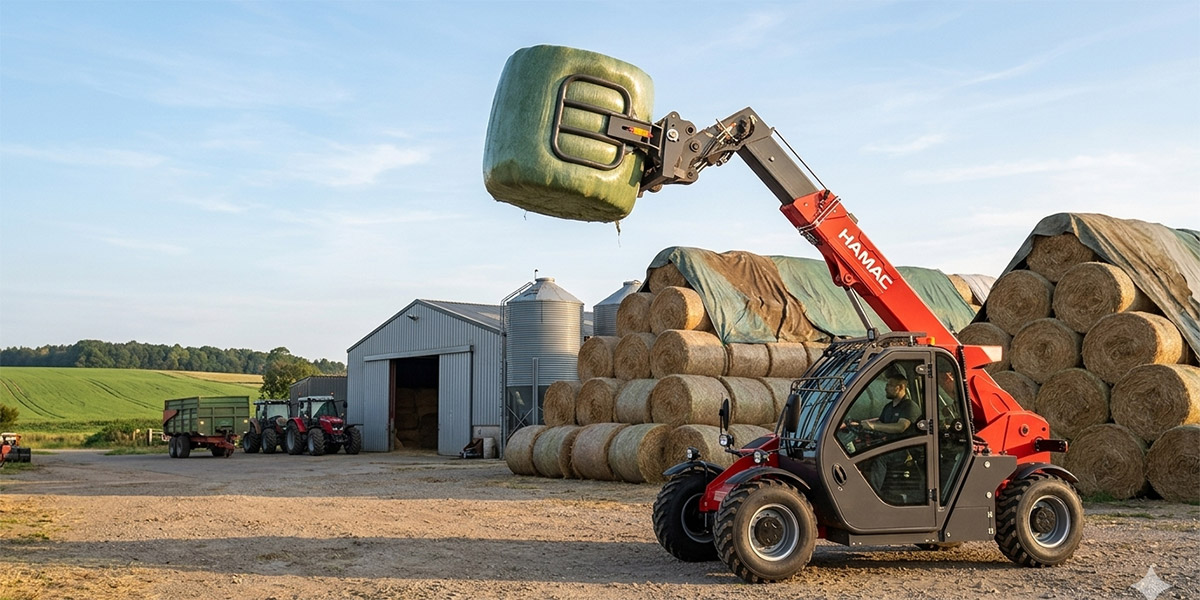
Modern farms need versatile equipment that can handle more than one task. From lifting round hay bales and stacking square bales to loading feed, moving grain, transporting fertilizer, unloading seed pallets, and maintaining farm buildings, a telehandler can provide an efficient all-in-one material-handling solution.
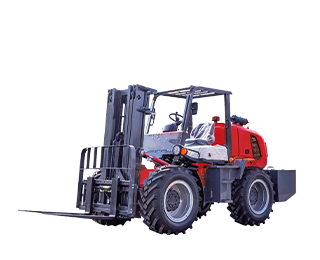
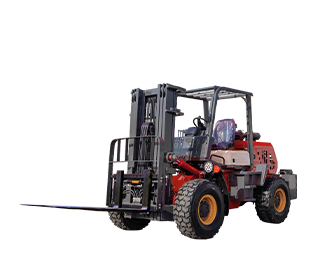
HAMAC agricultural telehandlers combine forklift lifting capacity, telescopic boom reach, rough-terrain mobility, and attachment versatility. With the right configuration, one machine can support daily farm logistics, livestock feeding, bale storage, grain handling, construction work, and seasonal loading operations.
Farms often operate across uneven yards, gravel access roads, soft soil, barns, feed storage areas, silage pits, outdoor material yards, and agricultural buildings. Standard warehouse forklifts may not have enough ground clearance, traction, or reach for these conditions.
A telehandler is especially useful because its telescopic boom can lift materials higher and extend them farther forward than a conventional forklift. This helps farmers place bales in barns, reach over feed barriers, load trailers, stack pallets, fill storage areas, and move materials closer to where they are needed. Learn more about HAMAC material-handling solutions for agriculture and farming.
| Farm Application | Typical Materials | Recommended Attachment | Telehandler Benefit |
|---|---|---|---|
| Hay Bale Handling | Round hay bales, square bales, straw bales and silage bales | Bale spear, bale fork or bale clamp | Moves, stacks and loads bales efficiently while reducing manual handling. |
| Feed Storage and Distribution | Silage, feed, grain, hay, bedding and bulk agricultural materials | Bucket, grapple bucket or grain bucket | Supports loading feed, moving bulk material and serving livestock areas. |
| Grain and Silo Handling | Grain, bagged feed, seed bags, bulk bags and farm supplies | Grain bucket, pallet forks or bulk bag attachment | Improves loading, unloading and material movement around silos and storage areas. |
| Fertilizer and Seed Logistics | Fertilizer bags, seed pallets, chemical containers and agricultural supplies | Pallet forks | Helps unload trucks, transport pallets and organize outdoor farm storage. |
| Trailer and Truck Loading | Bales, pallets, feed bags, machinery parts, crates and packaged goods | Pallet forks, bale fork or bucket | Reduces loading time and improves access to high-sided trailers. |
| Barn and Shed Storage | Bales, timber, building materials, feed pallets and maintenance supplies | Pallet forks or bale attachment | Uses boom reach to stack materials higher and improve storage capacity. |
| Farm Maintenance Work | Timber, pipes, fencing materials, roof panels, tools and equipment parts | Pallet forks, crane jib or approved attachment | Supports repairs, building maintenance and material placement around the farm. |
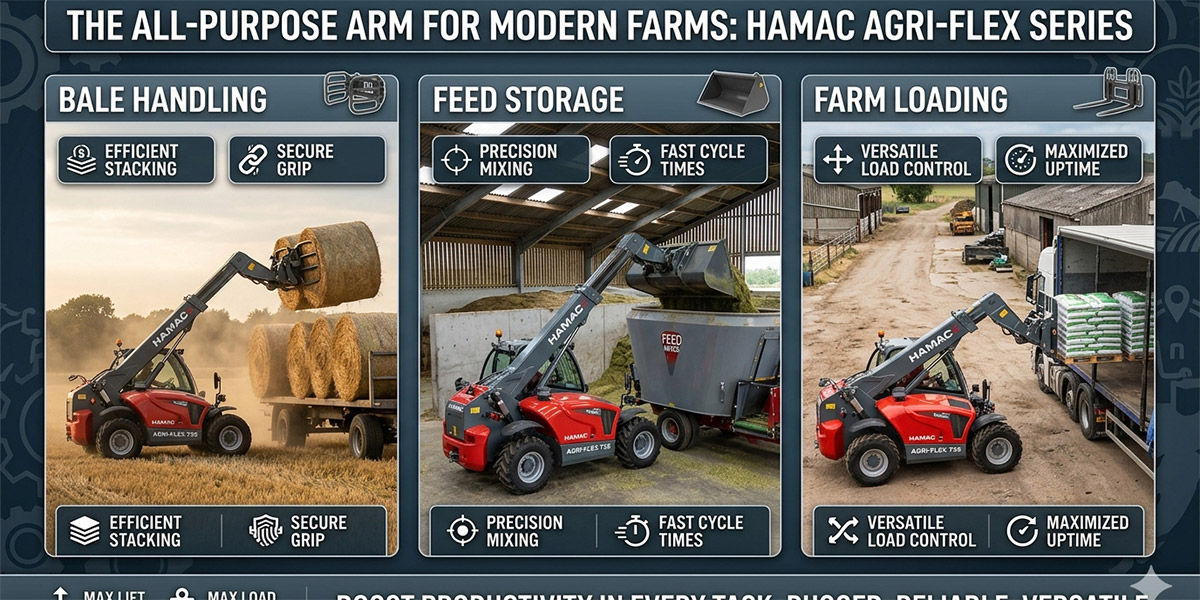
Bale handling is one of the most common agricultural telehandler applications. A bale spear, bale fork, or bale clamp allows operators to move round hay bales, square straw bales and wrapped silage bales quickly between fields, trailers, barns and feed-storage areas.
For wrapped silage bales, a bale clamp is usually the preferred attachment because it grips the bale without puncturing the protective film. For hay and straw bales, bale spears can provide a practical solution for loading trailers and creating stable stacks. See the HAMAC telehandler hay bale stacking and feeding-operation case for a related application.
In livestock and crop operations, telehandlers can also support feed handling, grain loading, bagged-feed movement, seed-pallet unloading and bulk material storage. Pallet forks are suitable for bags and pallets, while general-purpose buckets, grain buckets and grapple buckets help handle loose agricultural materials.
Farms with grain silos or bulk-feed areas can use a telehandler to move bagged feed, grain and related supplies across outdoor loading zones. Read the HAMAC telehandler application for grain handling at farm silos for another example of agricultural logistics work.
The best telehandler for a farm depends on daily work requirements. Before selecting a model, consider the heaviest bale or pallet, the required stacking height, the terrain condition, barn clearance, trailer height, attachment needs, and the distance between storage and feeding areas.
| Selection Factor | What to Consider | Why It Matters |
|---|---|---|
| Load Capacity | Weight of bales, feed pallets, fertilizer, grain bags, attachments and lifting accessories | The machine must have enough capacity for the actual load, including the attachment weight. |
| Lift Height | Barn stacking height, shed roof clearance, trailer sidewall height and storage rack level | Ensures the telehandler can place materials safely at the required height. |
| Forward Reach | Need to reach across feed barriers, trailers, silage pits, fences or storage stacks | Forward reach helps position materials beyond the front wheels of the machine. |
| Farm Terrain | Soft soil, gravel roads, mud, slopes, wet yards and uneven outdoor surfaces | Determines the importance of 4WD drive, off-road tires and ground clearance. |
| Attachment Requirements | Bale spear, bale clamp, pallet forks, bucket, grain bucket, grapple bucket or crane jib | Correct attachments increase versatility and improve the efficiency of daily farm tasks. |
| Machine Dimensions | Barn entrance height, aisle width, turning area and storage-building access | Compact machines may be more practical for confined farm buildings and narrow yards. |
| Farm Requirement | Recommended Capacity and Height | Suggested HAMAC Models | Best-Fit Use |
|---|---|---|---|
| Compact farms, barns and daily pallet movement | 2.5–3 Ton / 6–7 m | HT2506, HT3007 | Feed bags, seed pallets, fertilizer, smaller bales, barn storage and general farm logistics. |
| Medium farms, bale handling and feed storage | 3.5–4 Ton / 7–10 m | HT3507, HT4007, HT3510, HT4010 | Hay bale stacking, feed handling, trailer loading, grain logistics and larger agricultural storage yards. |
| Large farms, high stacking and heavy material handling | 4–5 Ton / 10–14 m | HT4014, HT5010, HT5014 | High barn storage, large bale operations, heavy pallets, farm construction and long-reach loading work. |
| Large agricultural operations and heavy elevated handling | 5–6 Ton / 18 m class | HT5018, HT6018 | High-capacity storage, major agricultural facilities, large feed operations and heavy project material placement. |
Explore the complete HAMAC telehandler product range to compare available lifting capacities, boom heights and configurations for agricultural material handling.
| Attachment | Best Use | Important Selection Tip |
|---|---|---|
| Bale Spear | Round hay bales, straw bales and unwrapped agricultural bales | Choose a suitable spear length and capacity for the bale weight and type. |
| Bale Clamp | Wrapped silage bales | Use controlled clamp pressure to avoid damaging the bale wrapping. |
| Pallet Forks | Feed bags, fertilizer, seed, pallets, farm supplies and packaged products | Confirm fork length, fork spacing and load center for the pallet size. |
| General-Purpose Bucket | Soil, feed, light aggregates, grain and bulk agricultural materials | Check material density because wet or compacted material can be much heavier than expected. |
| Grain Bucket | Grain, feed, wood chips, mulch and light bulk materials | Select bucket volume according to material density and available load-chart capacity. |
| Grapple Bucket | Silage, manure, bedding, brush, crop residue and irregular materials | Verify auxiliary hydraulic compatibility and inspect hoses before operation. |
Agricultural loads can vary significantly in size and weight. Wet hay, wrapped silage bales, dense feed, compacted grain and loaded buckets may weigh more than expected. Before lifting, operators should confirm the actual load weight and compare it with the official load chart for the required lift height, boom extension and attachment configuration.
The right agricultural telehandler can reduce manual labor, improve feed and bale logistics, speed up truck loading, and support farm maintenance throughout the year. With a telescopic boom and compatible attachments, one machine can handle pallets in the morning, stack bales in the afternoon, load feed in the evening, and support maintenance work when needed.
Tell HAMAC your bale weight, required lift height, feed-storage layout, terrain conditions, trailer loading needs and preferred attachments. We can recommend a suitable telehandler for bale handling, grain logistics, feed storage, farm loading and agricultural material handling.
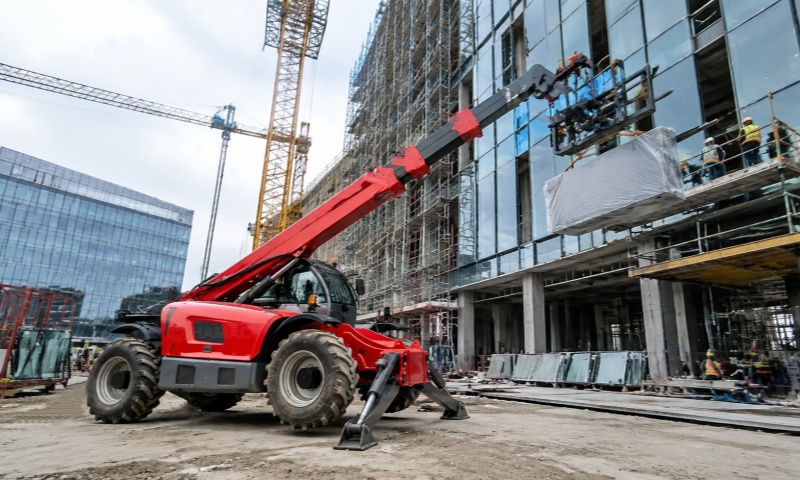
On a commercial building project, an HT4010 telehandler is used to assist facade and curtain wall ins
Free Consultation >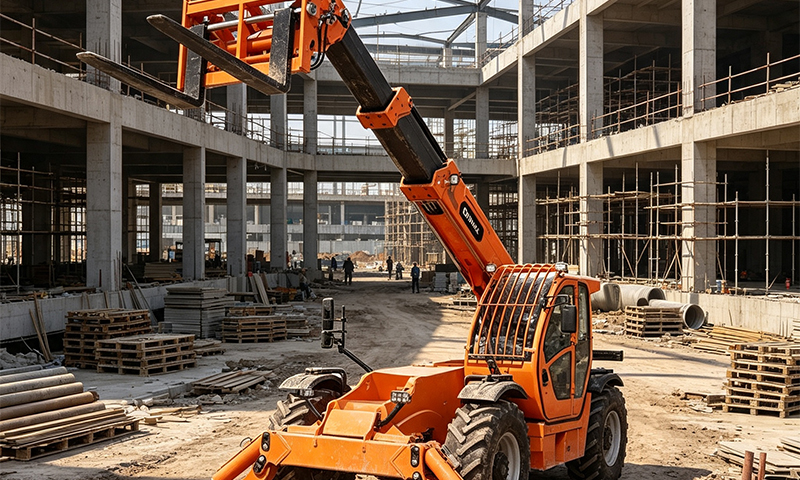
This case study describes how an HT5014 telehandler supports outdoor storage rack replenishment besid
Free Consultation >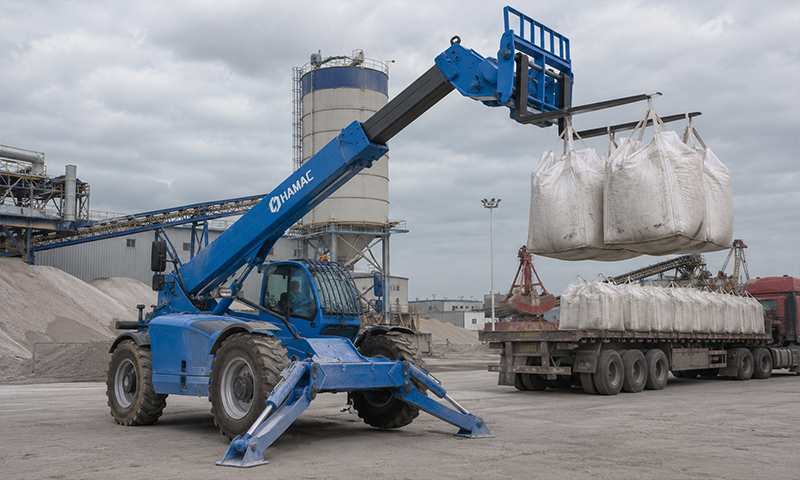
At inland port terminals, a high‑capacity telehandler is used to transfer bulk materials between tr
Free Consultation >Please fill out the form, and we can satisfy any of your needs including equipment selection, scheme design, technical support, or after-sales service. We will contact you as soon as possible.