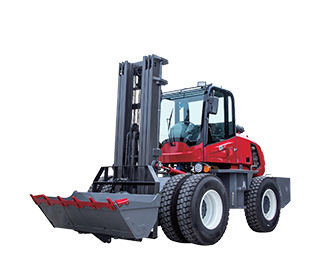
FD60‑RT
Rough Terrain Forklifts
Rated load capacity: 6,000 kg
Maximum lift height: approx. 3,000–4,500 mm
Consult now





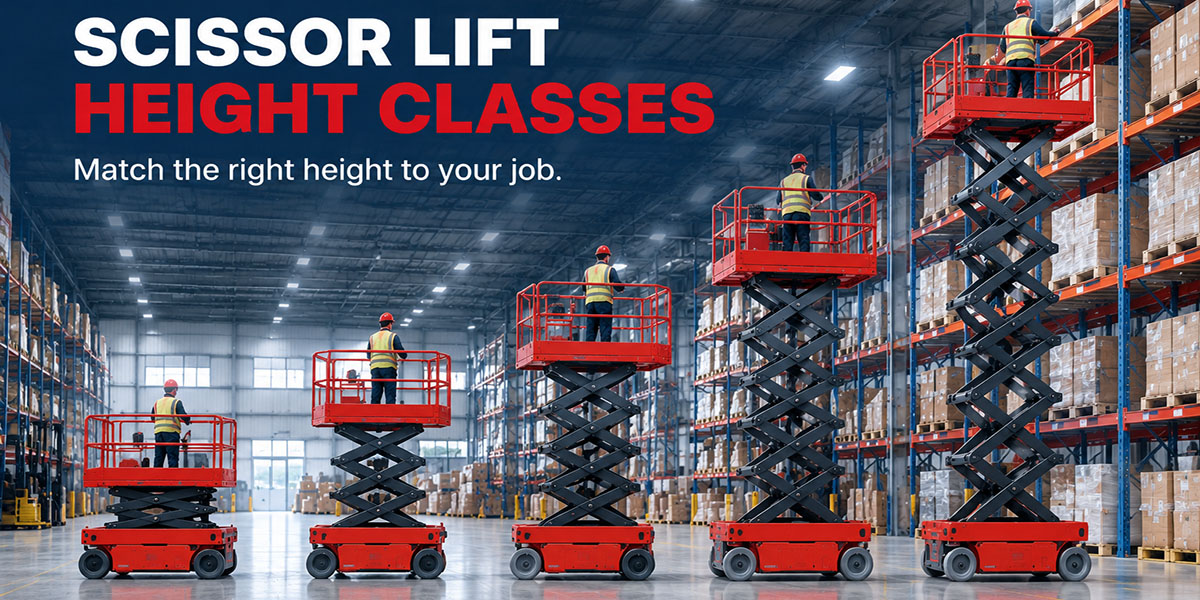
Choosing between a 6m, 8m, 10m, 12m or 14m scissor lift starts with one distinction: platform height and working height are not the same figure. The height class in a model name usually refers to working height, while the platform itself stops lower and operators reach the work point by standing on the platform.
This guide compares the five most common height classes for warehousing, maintenance, installation and construction work, helping you match the machine to the job instead of paying for height your site does not need.
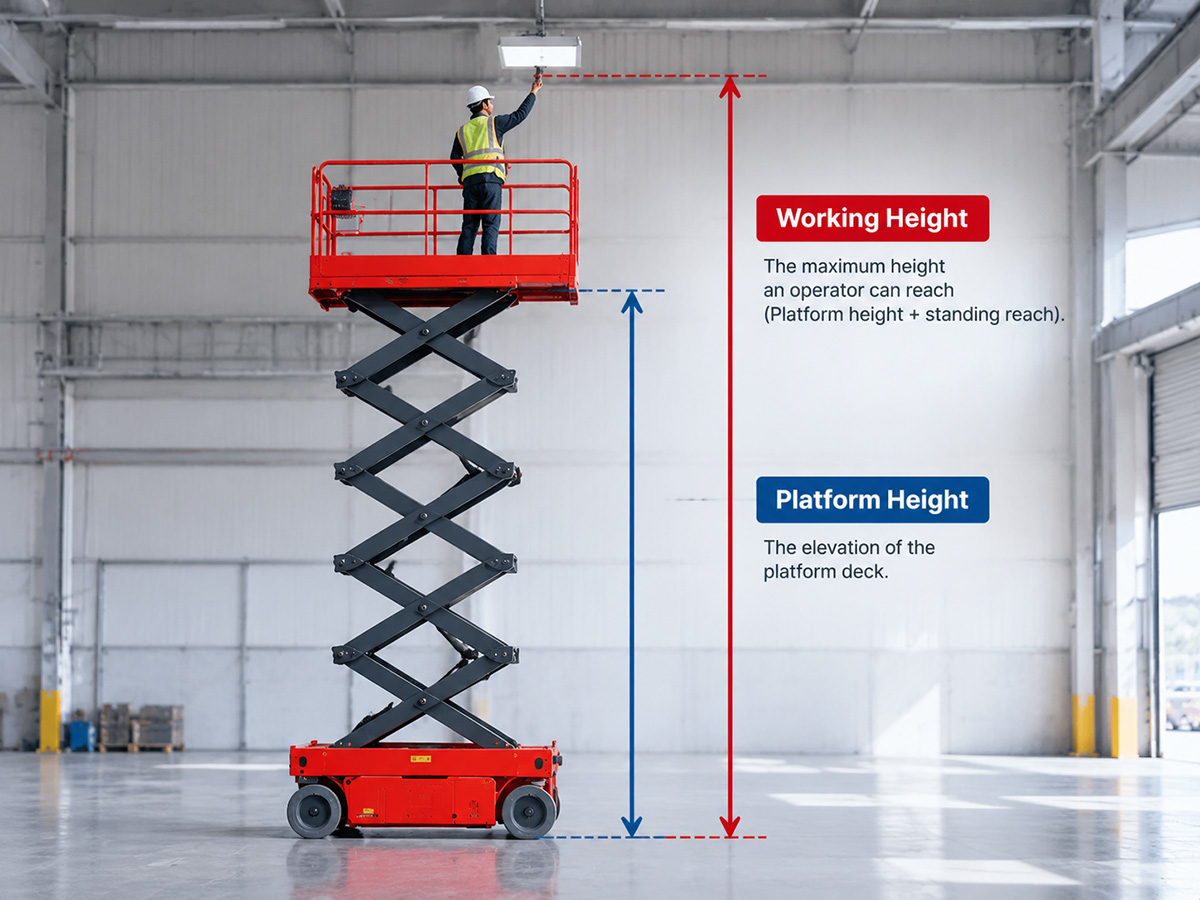
Working height is the maximum height an operator can reach, normally calculated as the platform floor height plus a standing-reach allowance. Platform height is simply the elevation of the platform deck. A 12m scissor lift, for example, typically has a platform height of around 10 m rather than 12 m.
Confirm how the supplier defines both figures for the exact model you are considering, and check whether the same limits apply indoors and outdoors. Never compare one supplier’s working height against another supplier’s platform height; the two numbers cannot be exchanged.
Select a scissor lift by height according to the height of the work point, not according to the largest number in a brochure. Use the table below as an initial shortlist for common applications.
| Height Class | Typical Platform Height | Common Applications |
|---|---|---|
| 6m scissor lift | Approx. 4 m | Warehouse racking, light replacement, stock access |
| 8m scissor lift | Approx. 6 m | Facility maintenance, ducting, pipework, inspection |
| 10m scissor lift | Approx. 8 m | Plant maintenance, equipment servicing, installation |
| 12m scissor lift | Approx. 10 m | Interior fit-out, ceiling installation, electrical work |
| 14m scissor lift | Approx. 12 m | High-level fire systems, ventilation, building services |
The platform heights above are indicative comparisons for planning only. Always confirm platform height, working height and indoor or outdoor limits against the model specification sheet before ordering.
Measure the height of the work point, then add a reasonable standing reach to estimate the working height you need. Avoid choosing a larger class “just in case”, because a taller machine brings greater weight, larger stowed dimensions and higher floor-loading requirements that can create access problems rather than solving them.
Check the platform height first, then verify that the total scissor lift platform capacity covers all operators, tools and materials. Operators must work from within the platform and must not stand on guardrails or add ladders or boxes to gain extra height.
A height class only tells you how high the platform can travel. Before ordering an indoor scissor lift, confirm the following points together with the height requirement.
| Check | What to Confirm |
|---|---|
| Platform capacity | Total weight of operators, tools and materials, plus extension-deck limit |
| Access route | Door widths, aisle space, turning area, stowed dimensions |
| Ground conditions | Floor suitability, load limits, approved operating slope |
| Environment | Indoor or outdoor use, wind limits, non-marking tire requirements |
| Power type | Battery-electric operation and charging arrangements for daily shifts |
For projects involving uneven ground, compare rough-terrain models before ordering an electric slab machine. For guidance on those selection factors, see our related article rough terrain scissor lift buying guide.
The following HAMAC electric scissor lifts show how height class and platform capacity vary independently. A higher class does not automatically mean a larger capacity, so check both figures against your task.
| HAMAC Model | Listed Working Height | Listed Platform Height | Listed Platform Capacity |
|---|---|---|---|
| SL0608ME | 7.8 m | 5.8 m | 230 kg |
| SL0812E | 10.1 m | 8.1 m | 450 kg |
| SL1012E | 12 m | 10 m | 320 kg |
Source: HAMAC scissor lift specifications. Confirm the final configuration, extension-deck capacity and applicable documentation before placing an order. For general guidance on MEWP selection, see the IPAF best practice guidance.
Use this scissor lift buying checklist to confirm the height class and the supporting requirements before you request a quotation.
| Step | What to Record |
|---|---|
| 1 | Measured work-point height and required standing reach |
| 2 | Platform height and working height for the candidate model |
| 3 | Total platform load, including extension-deck limit |
| 4 | Access dimensions, ground conditions and approved slope |
| 5 | Indoor or outdoor use and battery-charging arrangements |
| 6 | Documentation, training and after-sales support |
To receive a recommendation, send HAMAC your measured work-point height, total platform load, access dimensions and site conditions through the inquiry form on the HAMAC scissor lift product page.
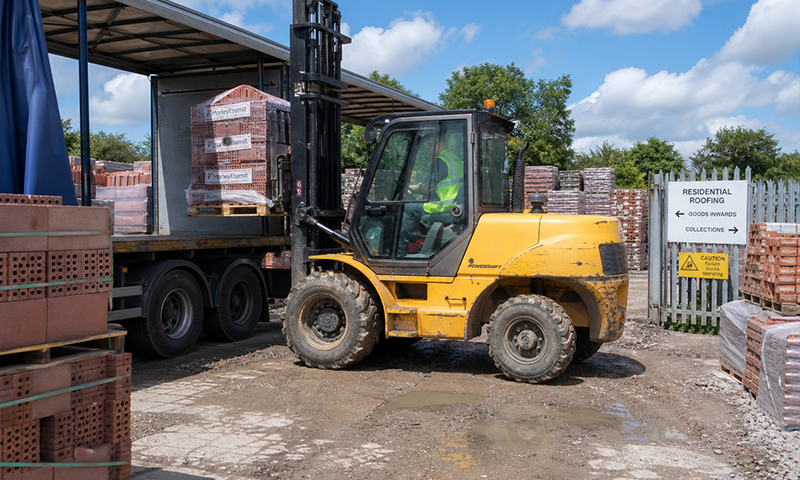
In a roof tile and brick storage yard, a rough terrain forklift is used to move palletized roofing ti
Free Consultation >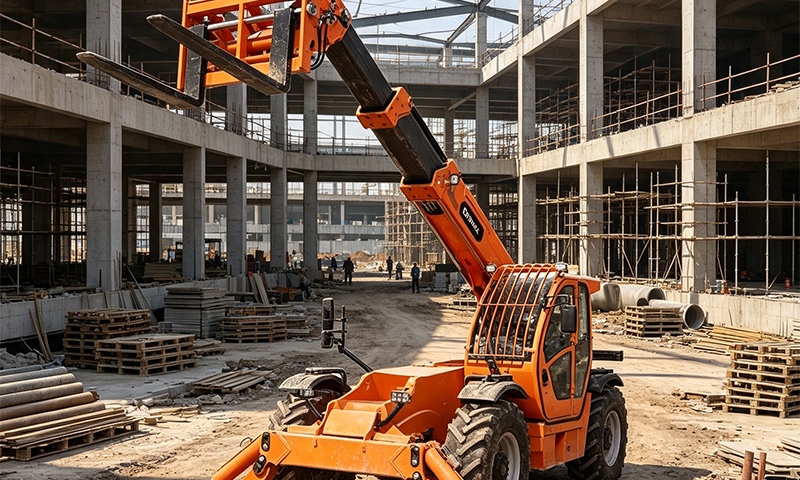
This case study describes how an HT5014 telehandler supports outdoor storage rack replenishment besid
Free Consultation >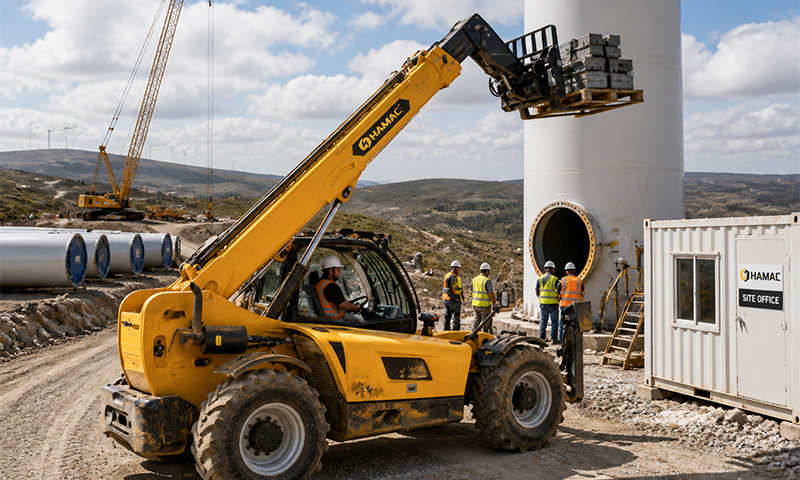
On a wind farm construction site, a HAMAC HT5010 5 ton 10 m telehandler is used to handle pallets, to
Free Consultation >Please fill out the form, and we can satisfy any of your needs including equipment selection, scheme design, technical support, or after-sales service. We will contact you as soon as possible.