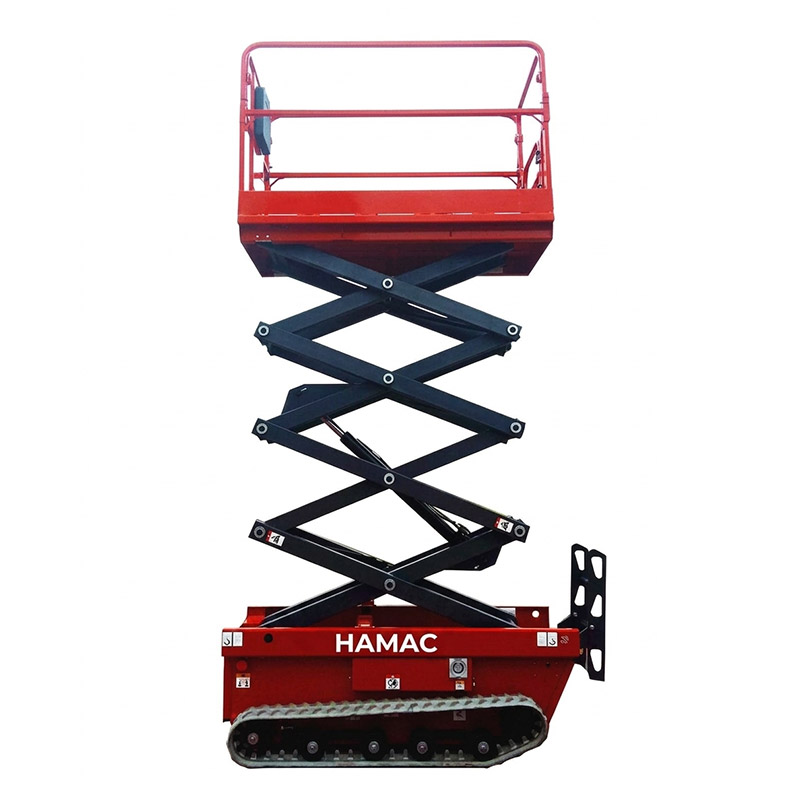
Crawler Type
Aerial Work Platforms
Working Height:6.8-8.0m
Lifting Capacity:230kg
Consult now






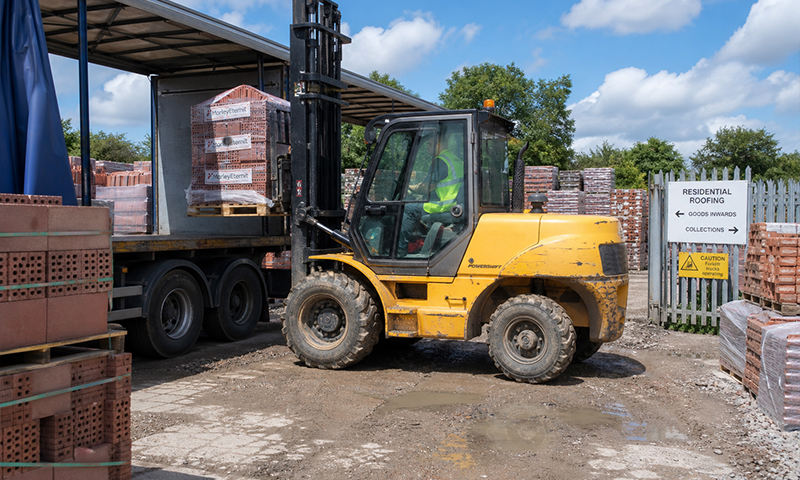
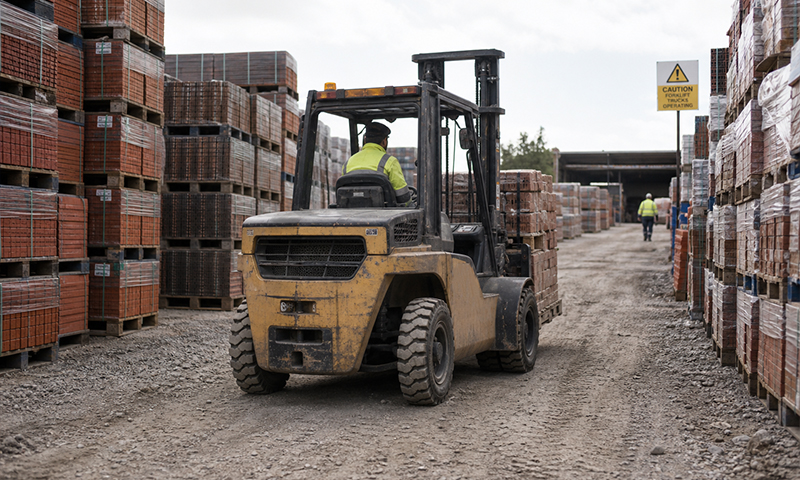
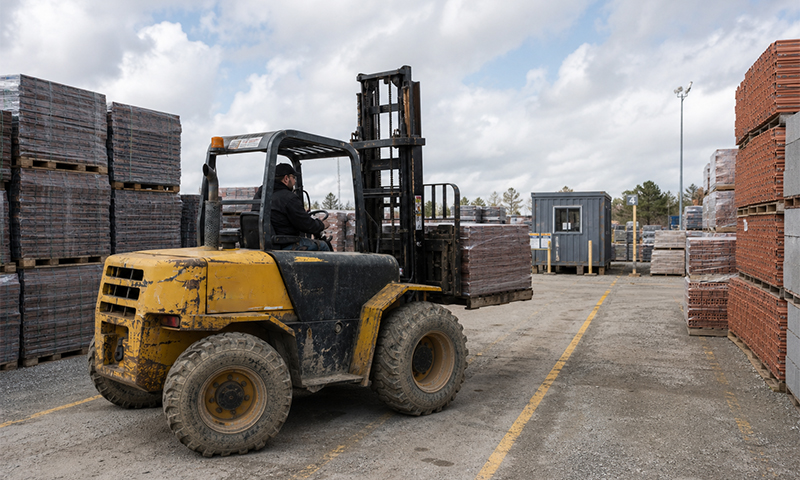
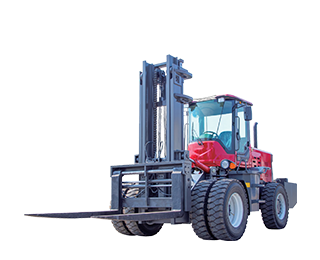
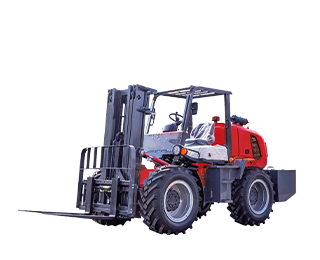
In a roof tile and brick storage yard, a rough terrain forklift is used to move palletized roofing tiles, bricks and related materials across uneven outdoor surfaces. The machine transfers pallets between long storage rows, loading zones and customer pickup areas.
With large pneumatic tyres, high ground clearance and strong lifting capability, the forklift provides stable handling where a standard warehouse truck would struggle. This makes it well suited to mixed roofing and masonry stock stored in open-air yards.
The customer operates a roofing and masonry supply yard serving roofing contractors and builders. The yard stores multiple types of clay and concrete roof tiles, facing bricks and structural blocks, mostly on pallets arranged in long outdoor rows.
Customers collect materials directly from the yard, and trucks arrive daily for replenishment. The ground surface includes gravel, compacted soil and concrete pads, so equipment must work reliably on variable terrain and in changing weather conditions.
Roof tiles and bricks are heavy and fragile, requiring careful pallet handling to avoid breakage while still maintaining high throughput.
The yard layout includes narrow lanes between pallet stacks, as well as slopes and soft spots after rain, which is challenging for conventional forklifts.
Pallets must be stacked to safe heights to maximize storage space but still remain accessible for quick picking and loading.
The yard needs to maintain traffic flow for forklifts and customer vehicles, especially during busy periods when multiple orders are being prepared at once.
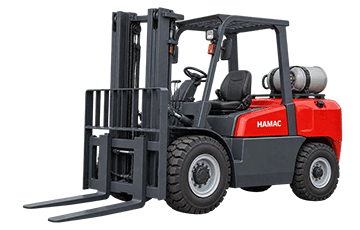
The roofing and masonry yard selected a diesel-powered rough terrain forklift with pneumatic tyres and a capacity matched to typical tile and brick pallet weights. The forklift is designed for outdoor use and can handle frequent heavy lifting on uneven ground.
Its high ground clearance, reinforced mast and rugged drivetrain provide the stability and traction needed for roof tile and brick handling. The machine operates in yard lanes, stacking rows and loading areas without switching equipment between tasks.
When supplier trucks arrive, the rough terrain forklift unloads pallets of roof tiles and bricks and places them into designated storage rows. Pallets are grouped by product type, colour and batch to simplify later picking.
For customer orders, the forklift retrieves selected pallets from the storage rows and transports them to a loading area or directly to the customer truck. The operator adjusts fork spacing and height to position pallets safely on flatbeds, trailers or small delivery vehicles.
During yard reorganization, the forklift reshuffles pallets to create seasonal display zones, high-turnover aisles or reserved stock areas for large projects. This helps sales and logistics staff access the right products more quickly.
In wet weather, the rough terrain configuration allows the forklift to maintain traction on soft or muddy surfaces, reducing downtime and helping the yard stay open even when conditions are challenging.
Operators inspect pallets and packaging before lifting, checking for damaged boards or loose tiles and bricks that could shift during transport. Loads are kept low while travelling and raised only when the forklift is in the final stacking or loading position.
Yard traffic routes are marked and speed limits enforced to separate forklift operations from customer vehicles and pedestrians. Spotters are used when manoeuvring in tight loading zones or near public access areas.
Routine maintenance includes checking tyres, brakes, mast chains and hydraulic systems to keep the forklift safe and reliable under outdoor exposure and heavy daily use.
Using a rough terrain forklift for roof tile and brick storage yard operations improves handling efficiency and reduces product damage during loading and stacking.
The yard can manage more stock in the same space by safely stacking pallets and moving them quickly as orders change, which helps keep customers supplied on schedule.
The forklift’s outdoor capability, durability and stable lifting performance make it a key asset for roofing and masonry supply operations that depend on reliable yard logistics.
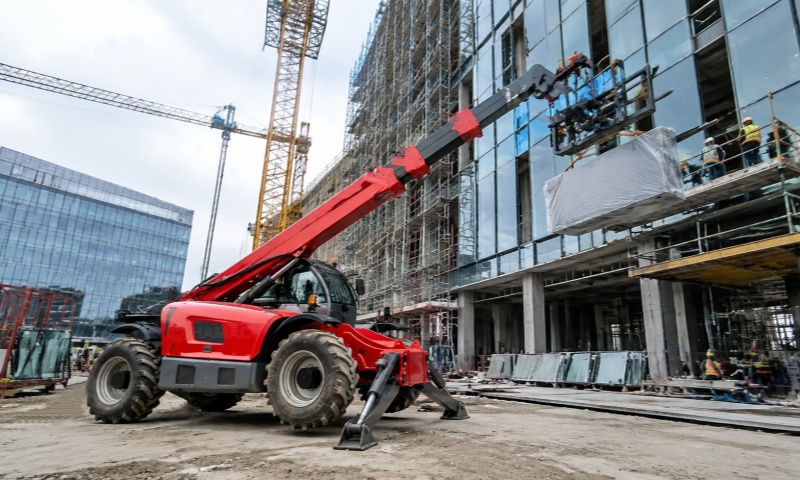
"If you have projects with similar lifting requirements, our team can recommend the right HAMAC telehandler or forklift configuration."
Please fill out the form, and we can satisfy any of your needs including equipment selection, scheme design, technical support, or after-sales service. We will contact you as soon as possible.