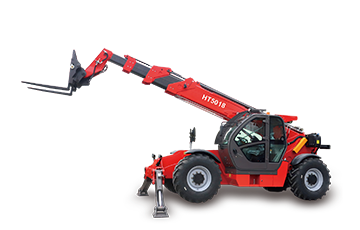
HT5018
Telehandlers
Lifting capacity: 5,000 kg
Max. lift height: 18.0 m
Consult now





A warehouse scissor lift must do more than reach the ceiling. It has to fit between racks, pass through doors, protect the floor and work safely while forklifts and pickers keep moving. The right choice depends on the maintenance task first and the machine second.
Quick answer: for most indoor warehouse maintenance, start with a compact electric scissor lift with non-marking tires. Then confirm the work-point height, narrowest aisle, floor loading, total platform load and charging arrangements before choosing a model.
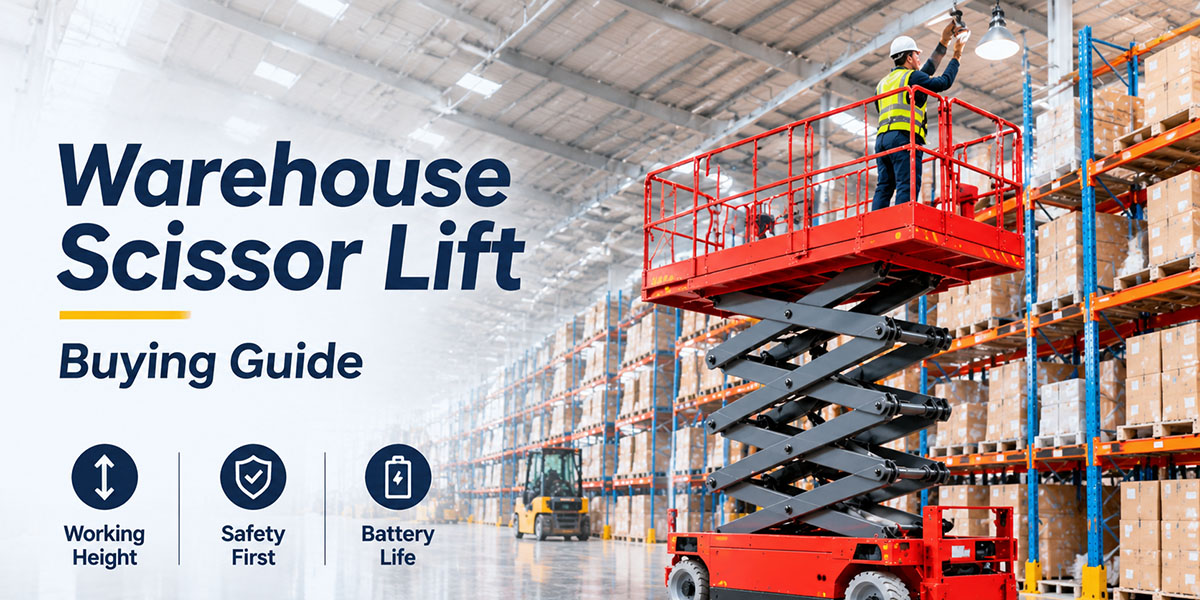
List the maintenance jobs before comparing machines. Each task sets a different height, load and platform-space requirement.
| Warehouse Maintenance Task | Typical Requirement | What to Check |
|---|---|---|
| High-bay lighting replacement | Frequent repositioning along aisles | Drive-at-height function, machine width, battery runtime |
| Fire sprinkler inspection | Access close to the roof structure | Working height, overhead clearance, platform guardrails |
| HVAC and ventilation duct service | Tools and spare parts on the platform | Platform capacity, deck size, extension deck |
| Racking inspection and repair | Work in narrow storage aisles | Overall width, turning radius, aisle traffic control |
| CCTV, Wi-Fi and cable installation | Light loads at many locations | Compact size, quick setup, low stowed height |
Select the scissor lift working height from the highest point you need to reach, not from the building's clear height. Light fittings, sprinkler heads, ducts and the tops of racking all sit at different heights.
Working height normally equals platform height plus about 2 m of operator reach. A 10 m working-height model therefore has a platform height of about 8 m. Choose a height that lets operators work comfortably within easy reach, without leaning over the guardrails. For a step-by-step method, read How to Choose the Right Scissor Lift by Working Height.
Aisle width is the most common reason a warehouse scissor lift fails on site. Measure the narrowest racking aisle, cross-aisle turning space, roller doors, fire doors and goods-lift openings along the full travel route.
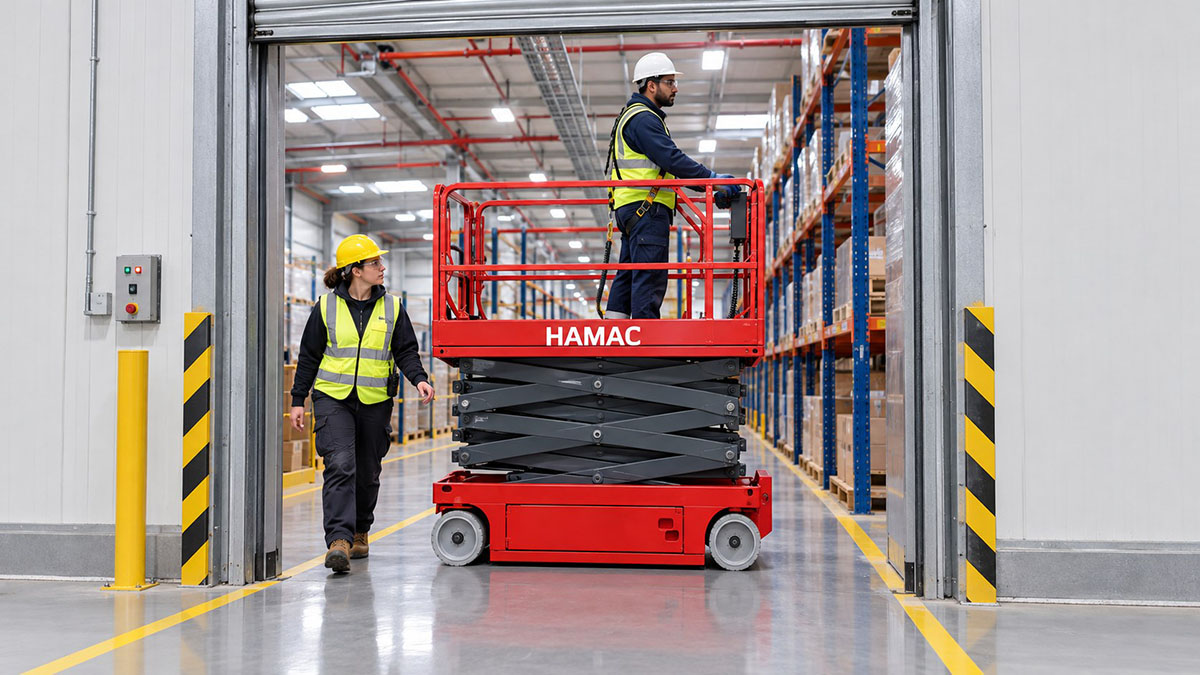
Also check overhead obstructions while traveling, such as sprinkler pipes, cable trays and door frames. A narrow aisle scissor lift or a zero-turn model makes repositioning much easier in tight storage areas. To compare the two layouts, see Narrow Scissor Lift vs Standard Scissor Lift.
Platform capacity and floor loading are two different numbers. The floor must carry the full machine weight, and each wheel puts a concentrated load on the surface. This matters most on mezzanine floors, steel platforms, suspended slabs and goods-lift routes.
Ask for machine weight and wheel-load data, and have a qualified person confirm floor suitability. Choose non-marking tires for epoxy or polished concrete floors. Note that non-marking tires prevent marks; they do not show that the floor can carry the machine. Drainage channels, dock ramps and expansion joints should also be checked before travel.
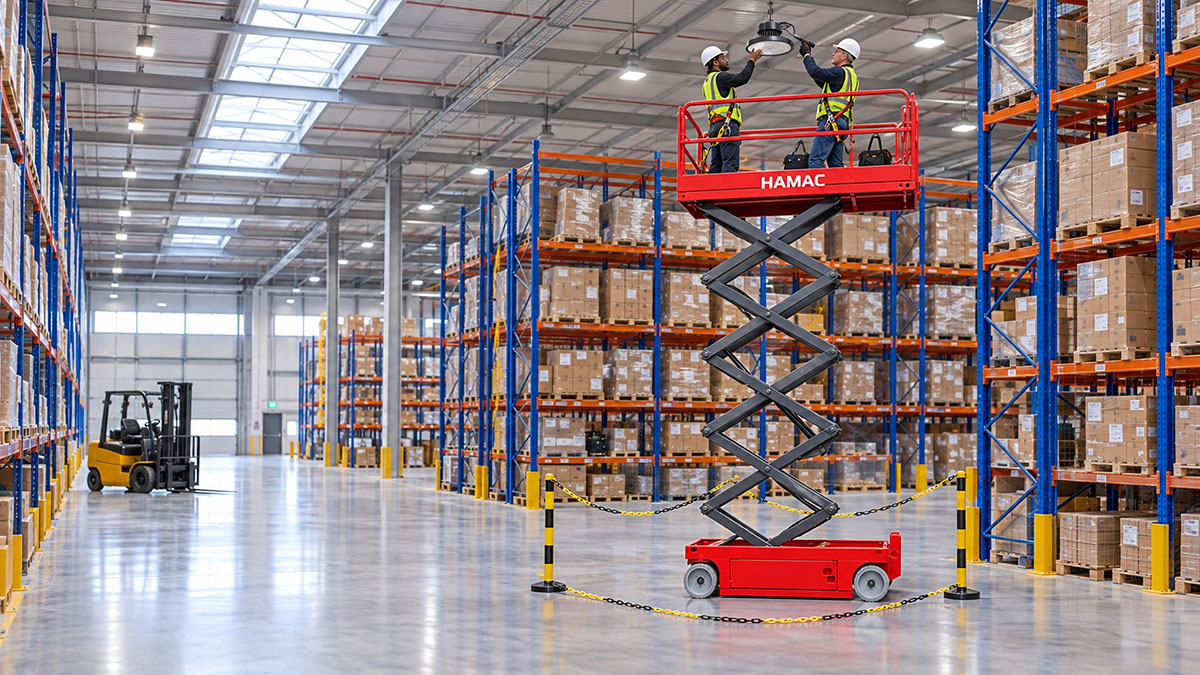
Most warehouse maintenance happens while the building is still operating. Battery-powered scissor lifts suit this work because they produce no on-site exhaust emissions and run quietly. Even so, a safe work zone is essential.
Isolate the work area with barriers or traffic controls, keep forklifts and pedestrians clear, and schedule work in low-traffic shifts where possible. Avoid crushing points when moving under beams or door frames. The OSHA Hazard Alert: Working Safely with Scissor Lifts covers fall protection, stabilization and positioning hazards. Further guidance on inspections and safe MEWP use is available in the IPAF Resource Library.
Calculate platform capacity from the combined weight of operators, tools, light fittings, spare parts and approved accessories. Check the extension deck limit separately, because it is much lower than the main platform rating.
Battery runtime depends on how often the platform is raised, how far the machine travels and how heavy the load is. Confirm the charging location, the charger's input supply and the charging time for your shift pattern. For more purchasing questions on batteries, safety documents and ownership cost, see the Electric Scissor Lift Buying Guide: 10 Questions.
The HAMAC ESL Series electric self-propelled scissor lift covers working heights from 6.5 m to 16 m. The table below shows models commonly suited to warehouse maintenance.
| HAMAC Model | Max. Working Height | Rated Capacity | Overall Width | Stowed Height | Warehouse Use |
|---|---|---|---|---|---|
| ESL65N | 6.5 m | 270 kg | 0.77 m | 2.04 m | Low-level signage, CCTV and lighting in tight spaces |
| ESL80C | 8 m | 350 kg | 0.80 m | 2.17 m | Narrow racking aisles, zero inside turning radius |
| ESL100C | 10 m | 230 kg | 0.80 m | 2.30 m | Mid-height lighting and sprinkler work in narrow aisles |
| ESL120W | 12 m | 400 kg | 1.20 m | 2.43 m | HVAC and duct service with tools and spare parts |
| ESL160W | 16 m | 230 kg | 1.20 m | 2.67 m | High-bay roof, sprinkler and lighting maintenance |
Data source: HAMAC Electric Self-Propelled Scissor Lift ESL Series. For very low work under 6 m, consider the HAMAC Mini Electric Scissor Lift or Vertical Mast Lifts. If you must reach over racking or equipment, an Articulated Boom Lift is the better option. View the full range on the HAMAC Scissor Lift page.
| Information to Prepare | Details to Send Your Supplier |
|---|---|
| Maintenance tasks | Lighting, sprinklers, HVAC, racking, cabling or roof work |
| Work-point height | Highest point to be reached and any overhead obstructions |
| Access dimensions | Narrowest aisle, door width and height, turning space |
| Floor conditions | Floor type, mezzanine or lift routes, known load limits |
| Platform load | Number of operators plus tools, parts and materials |
| Operation and charging | Shift pattern, maintenance hours and available power supply |
Send these details to HAMAC through our contact page to receive a warehouse scissor lift recommendation, a model-specific specification sheet and a quotation.
In a metal recycling yard, an HT4014 telehandler is used to handle bulk scrap metal, load trucks and
Free Consultation >
Results and Benefits By deploying RT35 forklifts, the humanitarian logistics hub achieved several key
Free Consultation >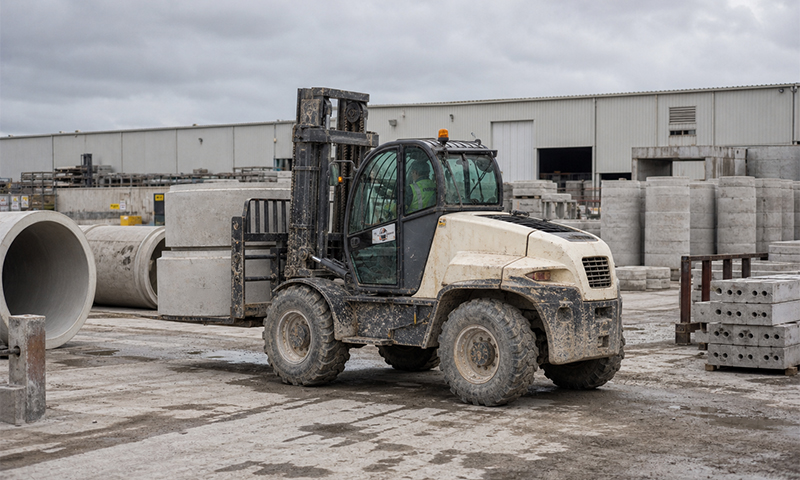
In a precast concrete yard, an FD60-RT rough terrain forklift is used to move pipes, manhole componen
Free Consultation >Please fill out the form, and we can satisfy any of your needs including equipment selection, scheme design, technical support, or after-sales service. We will contact you as soon as possible.