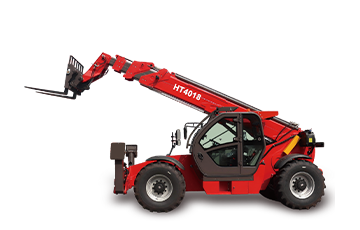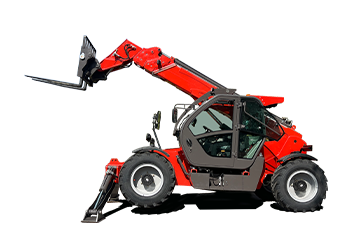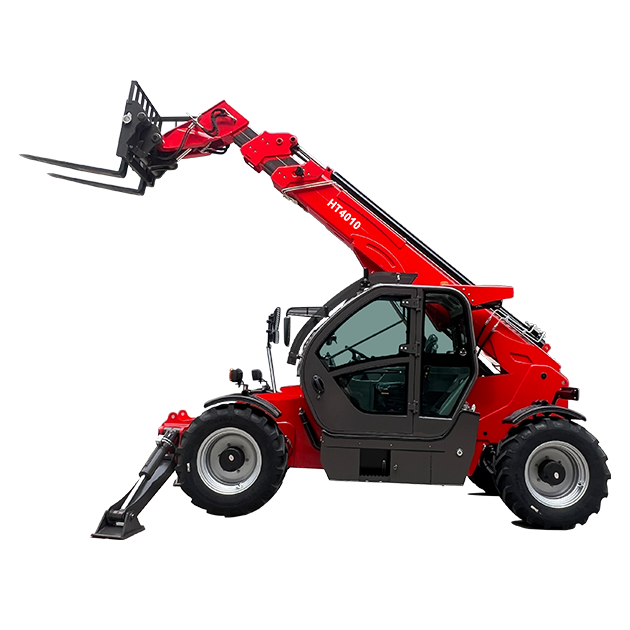
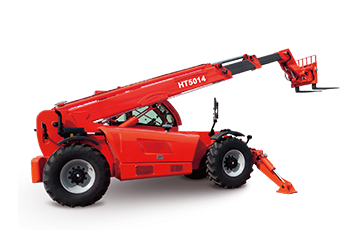
HT5014
Telehandlers
Lifting capacity: 5,000 kg
Max. lift height:=14.0 m
Consult now






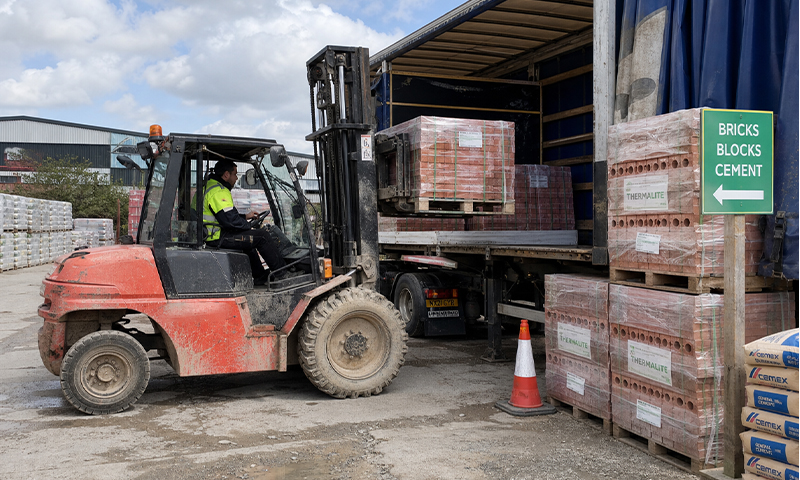
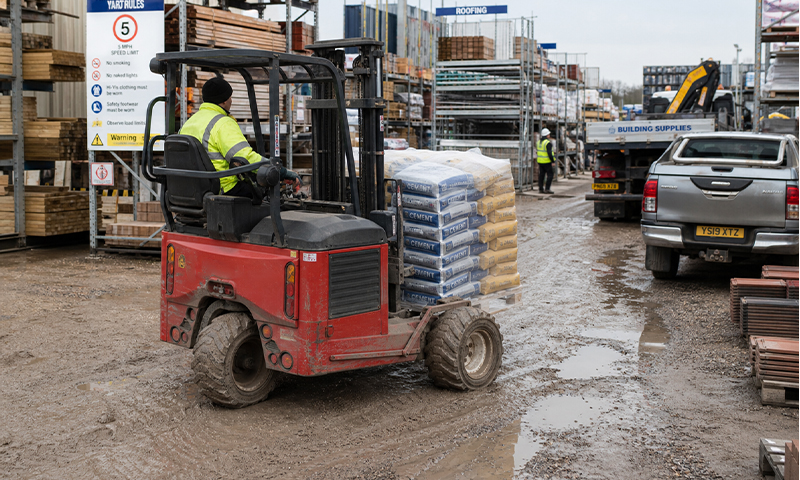
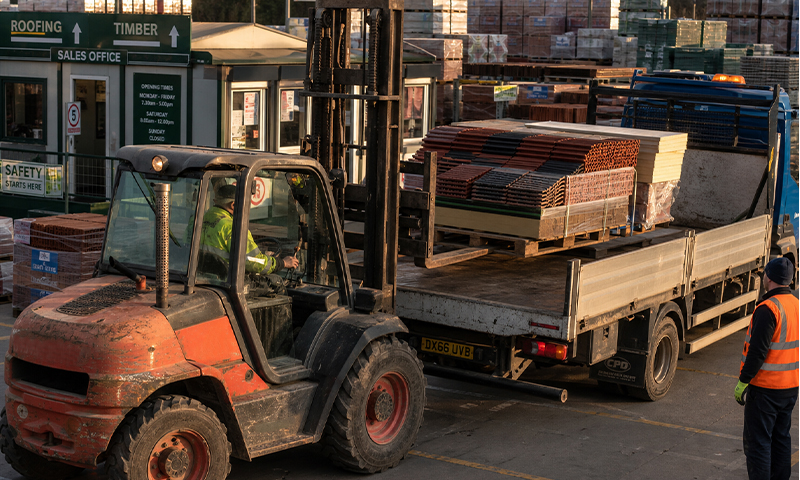
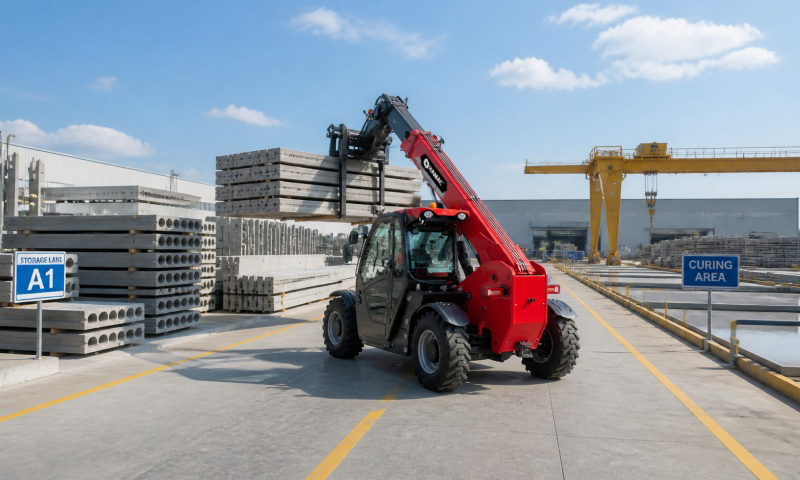
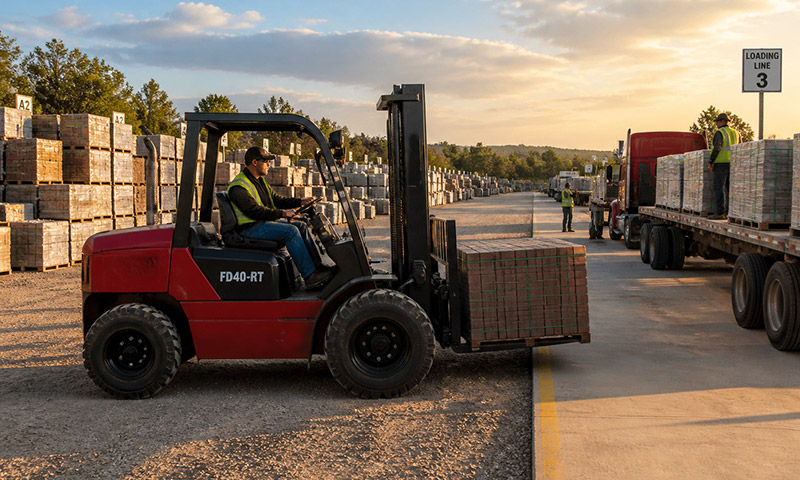
This case study describes how a rough terrain forklift supports pallet handling in a building materials market where products are stored outdoors and moved frequently. The machine helps operators transport palletized bricks, blocks, timber and cement safely across gravel, concrete and compacted surfaces while serving contractor and retail customers.
At a building materials market, a rough terrain forklift is used to handle palletized bricks, concrete blocks, timber packs and bagged materials in an outdoor yard. The machine moves pallets between storage lanes, loading bays and customer pickup areas over uneven ground.
With large pneumatic tyres, high ground clearance and strong lifting capacity, the forklift provides stable pallet handling in conditions where a standard warehouse truck would struggle. This makes it a practical choice for mixed construction materials stored outside.
The customer operates a building materials market supplying contractors and small builders with masonry, timber, roofing and landscaping products. Most items are stored on pallets in open-front racks or stacked rows within the yard.
Customers arrive throughout the day with flatbed trucks and small vehicles, and orders need to be picked, staged and loaded quickly. The yard surface is a mix of concrete, gravel and compacted soil, which demands equipment designed for outdoor conditions.
Pallets of bricks, blocks and bagged materials are heavy and must be moved frequently to keep up with customer demand, especially during peak seasons.
The yard includes slopes, puddles and loose gravel, so a conventional indoor forklift would face traction and stability problems during daily operation.
Products of different sizes and weights require flexible pallet handling while maintaining safe load centres and clear visibility.
The yard also needs to keep traffic flowing, with forklifts, customer vehicles and staff sharing the same operating area.
The building materials market selected a rough terrain forklift with diesel power, pneumatic tyres and a capacity sized for typical pallet loads. The forklift is designed to operate on uneven outdoor surfaces and handle heavy palletized materials.
Its high ground clearance, reinforced chassis and strong mast structure provide the stability needed for heavy loads in yard conditions. The machine can work across storage rows, loading docks and drive-through lanes without changing equipment.
When deliveries arrive, the rough terrain forklift unloads pallets of bricks, blocks and bagged cement from supplier trucks and moves them into the appropriate storage areas. This keeps the receiving zone clear and organizes stock by product type.
For customer orders, the forklift picks selected pallets from storage lanes and transports them to a staging area or directly to the customer vehicle. The operator positions the fork height carefully to load flatbeds, trailers or small trucks without damaging the vehicle.
The forklift also rearranges stock during seasonal changes, moving pallets to promotional areas or high-demand zones near the entrance of the yard. This helps sales staff access popular products more quickly.
In wet or muddy conditions, the rough terrain configuration allows the machine to maintain traction and continue operations with minimal interruption, reducing delays for customers.
Operators inspect pallets and unit loads before lifting, checking for broken boards or unstable stacking that could compromise safety. Loads are centred on the forks and kept as low as practical while travelling.
Traffic routes are marked to separate forklift lanes from customer walking and driving areas, and spotters are used during busy periods or in tight loading zones. The forklift travels at reduced speed near customer vehicles and pedestrian areas.
Routine maintenance includes tyre inspections, engine checks and mast lubrication to keep the machine reliable under outdoor exposure, dust and frequent load cycles.
Using a rough terrain forklift for building materials market pallet handling improves yard productivity by speeding up unloading, storage and customer loading operations.
The market can serve more customers in less time while maintaining safe and controlled pallet handling on uneven ground. This enhances customer experience and reduces product damage.
The machine’s outdoor capability, durability and strong lifting performance make it a key asset for managing a busy building materials yard.
"If you have projects with similar lifting requirements, our team can recommend the right HAMAC telehandler or forklift configuration."
Please fill out the form, and we can satisfy any of your needs including equipment selection, scheme design, technical support, or after-sales service. We will contact you as soon as possible.