Customer & Project Background:
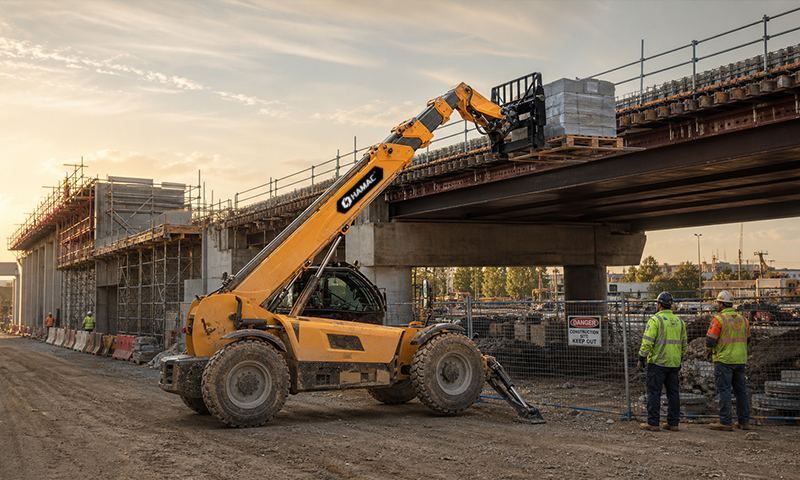
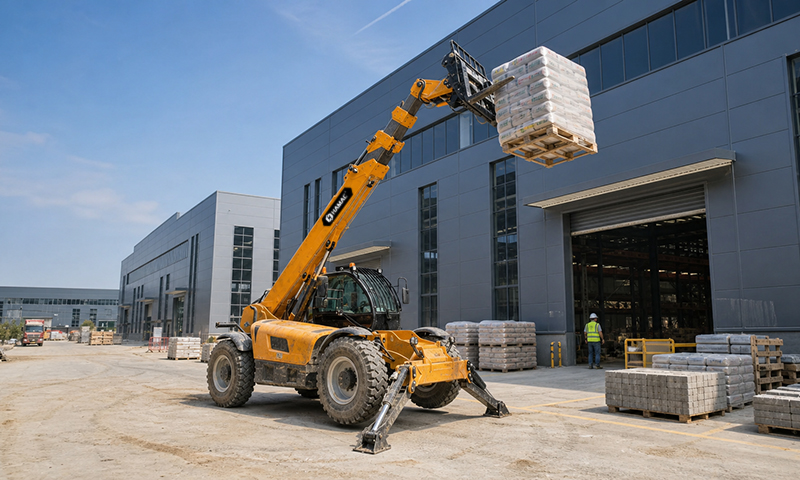
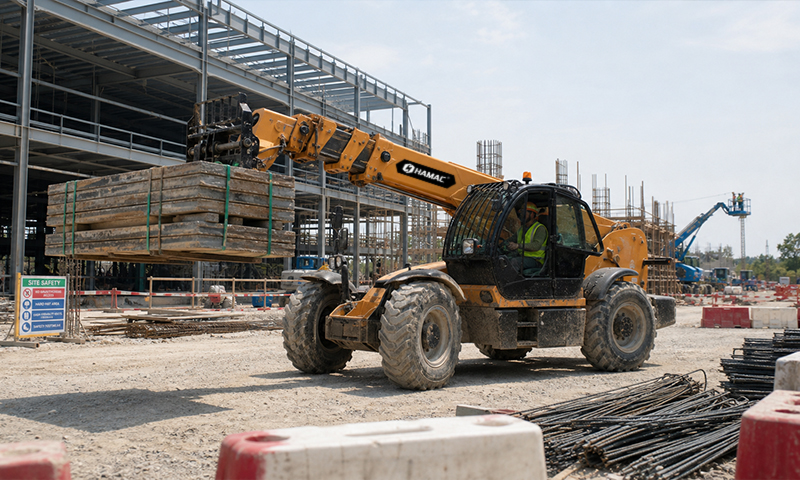
On a steel building project, an HT6018 telehandler is used to handle sandwich wall panels and long roof panels from ground-level stacks to installation positions along the structure. The machine supports both wall cladding and roof covering work, helping crews move and place insulated panels safely and efficiently.
Equipped with pallet forks and a dedicated spreader beam or vacuum lifter, the telehandler lifts bundled panels, separates individual sheets and raises them to roof level or facade edges. This combination of reach, capacity and attachment versatility reduces manual carrying and lowers the need for crane time on repetitive panel lifts.
Customer & Project Background
The customer is a cladding contractor responsible for installing insulated sandwich wall panels and long metal roof panels on a light industrial building. The structure consists of steel frames, purlins and girts, with large roof slopes that require continuous panel runs.
Panels are delivered to site in bundled packages of different lengths, which must be stored, sorted and lifted in sequence according to the installation plan. The job site has limited space around the building, with narrow access lanes and shared working areas used by other trades.
Challenges
Sandwich panels and long roof panels can be flexible and susceptible to damage if not supported properly during lifting, especially for lengths up to several metres.
The site needed a way to move panel bundles from delivery trucks to staging areas, and then to roof or wall positions, without relying on a large crane for every lift.
Wind conditions and building height made it important to keep panels under stable control during lifting, particularly when handling long roof sheets that act like sails.
The contractor required a solution that could lift panels horizontally, present them accurately to the structure and adapt to both roof and wall installation sequences.
Equipment Solution from HAMAC:
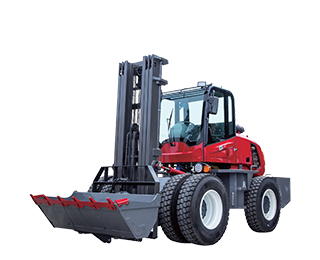
HAMAC supplied an HT6018 telehandler configured with pallet forks for handling panel bundles and a spreader beam or vacuum lifter attachment for individual panels. The telehandler provides 6 ton capacity, a 17.6 m lift height and 12 m outreach, allowing it to reach roof edges and upper wall lines.
The spreader beam or vacuum lifter offers multiple support points along the panel length, reducing deflection and risk of deformation. Combined with the telehandler’s telescopic boom and stabilisers, this setup provides controlled lifting and placement for both wall sandwich panels and roof panels.
Application on Site
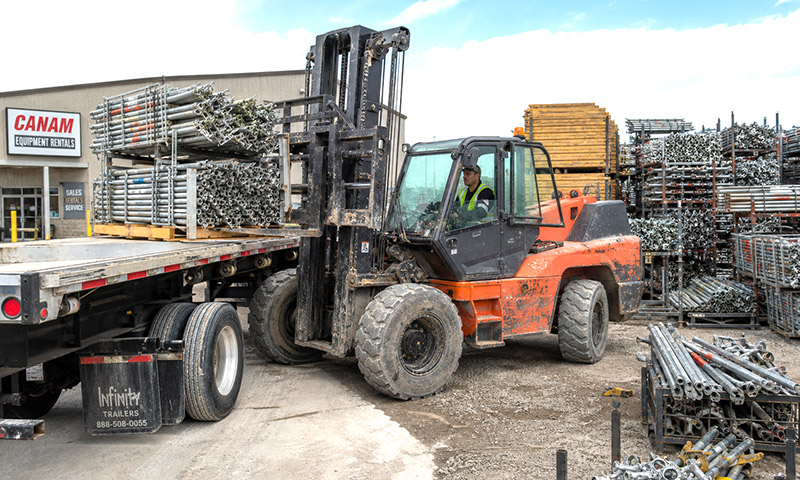
At delivery, the HT6018 telehandler uses forks to unload bundled sandwich panels and roof sheets from trucks and place them on timber bearers in designated staging zones. Bundles are positioned close to the building but clear of main access routes.
For wall cladding, panels are lifted one by one using the spreader beam or vacuum lifter attached to the telehandler boom. The operator raises the panel to the required height and booms in toward the steel frame, while installers guide the panel into position along girts and columns before fixing it.
During roof work, the telehandler lifts long roof panels horizontally from ground stacks and raises them to roof level, following agreed lifting paths that avoid over-bending the sheets. The boom is extended so that the panel can be placed directly onto prepared purlins where roof crews align and secure it.
When panels need to be repositioned or replaced, HT6018 is used to remove existing sheets, bring replacement panels to the work area and support them while joints and fixings are checked. This flexibility helps the contractor handle adjustments without waiting for dedicated crane support.
Safety & Operating Practices
Before each lift, telehandler operators and cladding crews review panel lengths, weights and lifting points to ensure the attachment and boom configuration remain within rated capacity. The lifting plan defines how many support points are required along each panel and how the panel should be oriented.
Panels are handled horizontally and never dragged along the ground, reducing coating damage and the risk of buckling. Wind conditions are monitored, and lifting operations are paused or adjusted when gusts could compromise control of long panels.
Communication between the telehandler operator and installers is maintained through radios or hand signals, with clear roles for signalling, alignment and final fixing. Work areas under and around the lift path are kept clear of unnecessary personnel.
Results & Benefits
Using the HT6018 telehandler for sandwich panel and roof panel handling significantly reduces manual handling and crane dependency on the project. Panel bundles and individual sheets are moved more quickly and with greater control.
The contractor achieves smoother panel installation sequences, with panels arriving at the correct location and orientation when needed. This improves productivity and helps maintain the planned schedule for both wall and roof cladding.
The combination of telehandler reach, capacity and specialised attachments enhances safety by keeping panels supported at multiple points during lifting and placement, while reducing the risk of panel damage and worker strain.