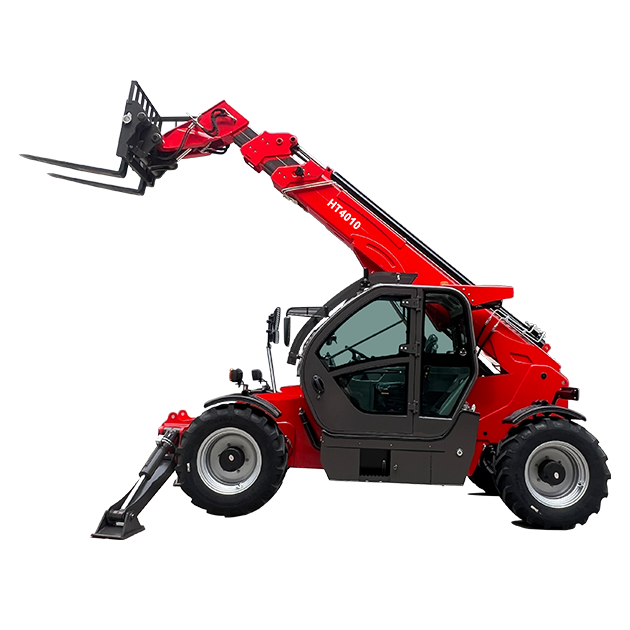
HT4010
Telehandlers
Lifting capacity: 4,000 kg
Max. lift height: ≈10.0 m
Consult now






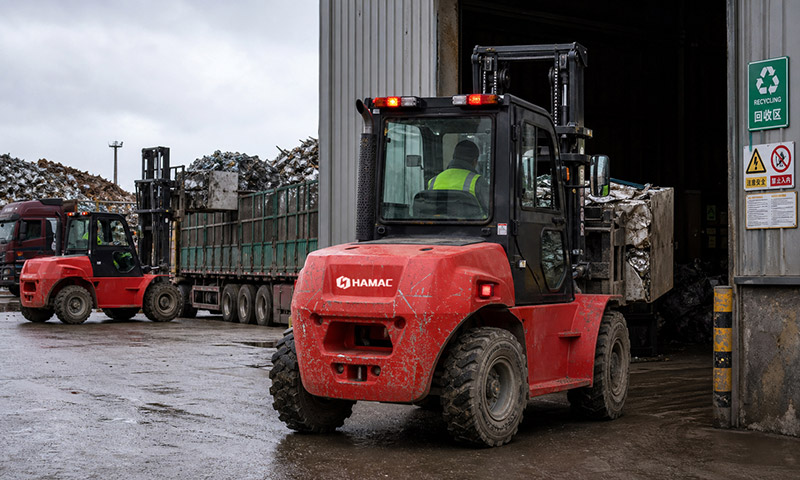
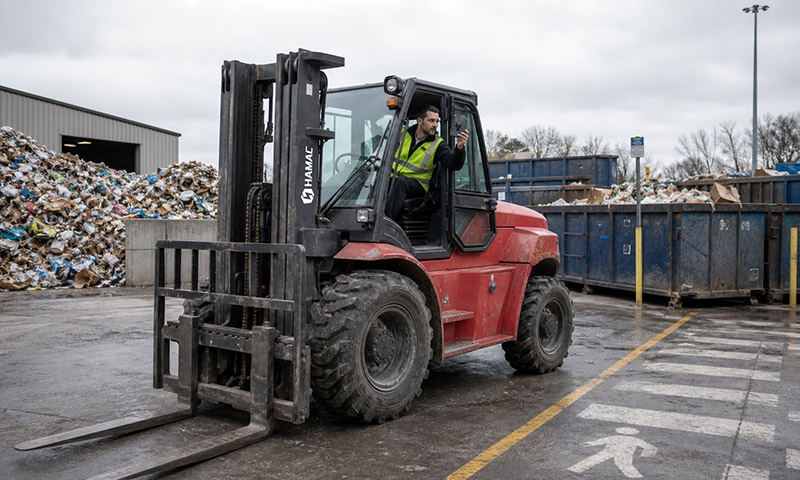
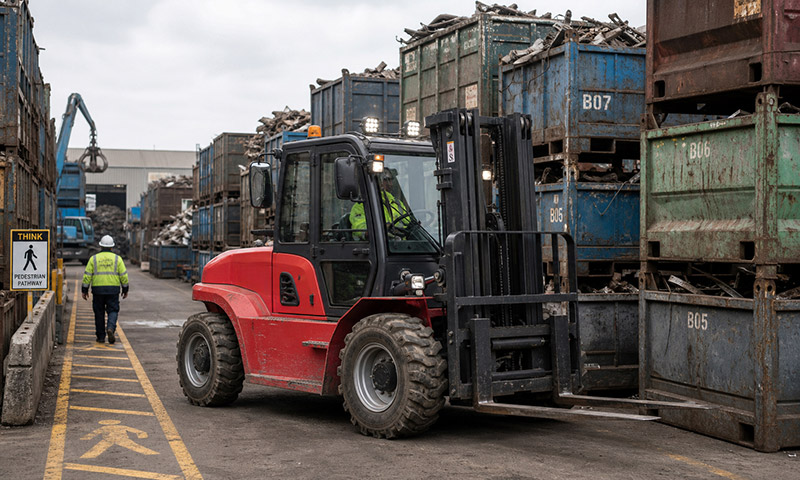
As part of an urban municipal waste recycling system, FD30-RT rough terrain forklifts and an HT3510 telehandler are deployed across transfer stations and sorting centers to move collected materials through the recycling network. The equipment supports the flow of mixed waste from collection points to processing facilities, helping the city system operate smoothly.
With a 3 ton capacity on the forklifts and a 3.5 ton, 10 m lift height telehandler, the equipment covers a range of handling tasks, from ground-level container transport to elevated stacking and loading at sorting facilities.
The municipal recycling network integrates household waste collection, community drop-off points, transfer stations and a central sorting facility. Materials such as paper, plastic, metal and glass are collected separately and consolidated before further processing.
Each transfer station receives waste from collection vehicles and prepares it for onward transport to sorting centers, where materials are separated further and prepared for recycling partners. The system requires consistent equipment support across multiple sites operating on tight daily schedules.
Transfer stations receive waste from many collection routes throughout the day, requiring efficient unloading and container handling to avoid backlogs and delays.
Sorting facilities needed to stack and organize bins and bales of separated materials by type, often within limited indoor floor space and tight aisles.
Loading sorted materials onto outbound trucks for transport to recycling processors required stable, accurate handling to prevent spillage or damage to compacted bales.
Coordinating equipment across several sites meant the system needed dependable machines that could operate consistently under daily, high-frequency use.
HAMAC supplied FD30-RT rough terrain forklifts for use at transfer stations and sorting centers, providing reliable container and pallet handling suited to frequent daily cycles. Their solid tires and compact chassis work well in yard areas with mixed surface conditions.
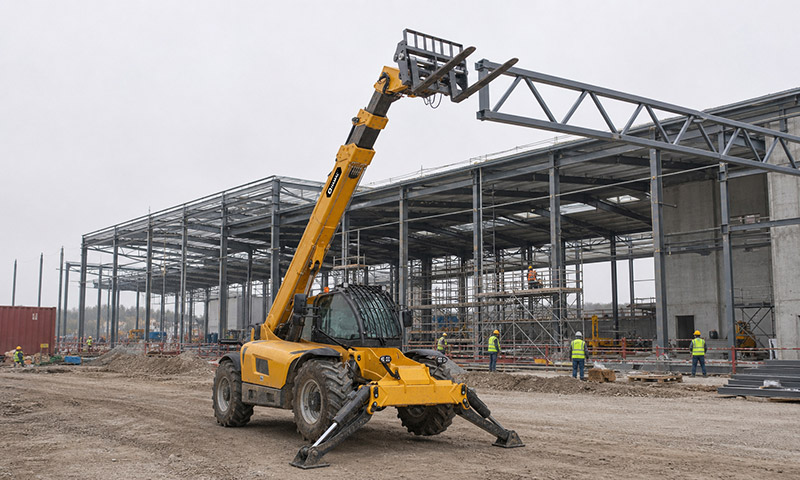
An HT3510 telehandler was deployed at the central sorting facility, fitted with forks and a bucket attachment for stacking bins and moving loose materials. Its 10 m lift height and front support legs allow safe elevated stacking within the facility's storage areas.
At transfer stations, FD30-RT forklifts unload waste containers from collection vehicles and move them to consolidation areas, keeping the receiving process moving efficiently throughout the day.
At the sorting facility, the HT3510 telehandler stacks bins of separated materials into designated storage zones, using its lift height to make efficient use of vertical space within the building.
The telehandler's bucket attachment also handles loose mixed materials during preliminary sorting, transferring them to conveyor infeed points for further processing.
When bales or bins are ready for shipment, the forklifts and telehandler work together to load outbound trucks, ensuring materials are transported securely to recycling processing partners.
Operators follow standardized procedures for container handling, checking weight distribution before lifting to avoid tipping during transfer station operations.
At the sorting facility, the telehandler's front support legs are deployed whenever stacking at height, ensuring stability while working near storage racks and aisles.
Routine equipment checks, including tyre condition, hydraulic systems and attachment security, are carried out across all sites to maintain consistent performance during high-frequency daily use.
The integration of FD30-RT forklifts and the HT3510 telehandler helps the municipal recycling system maintain steady material flow across transfer stations and sorting facilities.
The equipment supports improved sorting accuracy and space utilization, particularly at the central facility where vertical stacking capacity matters most.
By matching the right equipment to each stage of the recycling process, the city system achieves more reliable, efficient handling from collection through to final processing.
"If you have projects with similar lifting requirements, our team can recommend the right HAMAC telehandler or forklift configuration."
Please fill out the form, and we can satisfy any of your needs including equipment selection, scheme design, technical support, or after-sales service. We will contact you as soon as possible.