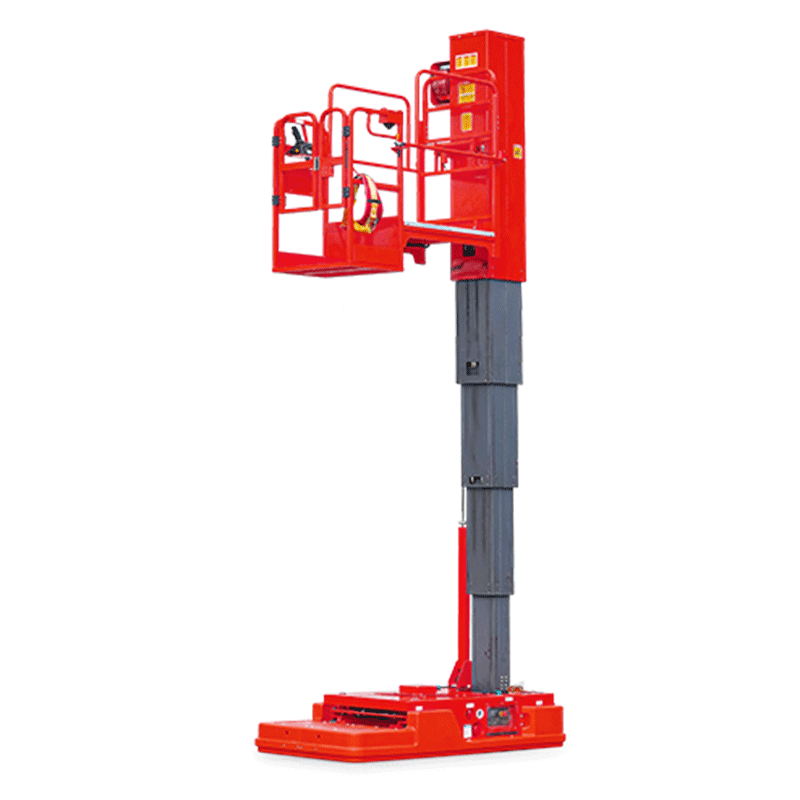
Vertical Lifts
Aerial Work Platforms
Max Working Height:5.8–10.3 m
Platform Capacity:160–227 kg
Consult now





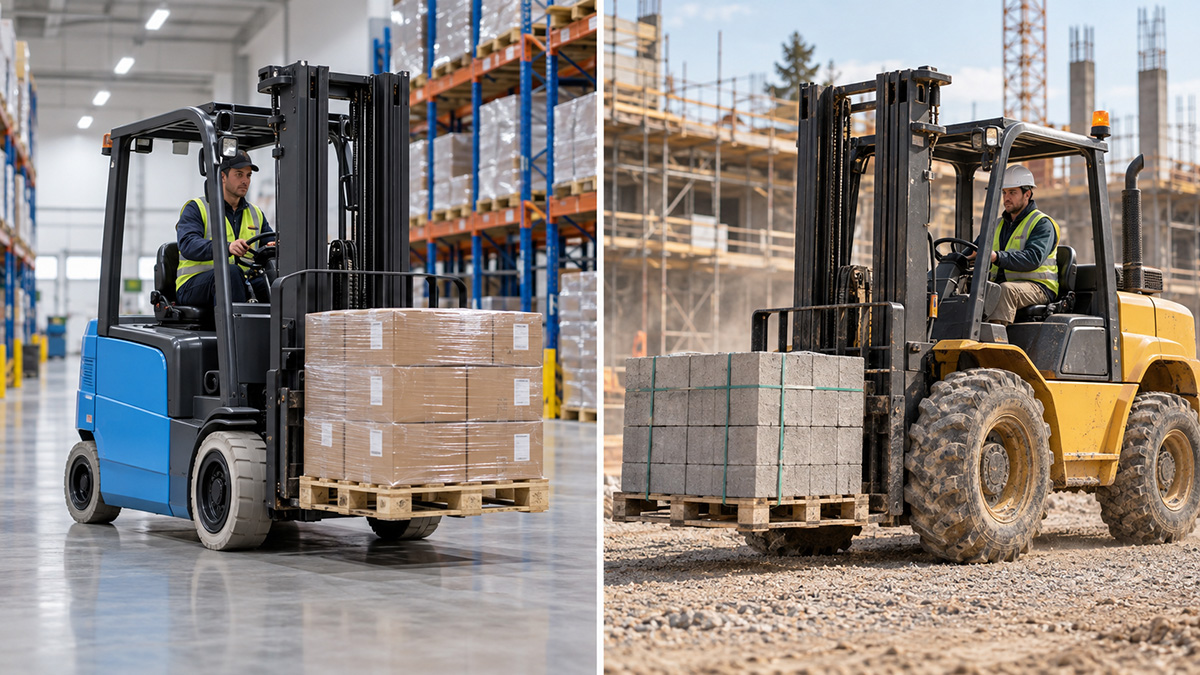
Choosing a forklift starts with the site, not the engine badge. An indoor warehouse, an unpaved construction yard and a facility that spans both put completely different demands on a machine. Decide the environment first, match the power type second, then verify the choice with a cost model.
| Environment | Best Power Type | Typical Machines |
|---|---|---|
| Indoor warehouse, plant or cold store | Electric | Counterbalance electric, reach truck, pallet stacker |
| Outdoor construction site, quarry, farm, timber yard | Diesel | Rough terrain forklift, telehandler |
| Mixed indoor and outdoor site | Outdoor-rated electric, or electric plus diesel pair | Electric shuttle unit and rough terrain diesel sharing attachments |
Indoor sites need electric because of emissions law. A diesel engine emits carbon monoxide, nitrogen oxides and particulate matter continuously. Indoors these accumulate faster than natural ventilation removes them. The OSHA powered industrial truck standard caps carbon monoxide from forklift operations at 50 ppm as an 8-hour average, and the EU Carcinogens Directive 2004/37/EC lists diesel exhaust as a workplace carcinogen with a binding exposure limit. Food, pharmaceutical and electronics facilities commonly ban combustion trucks outright. Electric forklifts produce zero exhaust and run under 75 dB(A), which also removes the ventilation project cost.
Outdoor sites favor diesel because of energy logistics and ground. A single battery supports roughly 4 to 6 hours of heavy work, then needs 6 to 8 hours on charge or a swap bay. Remote sites rarely have stable charging circuits, so a flat battery stops the job. Diesel refuels in minutes. Outdoor machines also need pneumatic or solid off-road tires, high ground clearance and 25 to 30 percent grade ability, which standard indoor electric models with cushion tires and IPX4 sealing do not provide. Our HAMAC rough terrain forklift range covers 3 to 10 ton diesel machines built for this duty.
Mixed sites cannot use one indoor machine everywhere. An indoor electric forklift is rated IPX4, which resists splashes but not rain or standing water, and its cushion tires lose traction on gravel and laterite. A diesel truck indoors needs engineered ventilation, exhaust aftertreatment and CO monitoring to stay legal. The practical answers are an outdoor-rated electric forklift with IPX5 sealing and off-road tires for yard-to-warehouse shuttle duty, or an electric plus diesel pair sharing a common attachment interface. For reach and height outdoors, see the HAMAC telehandler range.
| Dimension | Diesel | Electric |
|---|---|---|
| Purchase price | Lower upfront | Higher; add charger and infrastructure |
| Energy cost per shift | Fuel plus filters and fluids | Electricity; usually cheaper per hour |
| Refuel / recharge time | Minutes | Hours, unless battery swap is installed |
| Indoor emission compliance | Ventilation, scrubber and monitoring required | None |
| Noise | 95–105 dB(A) | Under 75 dB(A) |
| Ground suitability | Unpaved, slopes, rough terrain | Smooth concrete; outdoor-rated versions exist |
| Maintenance intensity | Filters, oil, injectors, turbo | Battery and charger checks |
| Resale value | Stable in outdoor markets | Rising as fleets electrify |
Model the full structure below before choosing. Actual figures vary by region, energy prices and utilization, so treat this as a checklist.
| Cost Element | Diesel | Electric |
|---|---|---|
| Machine purchase | Baseline | Typically 20–40% higher at same capacity |
| Infrastructure | Fuel storage and pump | Charger, dedicated circuit, possibly swap bay |
| Energy per operating hour | Diesel, filters and fluids | Grid electricity; usually lower |
| Scheduled maintenance | Engine service every 250–500 hours | Battery or BMS checks; brake and hydraulic service |
| Battery replacement | Not applicable | Lead-acid in 4–6 years; lithium typically longer |
| Compliance | Ventilation and CO monitoring if used indoors | None for exhaust |
In high-utilization indoor fleets, the lower energy and maintenance cost of electric usually recovers the purchase premium within roughly 3 to 4 years. In low-utilization or outdoor fleets, diesel usually remains the lower total cost because the electric premium is never recovered.
For daily readiness on outdoor machines, use our daily inspection checklist.
Rules, not only cost, decide when electric makes sense indoors. The EU brought diesel exhaust within the scope of Directive 2004/37/EC through Directive (EU) 2019/130 with a binding exposure limit of 0.05 mg/m³ as elemental carbon from February 2023. In the United States, OSHA caps forklift carbon monoxide at 50 ppm as an 8-hour average. Buyers in enclosed facilities should verify current local rules before ordering combustion trucks.
Which forklift is best for indoor warehouses?
Electric. Zero exhaust removes ventilation and monitoring cost, noise stays under 75 dB(A), and cushion tires match smooth concrete floors.
Which forklift is best for outdoor construction sites?
Diesel rough terrain forklifts and telehandlers. They refuel in minutes, handle unpaved ground and slopes, and do not depend on charging infrastructure.
Can one forklift work both indoors and outdoors?
Yes if it is an outdoor-rated electric with IPX5 sealing and off-road tires for a yard-to-warehouse shuttle. Otherwise run an electric plus diesel pair sharing attachments.
Is electric cheaper than diesel over time?
In high-utilization indoor fleets, energy and maintenance savings usually recover the purchase premium in 3 to 4 years. In low-utilization or outdoor fleets, diesel usually stays cheaper in total.
How do I choose between diesel and electric forklifts?
Start from environment, ground type, shift count, emission rules and charging availability. Those five answers select the power type before any brand comparison.
Tell HAMAC your indoor-to-outdoor hour split, floor and ground conditions, shift pattern and current fleet. We will recommend a diesel, electric or combined configuration with charger and infrastructure planning included.
Request a Diesel or Electric Configuration & Quote
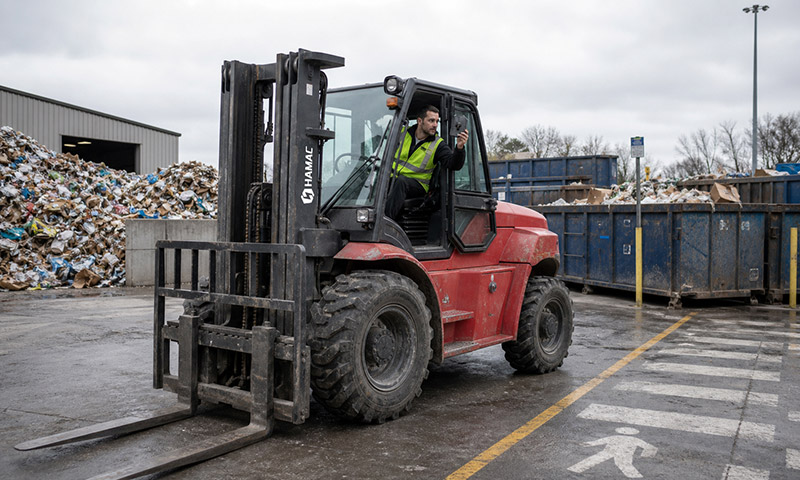
In an urban municipal waste recycling system, FD30-RT rough terrain forklifts and an HT3510 telehandl
Free Consultation >
FD60‑RT 6 ton rough terrain forklifts are used in a precast concrete yard to move and stage heavy b
Free Consultation >
This case study describes how an HT5018 telehandler assists factory roof maintenance and HVAC unit ha
Free Consultation >Please fill out the form, and we can satisfy any of your needs including equipment selection, scheme design, technical support, or after-sales service. We will contact you as soon as possible.