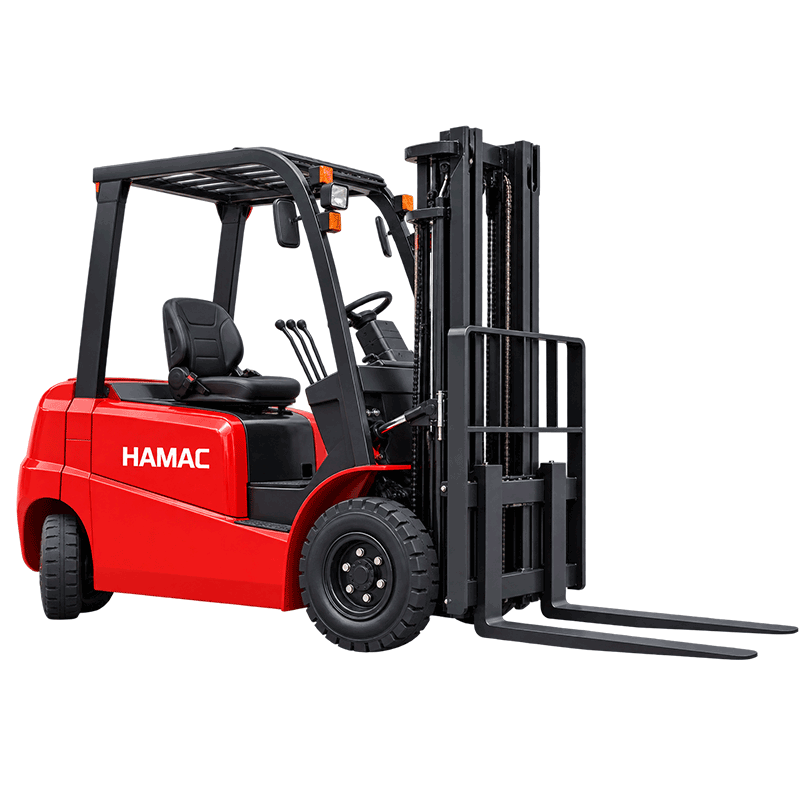
3-Wheel Electric
Electric Forklifts
Rated Capacity:1500–2,000 kg
Maximum Lift Height:3000–6500 mm
Consult now






A rough terrain forklift works in dust, mud, rain and heat, often lifting close to its rated capacity for a full shift. That environment wears components faster than a warehouse machine. The question "how often should my forklift be serviced" therefore has no single answer: the interval depends on how hard the machine works, not just on the calendar.
This guide sets out a practical maintenance schedule for rough terrain forklifts, explains which conditions justify shorter intervals, separates operator-level checks from dealer-level service, and shows how service records protect both your warranty and your resale value.
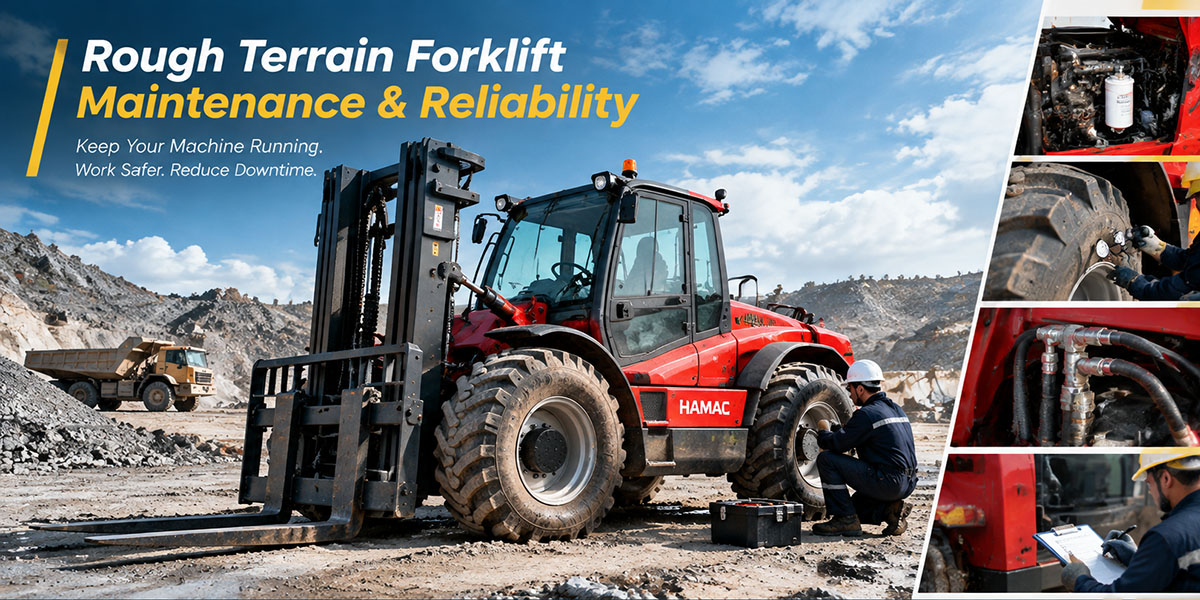
The table below is a baseline schedule. Always confirm against the maintenance chapter of the manual for your specific model, because engine type, hydraulic system and duty rating all change the numbers.
| Interval | Core Tasks | Who Performs It |
|---|---|---|
| Every shift / daily | Visual walkaround, tire condition and pressure, oil and coolant levels, leak check, horn, lights, seat belt, forks and carriage, parking and service brake test. | Operator |
| Weekly | Chain lubrication and tension, mast channel cleanliness, battery condition, air filter inspection, secure fasteners, hydraulic hose inspection. | Operator or site mechanic |
| Every 250 hours (first service) | Engine oil and oil filter change, fuel filter check, valve adjustment where specified, full lubrication of mast and chassis points. | Dealer or trained technician |
| Every 500 hours | Engine oil and filter, fuel filter replacement, hydraulic return filter, transmission fluid check, brake adjustment, coolant system inspection. | Dealer or trained technician |
| Every 1,000 to 2,000 hours | Hydraulic oil replacement, transmission oil and filter, brake fluid, drive axle oil, lift chain replacement or recalibration, complete boom and mast inspection. | Dealer or authorized technician |
| Annually or 2,000 hours | Full safety inspection, load test, relief valve calibration, electrical and ECU diagnostic, seat and restraint system, structural weld inspection. | Authorized service provider |
If your machine is still under warranty, follow the manufacturer's schedule exactly and keep the invoices. Skipping a documented interval is one of the most common reasons warranty claims are rejected. For a day-to-day companion to this schedule, see our daily inspection checklist for telehandlers and rough terrain machines.
The hour meter is a starting point, not the final word. The following conditions justify reducing the interval between services:
| Condition | Typical Impact | Recommended Adjustment |
|---|---|---|
| High dust or silica environment | Air filters clog faster; abrasive dust enters hydraulics and fuel systems. | Inspect air filter daily; shorten oil and hydraulic service by roughly 25 percent. |
| Continuous heavy loads near rated capacity | Hydraulic oil temperature rises; chains, pins and brakes wear faster. | Move to the next shorter interval tier. |
| Double-shift or 24/7 operation | Hour meter advances quickly; seals and coolant degrade faster. | Schedule by hours, not by month. |
| Frequent ramp or slope work | Transmission and brakes work harder; oil temperature rises. | Check transmission fluid and brake adjustment more often. |
| Wet or muddy sites | Water ingress in hydraulics and axles; corrosion on electrical connectors. | Test hydraulic oil for water at every 500-hour service. |
| Extreme heat or cold | Battery, coolant and hydraulic viscosity all move out of spec. | Use the fluid grades specified for the ambient temperature. |
A practical rule for mixed construction fleets: base your schedule on the harshest condition the machine sees for more than 20 percent of its operating hours, not on its average duty.
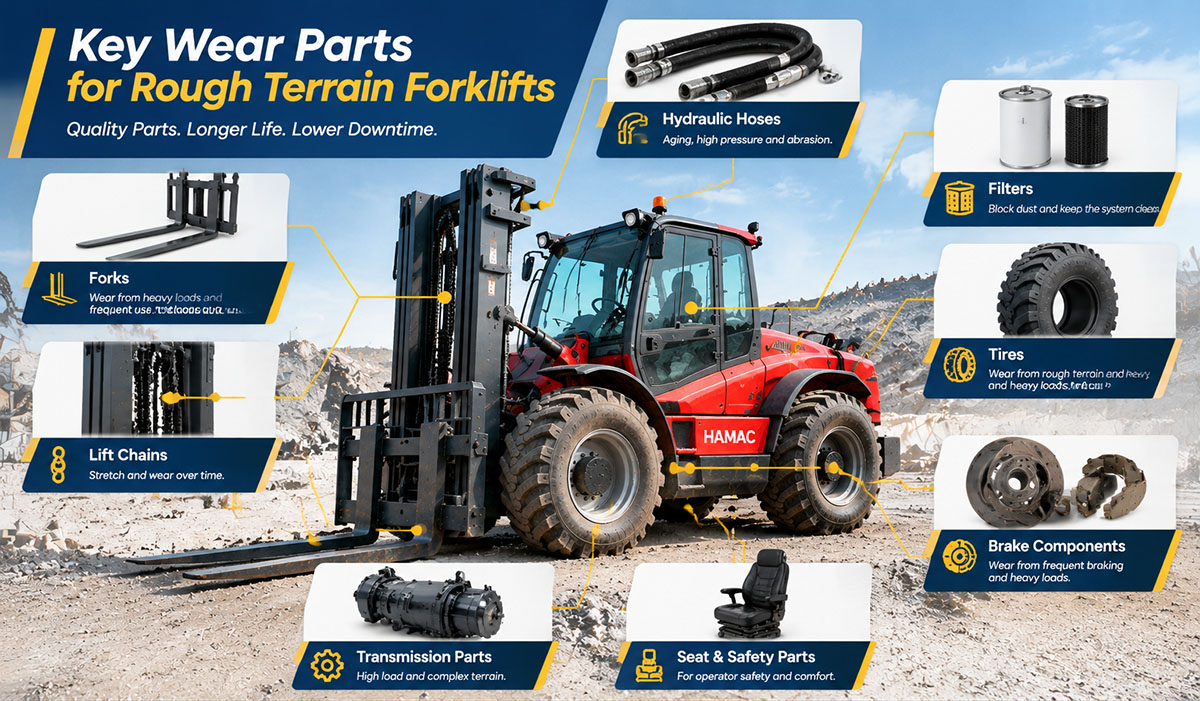
A clear division of work keeps the machine running and avoids voiding the warranty. Maintenance tasks generally fall into three tiers.
| Tier | Tasks | Notes |
|---|---|---|
| Operator level | Daily walkaround, fluid top-up, tire pressure, cleaning, visual inspection of forks, chains and hoses, lubrication of accessible grease points. | Requires training, not certification. |
| Site mechanic level | Filter and oil changes, brake adjustment, chain tensioning, battery maintenance. | Requires documentation of parts used and torque values. |
| Dealer or authorized technician level | Hydraulic pressure testing, brake system overhaul, mast and boom structural inspection, load chart verification, ECU diagnostics, safety valve calibration. | Often a condition of warranty coverage. |
Owners in regions without a local dealer can still stay within warranty by combining operator-level upkeep with remote support. For guidance on how attachments and capacity interact, read the JLG explanation of telehandler load capacity charts as a general reference, then apply your own model's chart.
A documented service history is a commercial asset, not paperwork. Warranty terms for rough terrain forklifts almost always require maintenance "in accordance with the manufacturer's schedule" with proof of parts and labor. A missing invoice is treated as a missed service.
The same records increase resale value. A used machine with a complete service log commands a higher price and sells faster because buyers can price the remaining component life instead of assuming the worst. The OSHA standard for powered industrial trucks also makes regular examination a legal requirement in many jurisdictions, which means your log doubles as compliance evidence.
The service schedule only works if the right parts and skills are available when you need them. This is the area where suppliers differ most, and it should weigh heavily in a purchase decision.
HAMAC ships a spare parts package with new machines and maintains stock of common service items for international customers. If your fleet operates far from service centers, ask for a parts list and lead times before you order, not after the first breakdown.
How often should a rough terrain forklift be serviced?
Baseline: daily operator checks, weekly lubrication and inspection, an engine oil service every 250 to 500 hours depending on duty, hydraulic and transmission service every 1,000 to 2,000 hours, and an annual full inspection. Reduce intervals in dusty, hot or heavily loaded operations.
Can I service my rough terrain forklift myself?
Yes for walkarounds, fluid top-ups, cleaning and lubrication. Oil, filter and brake work should be done by a trained mechanic, and hydraulic, structural and safety system testing belongs with a dealer or authorized technician, especially under warranty.
What voids a forklift warranty?
The most common causes are missed documented services, non-genuine filters and fluids, unauthorized attachments that change rated capacity, and structural modifications. Read the warranty terms before the first service, not after a claim.
How long do rough terrain forklift tires last?
Pneumatic tires on mixed sites typically last 2,000 to 4,000 hours; solid tires can last longer in puncture-heavy yards but wear faster under continuous overload. Tire life is a maintenance item, not a fixed number.
Send HAMAC your model, annual operating hours and typical site conditions. We will return a maintenance schedule tailored to your duty cycle, a list of stocked service parts, and a spare parts quote you can plan around.
Request a Service Schedule & Parts Quote
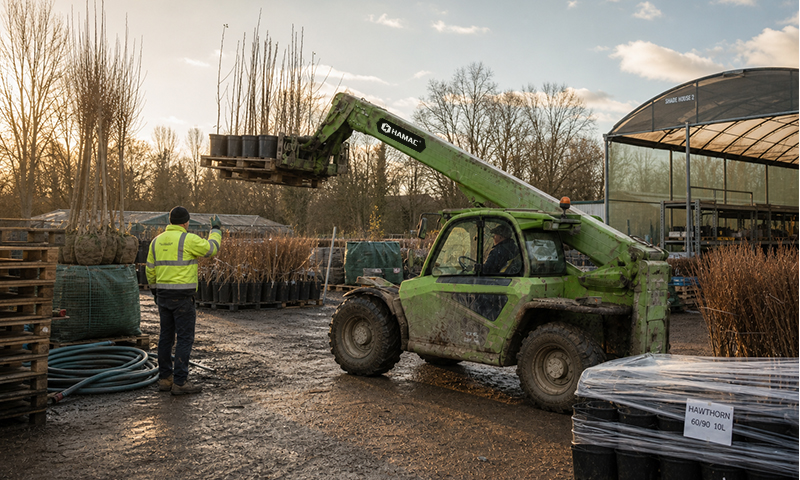
In forestry nurseries and tree logistics, a telehandler is used to move pallets of trees, load outgoi
Free Consultation >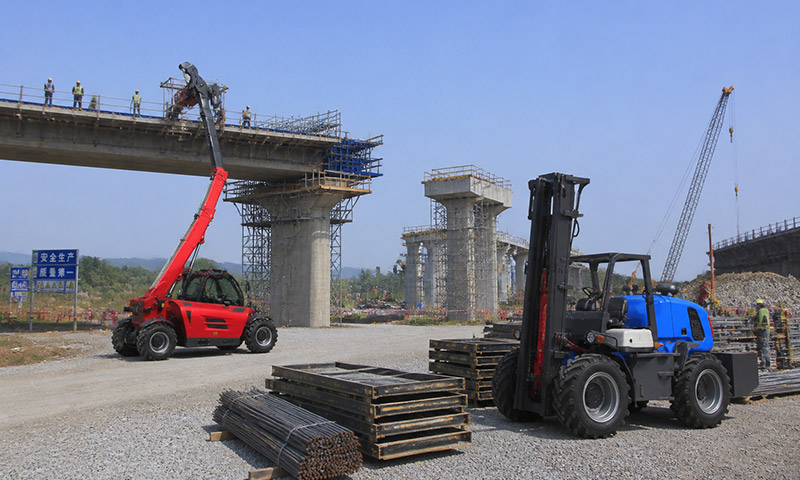
On a bridge construction project, FD50‑RT 5 ton rough terrain forklifts and an HT2506 2.5 ton teleh
Free Consultation >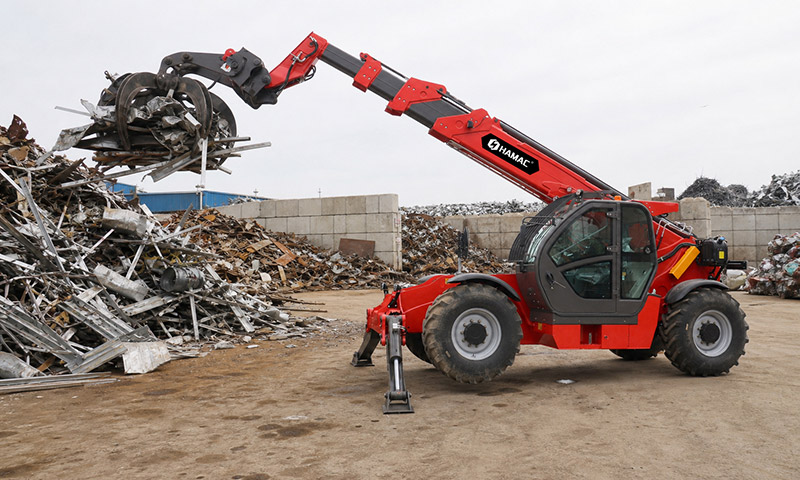
In a metal recycling yard, an HT4018 telehandler is used to sort, stack and load scrap metal and mixe
Free Consultation >Please fill out the form, and we can satisfy any of your needs including equipment selection, scheme design, technical support, or after-sales service. We will contact you as soon as possible.