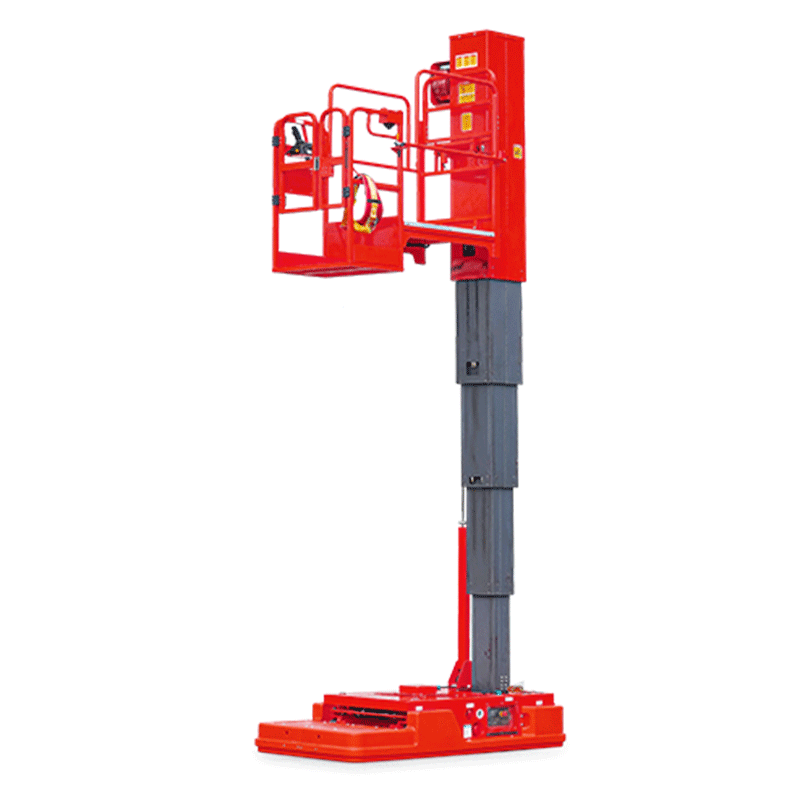
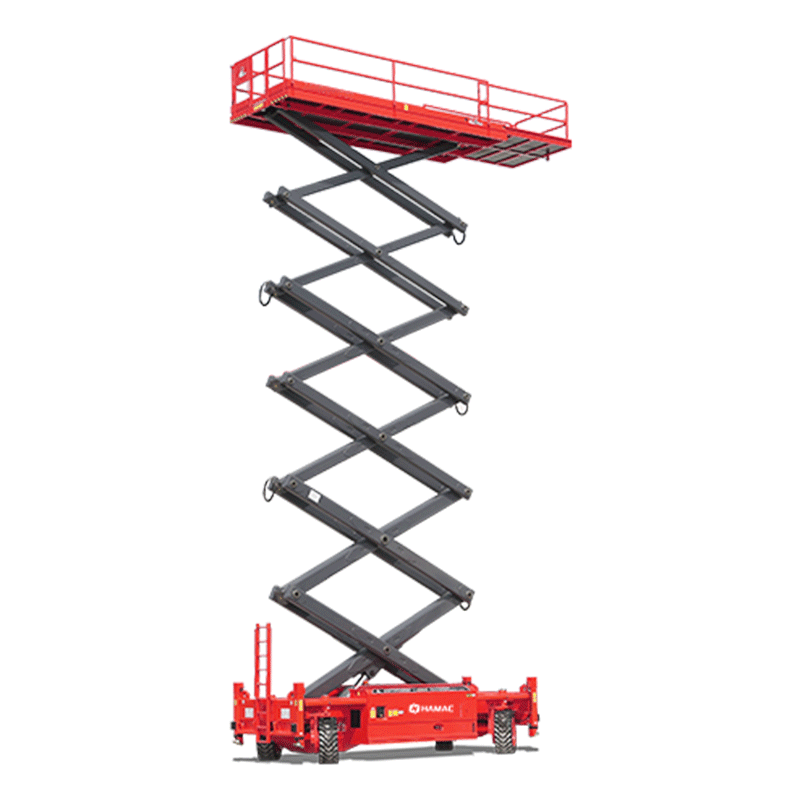
Scissor Lift
Aerial Work Platforms
Max. Working Height:6–32m
S.W.L (Safe Working Load):230-1000kg
Consult now






A common and costly misunderstanding among first-time telehandler buyers is assuming that the advertised "rated capacity" — for example, 3,500 kg or 5,000 kg — applies everywhere within the machine's working range. In reality, that number is almost always the maximum capacity achievable only with the boom fully retracted and the load close to the chassis. As the boom extends forward to reach its maximum horizontal distance, the safe lifting capacity can drop to a small fraction of the advertised figure.
As a manufacturer of the HT series telehandlers, HAMAC frequently clarifies this distinction for buyers comparing specifications across brands. This article explains why capacity drops so significantly at full reach, uses real industry data to illustrate the scale of the difference, and provides a practical checklist for avoiding overload mistakes.
A telehandler's stability is governed by the tipping moment created around its front axle, sometimes called the tipping line. As the boom extends forward and the load moves farther from the machine's chassis, the leverage exerted by that load increases dramatically, even if the load's actual weight stays the same. To prevent the machine from tipping forward, the manufacturer's rated capacity must decrease as reach and height increase. This is a matter of physics and machine stability, not a limitation specific to any one brand.
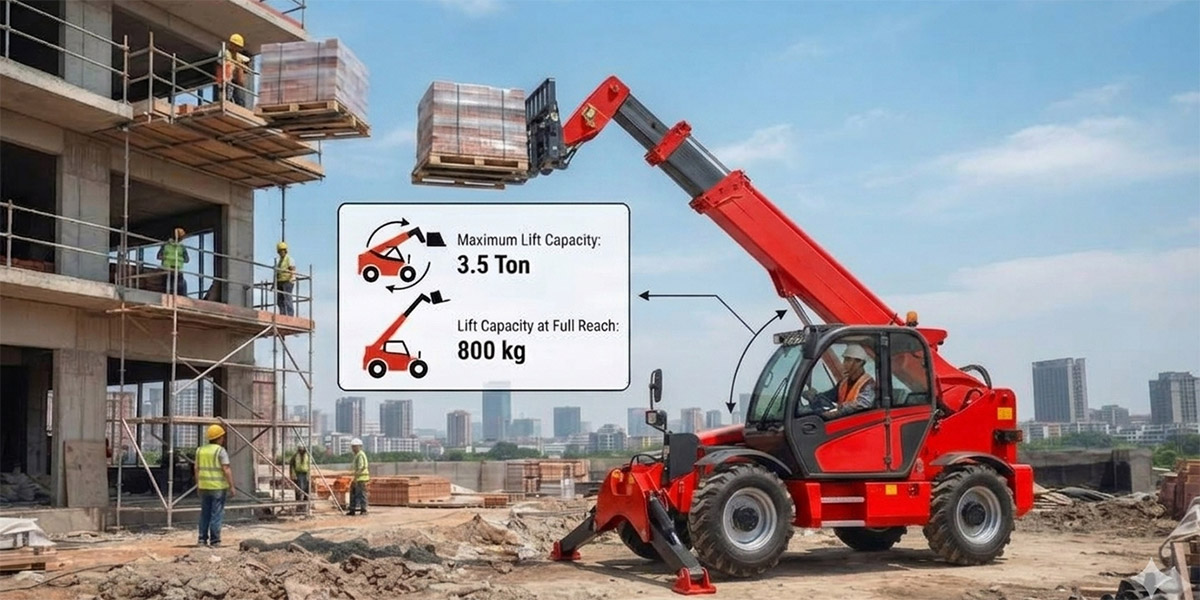
Manufacturer data illustrates just how large this gap can be. On one popular telehandler model equipped with forks, published performance figures show the following contrast between capacity at maximum height and capacity at maximum reach:
| Performance Point | On Stabilizers | On Tires |
|---|---|---|
| Capacity at Maximum Height | 4,100 kg | 2,500 kg |
| Capacity at Maximum Reach | 1,250 kg | 350 kg |
In this example, the capacity at full forward reach on tires is only about 14% of the capacity at maximum height on stabilizers. This is a normal and expected characteristic of telehandler design, but it is frequently overlooked by buyers who compare machines using only the single "maximum capacity" number listed in marketing materials.
| Variable | Effect on Capacity |
|---|---|
| Boom Extension (Reach) | Capacity decreases as the boom extends farther forward from the chassis |
| Lift Height | Capacity decreases as the load is raised higher, especially combined with reach |
| Load Center | Capacity decreases if the load's center of gravity sits farther from the fork face than the chart's standard load center |
Many telehandlers offer significantly higher rated capacity when outriggers or stabilizers are deployed, compared to lifting on tires alone. Stabilizers widen the machine's effective base of support, reducing the risk of tipping and allowing higher safe loads at the same height and reach. Operators and buyers should always confirm which configuration a quoted capacity figure applies to, since using the "on tires" capacity for a lift that requires the "on stabilizers" rating (or vice versa) is a common and dangerous mistake.
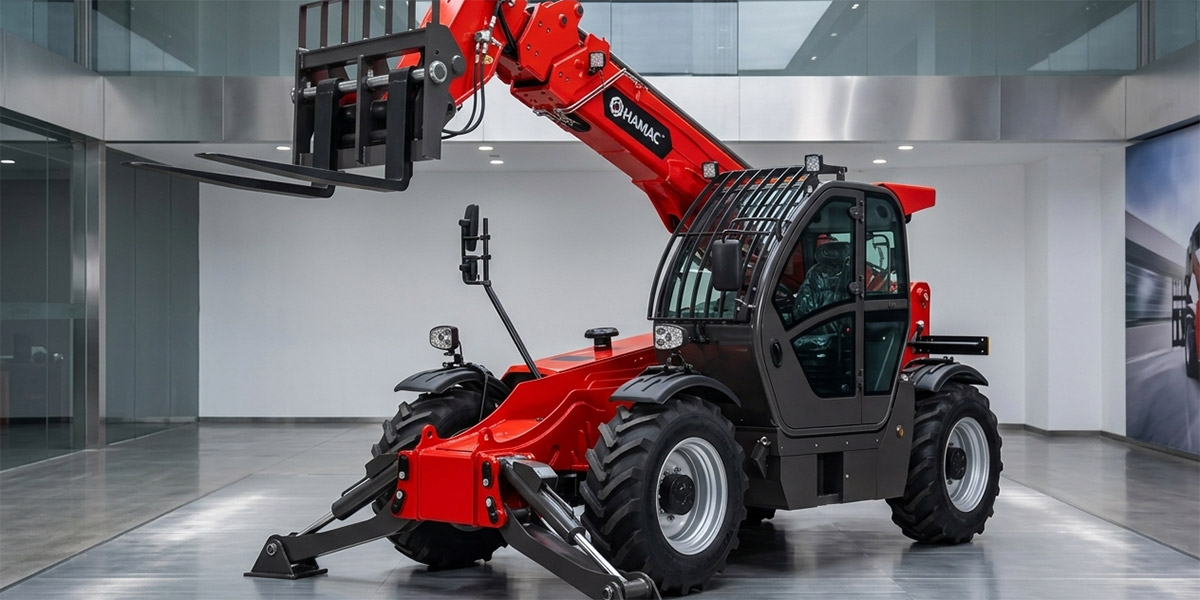
Buyers who select a telehandler based solely on its maximum rated capacity may find that the machine cannot actually perform the specific lift required at the jobsite — particularly tasks that involve placing materials at both height and distance, such as loading upper floors or reaching over obstacles. The correct approach is to identify the actual height and reach needed for the heaviest routine lift, then confirm the machine's charted capacity at that exact position, not its maximum advertised figure.
| Buyer Mistake | Consequence | Correct Approach |
|---|---|---|
| Comparing machines using only maximum rated capacity | May select an undersized machine for the actual task | Compare capacity at the specific height and reach required for the job |
| Assuming capacity is the same on tires and stabilizers | Overloading risk if stabilizers are not deployed | Confirm which configuration the required lift depends on |
| Ignoring load center differences | Unexpected reduction in actual safe capacity | Check load center against the chart's standard reference distance |
Send us your required lift height, forward reach, load weight and whether stabilizers can be deployed at your jobsite. Our team will confirm the exact safe lifting capacity for a HAMAC telehandler at that position before you commit to a machine.
Q1: Does a telehandler's advertised maximum capacity apply at full boom extension?
No. The advertised maximum capacity typically applies only with the boom retracted and the load close to the chassis. Capacity decreases significantly as the boom extends forward and upward.
Q2: How much less can a telehandler lift at full reach compared to its rated capacity?
The reduction varies by model, but industry examples show capacity at full reach can be as low as 10–15% of the capacity available at a lower, closer lifting position.
Q3: Why does capacity differ between stabilizers and tires?
Stabilizers widen the machine's base of support and reduce tipping risk, allowing a higher safe load at the same height and reach compared to lifting on tires alone.
Q4: How should I choose a telehandler if I need to lift materials at height and distance regularly?
Identify the actual height and reach needed for your heaviest routine lift, then check the load chart's capacity at that exact position — not the machine's maximum advertised rating — before selecting a model.
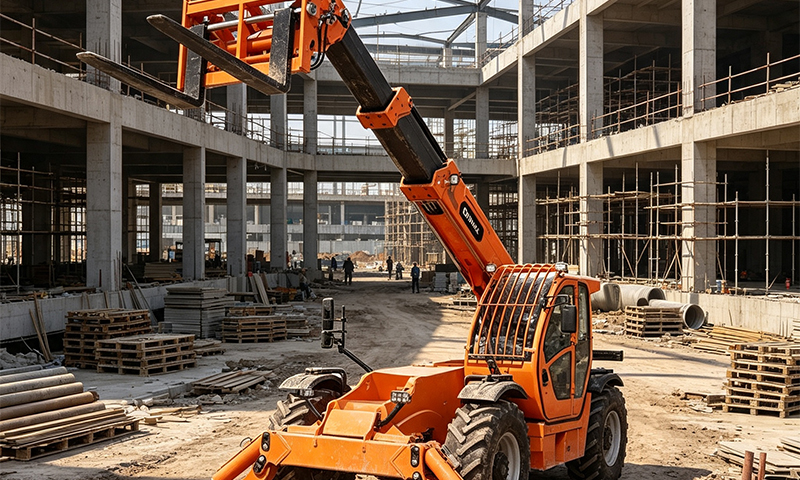
This case study describes how an HT5014 telehandler supports outdoor storage rack replenishment besid
Free Consultation >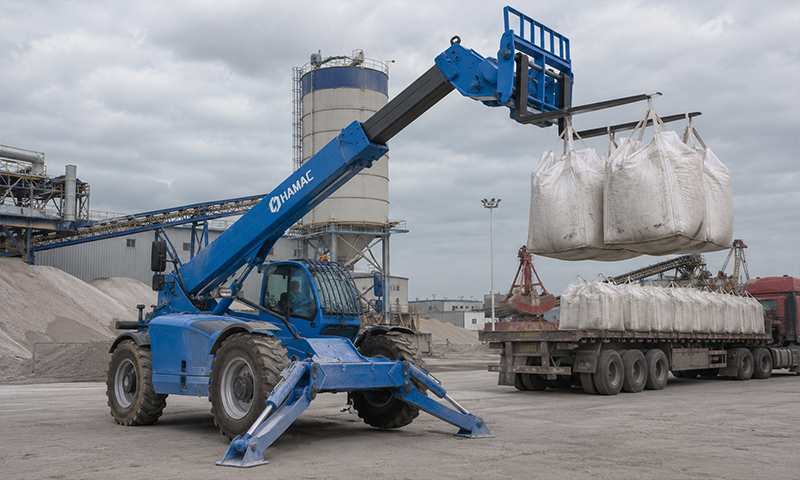
At inland port terminals, a high‑capacity telehandler is used to transfer bulk materials between tr
Free Consultation >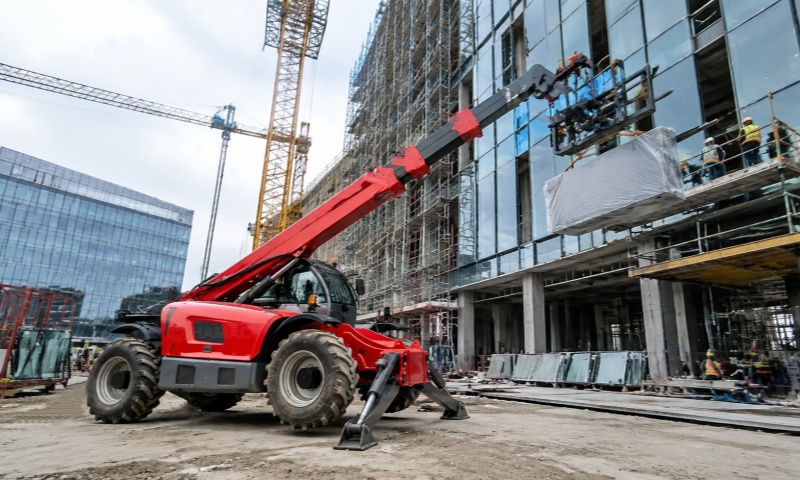
On a commercial building project, an HT4010 telehandler is used to assist facade and curtain wall ins
Free Consultation >Please fill out the form, and we can satisfy any of your needs including equipment selection, scheme design, technical support, or after-sales service. We will contact you as soon as possible.