FD50‑RTD
Rough Terrain Forklifts
Rated load capacity: 5,000 kg
Maximum lift height: approx. 4,500–6,000 mm
Consult now






Many buyers searching for off-road material handling equipment face the same question early in the purchasing process: should the project use a telehandler or a rough terrain forklift? Both machines are built for unpaved, uneven and demanding worksites, and both can lift heavy loads that standard warehouse forklifts cannot handle. However, they are engineered around different working principles, and choosing the wrong type often leads to reduced efficiency, unnecessary attachment costs or safety limitations on site.
As a manufacturer producing both product lines, HAMAC frequently helps international buyers compare these two machine types before finalizing a purchase. This guide breaks down the core differences in structure, lifting performance, applications and total cost of ownership so you can match the right machine to your actual jobsite conditions.
A telehandler (telescopic handler) uses an extending boom that can reach forward and upward, similar to a small mobile crane combined with a forklift. This design allows it to lift materials to significant heights and place loads at a horizontal distance from the machine's chassis, which is useful on construction sites where materials must be placed on upper floors or over obstacles.
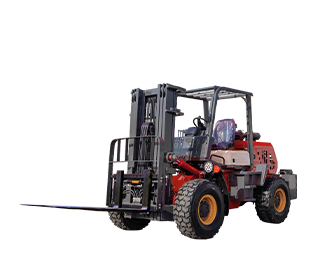
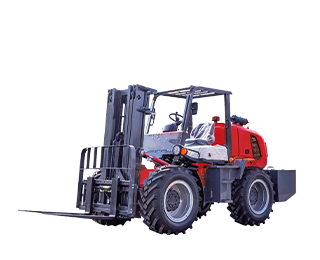
A rough terrain forklift uses a fixed vertical mast, similar to a conventional forklift, but is built with 4WD drivetrains, large off-road tires and reinforced chassis components for outdoor and unpaved environments. Its lifting path is vertical rather than extending outward, making it well suited for straightforward loading, unloading and stacking tasks on gravel, mud, soil or uneven ground.
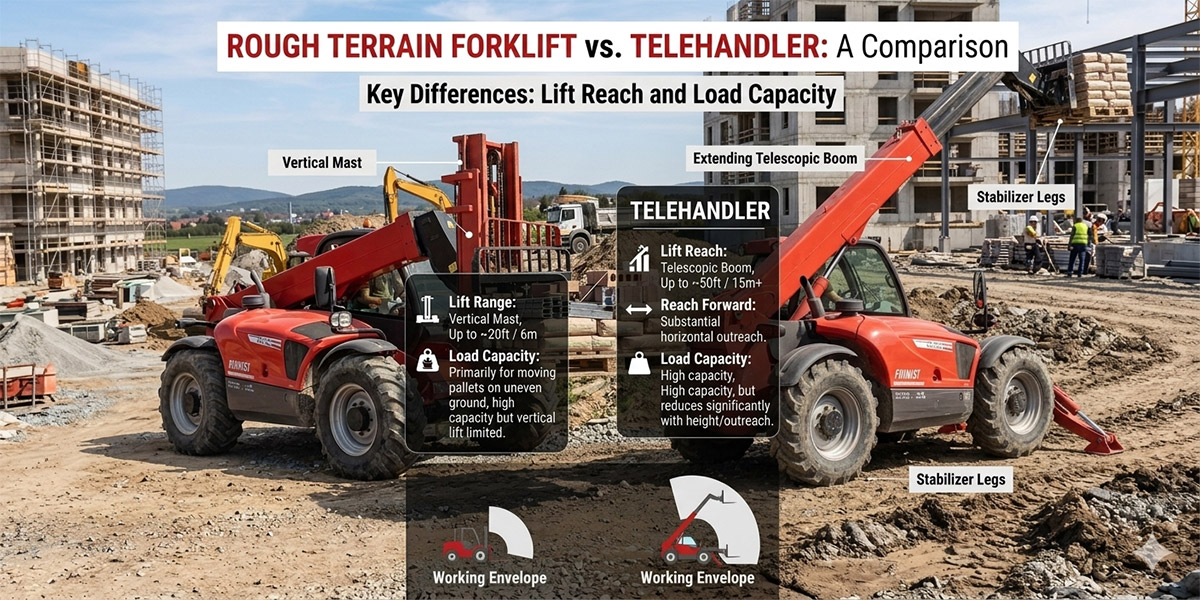
| Feature | Telehandler | Rough Terrain Forklift |
|---|---|---|
| Lifting Mechanism | Telescopic boom (extends forward and up) | Fixed vertical mast |
| Reach | Forward and elevated reach, up to 18+ meters on some models | Vertical lift only, no forward reach |
| Typical Lift Height | 6m–18m depending on model | 3m–6m depending on model |
| Load Placement | Can place loads at height and at a distance | Loads placed directly in front of the machine |
| Maneuverability | Larger turning radius on boom models | Often more compact, especially articulated models |
| Attachment Versatility | Forks, buckets, jibs, work platforms, grapples | Primarily pallet forks, some bucket and clamp options |
| Terrain Capability | 4WD rough terrain capable | 4WD rough terrain capable |
| Use Case | Better Choice | Why |
|---|---|---|
| Lifting building materials to upper floors | Telehandler | Boom reach places loads directly at height without cranes or hoists |
| Loading/unloading trucks and containers | Rough Terrain Forklift | Fast, simple vertical lift and straightforward maneuvering |
| Stacking pallets in outdoor yards | Rough Terrain Forklift | Efficient for repetitive straight-line stacking tasks |
| Placing steel structures or trusses during erection | Telehandler | Extended reach allows positioning at distance and height |
| Moving bagged cement, bricks or feed on uneven ground | Rough Terrain Forklift | Lower cost, simpler operation for straightforward transport |
| Reaching over obstacles, trenches or existing structures | Telehandler | Boom extension bypasses ground-level obstacles |
| Mining and quarry material handling | Rough Terrain Forklift | Higher load capacities available (up to 10 tons) for heavy components |
| Multi-purpose farm work (bales, feed, loading trailers) | Telehandler | Wide attachment compatibility for varied daily tasks |
Rough terrain forklifts, such as the HAMAC FD-RT series, are available in capacities from 3 tons up to 10 tons, making them a strong choice for mining, quarry and heavy industrial projects that require raw lifting strength on rough ground. Telehandlers, such as the HAMAC HT series, typically range from 2.5 to 5 tons in lifting capacity but compensate with much greater lift height and attachment versatility, including buckets, jibs, grapples and personnel work platforms.
If a project mainly needs heavy, straightforward vertical lifting, a rough terrain forklift usually offers better value. If a project requires flexibility across multiple tasks, extended reach or elevated placement, a telehandler is typically the more efficient investment.
| Factor | Telehandler | Rough Terrain Forklift |
|---|---|---|
| Initial Investment | Generally higher due to boom mechanism | Generally lower for equivalent capacity |
| Maintenance Complexity | More components (boom, extension cylinders) | Simpler mast-based structure |
| Task Versatility | High, multiple attachments and functions | Moderate, primarily pallet and bulk handling |
| Best Fit | Construction, agriculture, mixed-task sites | Mining, quarry, ports, heavy-duty logistics |
Every jobsite has different lifting height, reach, terrain and load requirements. Send us your required lifting capacity, maximum lift height, ground conditions and typical materials handled, and our engineers will recommend whether a telehandler, a rough terrain forklift, or a combination of both is the best fit for your project.
Q1: Can a rough terrain forklift do the same job as a telehandler?
No. A rough terrain forklift only lifts vertically, while a telehandler's telescopic boom can reach forward and upward, allowing it to place loads at height and at a distance that a rough terrain forklift cannot reach.
Q2: Which machine is cheaper to maintain, a telehandler or a rough terrain forklift?
Rough terrain forklifts generally have simpler mast-based structures with fewer moving components, making routine maintenance less complex compared to a telehandler's boom and extension system.
Q3: Can one machine replace the other on a mixed-use jobsite?
On sites with varied tasks — such as construction combined with material yard logistics — many operators use both machine types together, since each is optimized for different lifting patterns.
Q4: What capacity range is available for HAMAC telehandlers and rough terrain forklifts?
HAMAC telehandlers (HT series) range from 2.5 to 5 tons with lift heights up to 18 meters, while HAMAC rough terrain forklifts (FD-RT series) range from 3 to 10 tons with vertical lift heights up to approximately 6 meters.
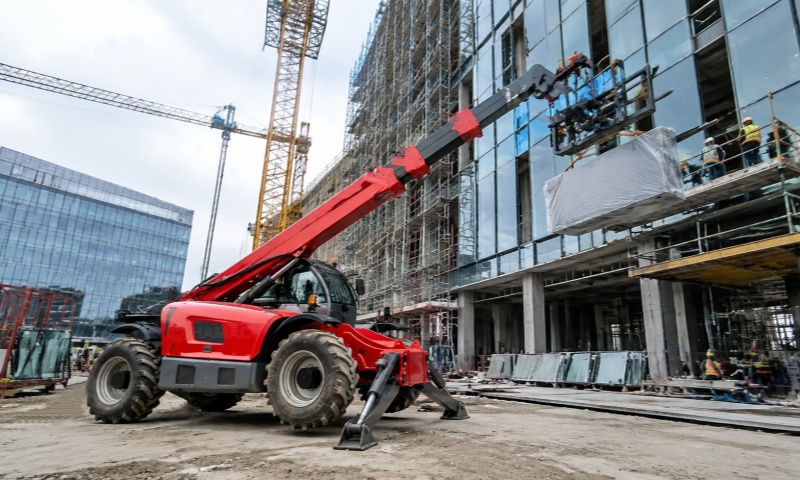
On a commercial building project, an HT4010 telehandler is used to assist facade and curtain wall ins
Free Consultation >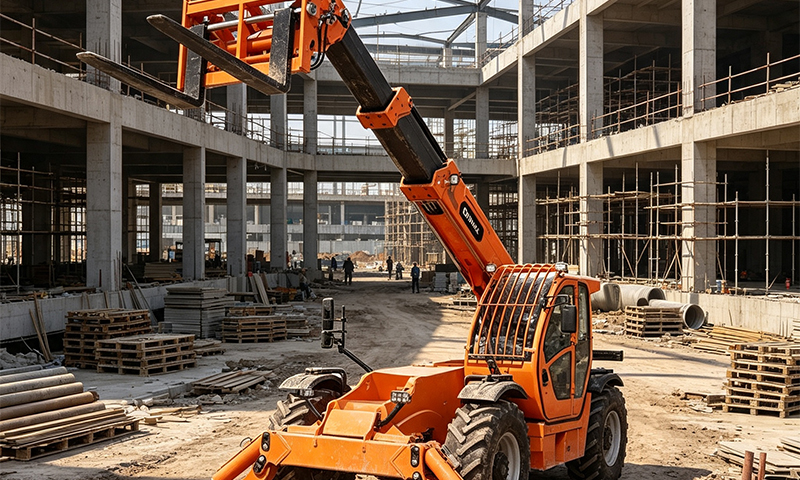
This case study describes how an HT5014 telehandler supports outdoor storage rack replenishment besid
Free Consultation >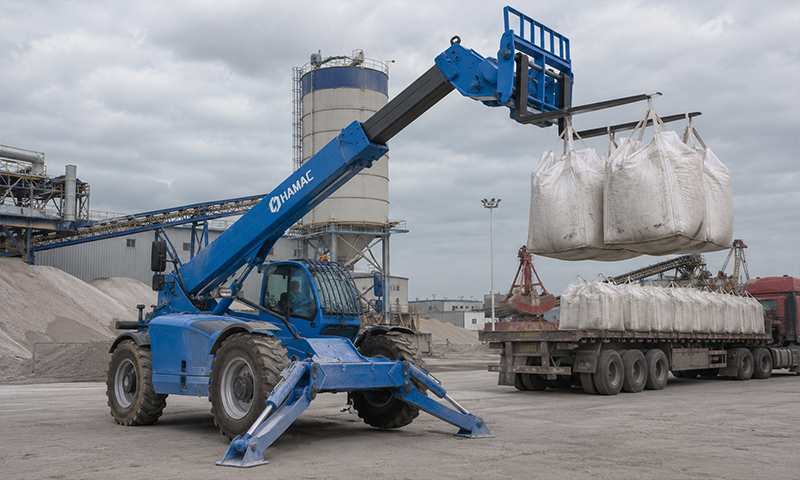
At inland port terminals, a high‑capacity telehandler is used to transfer bulk materials between tr
Free Consultation >Please fill out the form, and we can satisfy any of your needs including equipment selection, scheme design, technical support, or after-sales service. We will contact you as soon as possible.