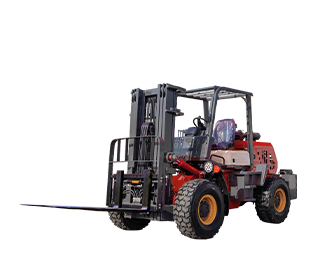
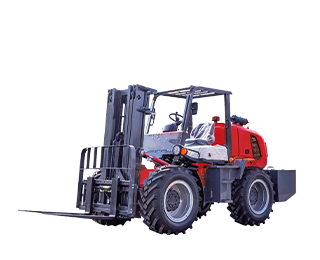
FD50‑RTD
Rough Terrain Forklifts
Rated load capacity: 5,000 kg
Maximum lift height: approx. 4,500–6,000 mm
Consult now






Choosing a rough terrain forklift is not simply a matter of picking the highest available lifting capacity. Buyers who select equipment based on capacity alone often end up with a machine that is oversized for the jobsite, difficult to maneuver in tight areas, or unable to reach the required lift height. A correct selection depends on several interacting factors: load weight, load center, mast height, ground conditions, tire type and available attachments.
As a manufacturer of the FD-RT series rough terrain forklifts, HAMAC works with buyers across construction, mining, agriculture and industrial sectors to match machine specifications to actual working conditions. This guide walks through the key decision points step by step.
Rated capacity is measured at a standard load center (commonly 500mm). If your loads are larger, longer or the center of gravity sits farther from the forks, the effective safe capacity is lower than the rated figure. Always confirm the actual load dimensions and weight distribution before selecting a capacity class, not just the maximum weight on paper.
| Capacity Range | Typical Load Type | Typical Worksite |
|---|---|---|
| 3 Ton | Bagged cement, bricks, agricultural supplies, general pallets | Farms, small construction sites, general outdoor logistics |
| 3.5–4 Ton | Heavy pallets, blocks, steel, concrete products | Construction sites, industrial yards, forestry operations |
| 5 Ton | Stone, timber, heavy cement pallets, machinery parts | Mining support, cement plants, stone yards |
| 6 Ton | Large pallets, pipes, heavy steel components | Mining, quarry, remote infrastructure |
| 10 Ton | Stone blocks, oversized machinery, heavy steel structures | Major mining operations, ports, heavy industry |
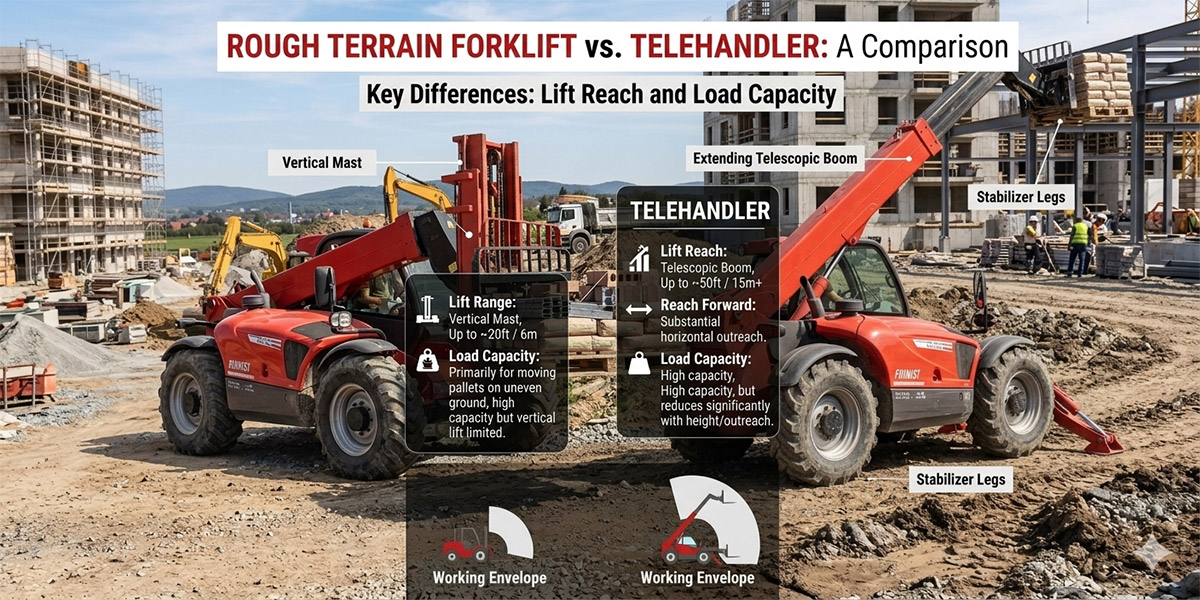
Rough terrain forklifts typically lift from 3 to 6 meters depending on the model. Buyers working under low-overhead structures, inside warehouses with outdoor yards, or near power lines and tree cover should consider low-mast configurations, which trade some lift height for a more compact working profile and better visibility.
| Configuration | Advantage | Best For |
|---|---|---|
| Standard 4WD Rough Terrain | Balanced traction and stability | General construction, agriculture, quarry work |
| Short-Wheelbase (RTS) | Tighter turning radius, easier maneuvering | Congested yards, tight aisles, busy work areas |
| Low-Mast (RTL) | Wider visibility, lower overhead profile | Mixed indoor-outdoor work, limited clearance areas |
| Articulated Frame | Compact footprint, tight-space agility | Confined access sites, farms, forestry |
Tires directly affect traction, stability and tire life on rough terrain. Pneumatic tires provide better shock absorption on uneven or rocky ground but are more vulnerable to punctures. Solid or foam-filled tires resist punctures and reduce downtime on sites with sharp debris, such as demolition areas or scrap yards, but transmit more vibration to the operator. Off-road tread patterns improve grip on mud, gravel and loose soil, while general-purpose patterns suit harder, more consistent surfaces.
| Mistake | Consequence | Correct Approach |
|---|---|---|
| Selecting capacity based on maximum load only | Reduced safe capacity at actual load center | Calculate capacity at your specific load center, not rated center |
| Ignoring mast height requirements | Inability to reach required stacking or loading height | Confirm maximum lift height against tallest stacking need |
| Choosing pneumatic tires for sharp-debris sites | Frequent punctures and downtime | Use solid or foam-filled tires in high-puncture-risk environments |
| Overlooking wheelbase and turning radius | Poor maneuverability in tight yards | Select short-wheelbase or articulated models for congested sites |
Send us your load weight, load center, required lift height, ground conditions and typical attachments needed. Our engineers will recommend a suitable HAMAC rough terrain forklift model and configuration for your project.
Q1: What capacity rough terrain forklift do I need for construction sites?
Most general construction sites use 3.5 to 5 ton rough terrain forklifts, depending on the weight of building materials and pallet loads being handled.
Q2: Should I choose pneumatic or solid tires for a quarry environment?
Solid or foam-filled tires are generally recommended for quarry and demolition sites due to the high risk of punctures from sharp debris and rocky ground.
Q3: What is the difference between a standard rough terrain forklift and a short-wheelbase (RTS) model?
An RTS model has a shorter wheelbase for a tighter turning radius, making it better suited to congested yards and tight aisles, while standard models offer more stability for open, heavy-duty applications.
Q4: Can rough terrain forklifts work on slopes and mud?
Yes, rough terrain forklifts are built with 4WD drivetrains, high ground clearance and off-road tires specifically to handle slopes, mud, gravel and uneven ground, though operators should always follow manufacturer slope-rating limits.
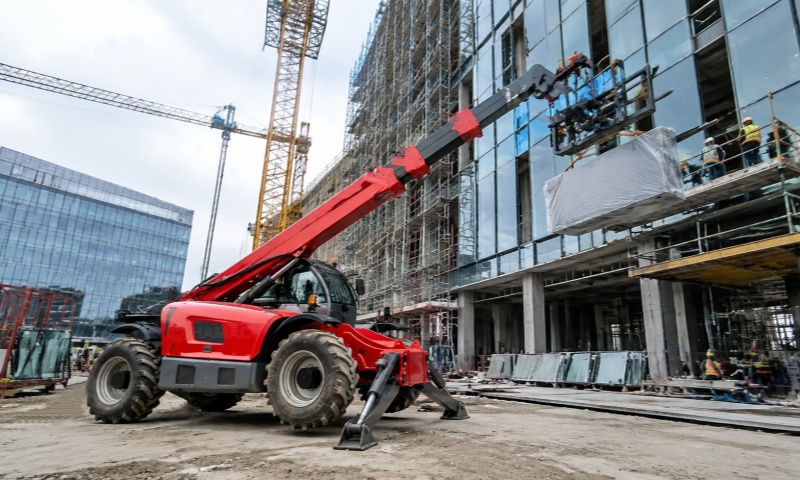
On a commercial building project, an HT4010 telehandler is used to assist facade and curtain wall ins
Free Consultation >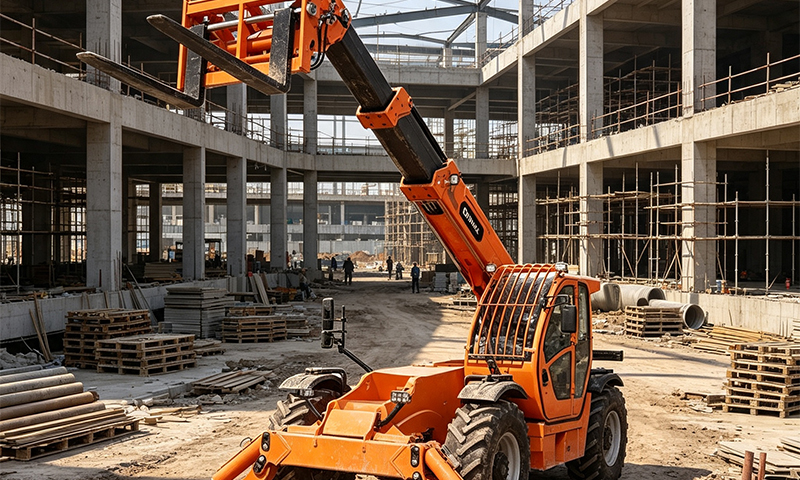
This case study describes how an HT5014 telehandler supports outdoor storage rack replenishment besid
Free Consultation >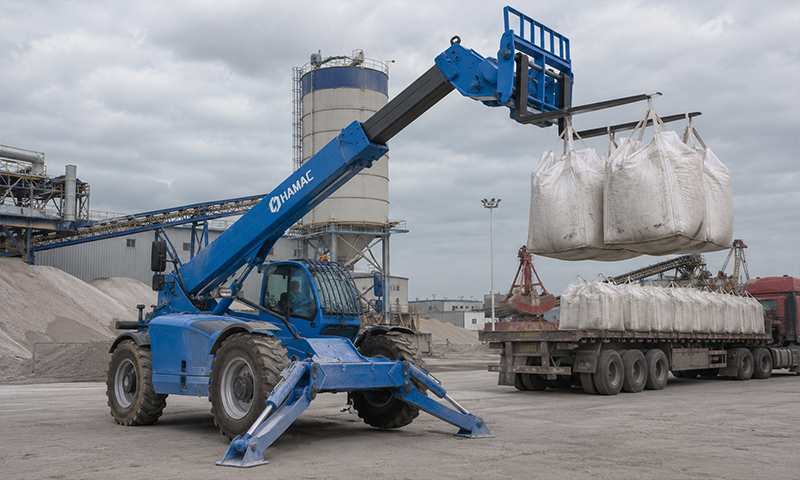
At inland port terminals, a high‑capacity telehandler is used to transfer bulk materials between tr
Free Consultation >Please fill out the form, and we can satisfy any of your needs including equipment selection, scheme design, technical support, or after-sales service. We will contact you as soon as possible.