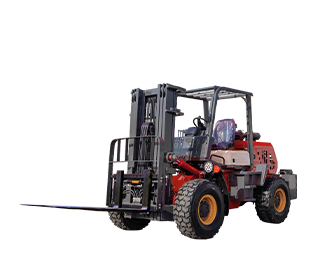
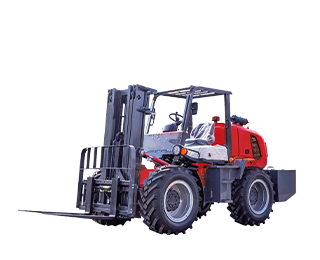
FD50‑RTD
Rough Terrain Forklifts
Rated load capacity: 5,000 kg
Maximum lift height: approx. 4,500–6,000 mm
Consult now






One of the most common questions buyers ask before purchasing a rough terrain forklift is whether a 3 ton or a 5 ton model is the right fit. On paper, the difference looks like a simple 2-ton gap in lifting capacity. In practice, the two capacity classes are built for different load profiles, different worksite layouts and different cost structures, and choosing the wrong one can mean paying for unused capacity or, worse, operating a machine that is undersized for daily loads.
As a manufacturer producing both 3 ton and 5 ton models in the FD-RT series, HAMAC regularly helps buyers work through this comparison using actual load data rather than assumptions. This guide explains the practical differences so you can match the correct tonnage to your project.
A forklift's rated capacity is measured at a standard load center, commonly 500mm from the face of the forks. If your loads are bulkier, longer, or the center of gravity sits farther from the forks, the safe working capacity drops below the rated figure. This is why many suppliers recommend selecting a forklift with meaningfully more rated capacity than your average load weight, rather than matching capacity to load weight exactly. A common industry approach is to size the forklift at roughly 1.5 to 1.7 times the actual load weight to leave a safety margin for load center, attachments and uneven ground conditions.
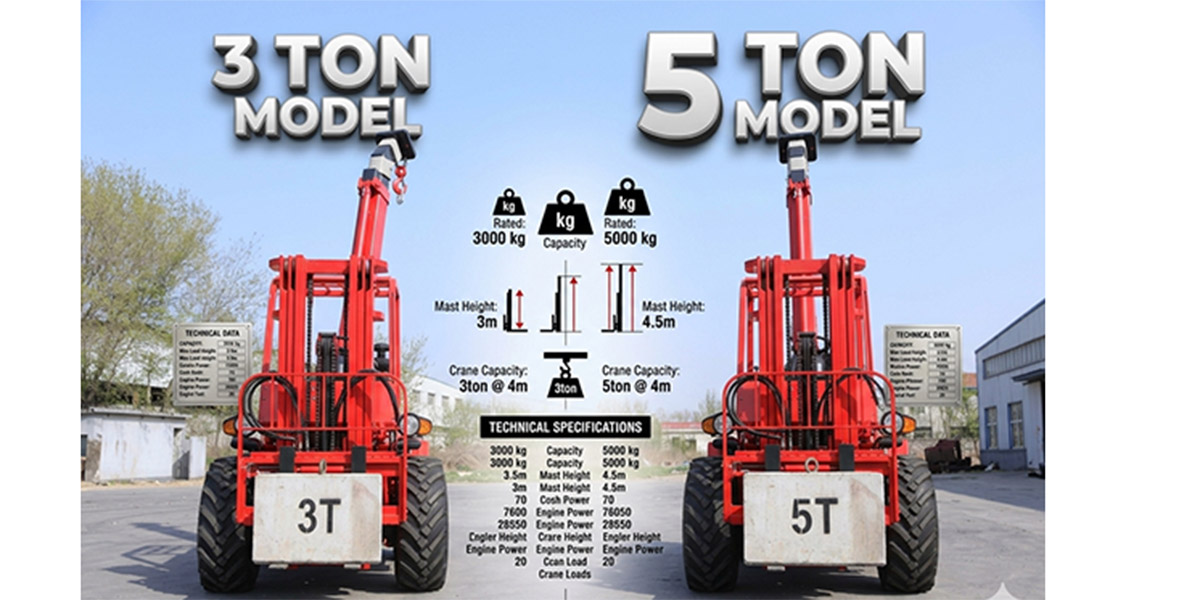
| Specification | 3 Ton Rough Terrain Forklift | 5 Ton Rough Terrain Forklift |
|---|---|---|
| Rated Capacity | 3,000 kg | 5,000 kg |
| Typical Lift Height | 3m–4.5m | 4.5m–6m |
| Chassis and Counterweight | Lighter, more compact | Heavier, reinforced frame |
| Maneuverability | Tighter turning radius, easier in confined spaces | Larger footprint, better suited to open yards |
| Fuel Consumption | Lower | Higher, due to larger engine and load |
| Typical Investment | Lower upfront cost | Higher upfront cost |
| Load Type / Task | Recommended Class | Why |
|---|---|---|
| Bagged cement, bricks, general pallets | 3 Ton | Loads typically fall within 1.5–2 ton range at standard load center, leaving adequate safety margin |
| Farm supplies, feed, small agricultural equipment | 3 Ton | Lighter loads and need for compact maneuverability in yards and barns |
| Stone, timber, heavy cement pallets | 5 Ton | Higher load weight and larger load centers common in stone and timber yards |
| Mining support and spare parts handling | 5 Ton | Machinery components are often heavy and irregular in shape, requiring extra capacity margin |
| Quarry material and aggregate handling | 5 Ton | Bulk density of stone and aggregate loads typically exceeds 3 ton class safe limits |
| Confined construction yards with frequent turning | 3 Ton | Smaller footprint improves maneuverability in tight spaces |
Both classes are equipped with 4WD drivetrains and off-road tires, but the 5 ton model's added weight generally improves stability on rougher, uneven ground and inclines when carrying heavy loads. On soft or muddy ground, however, the heavier 5 ton machine also exerts higher ground pressure, so tire selection and, in some cases, wider tire options become more important to avoid sinking or reduced traction.
| Factor | 3 Ton | 5 Ton |
|---|---|---|
| Purchase Price | Lower | Higher |
| Fuel Cost per Hour | Lower | Higher |
| Tire Wear on Rough Ground | Lower, due to lighter weight | Higher, due to greater load and chassis weight |
| Resale Value in Heavy-Duty Markets | Moderate | Generally stronger, due to broader industrial demand |
Send us your heaviest routine load weight, load center distance, ground conditions and required lift height. Our team will confirm whether a 3 ton or 5 ton HAMAC rough terrain forklift is the correct match for your project, or recommend an alternative configuration if needed.
Q1: How do I know if I need a 3 ton or 5 ton rough terrain forklift?
Compare your heaviest routine load weight and its load center distance against each model's rated capacity, and add a safety margin of roughly 30–50% rather than matching capacity to load weight exactly.
Q2: Does a 5 ton rough terrain forklift use significantly more fuel than a 3 ton model?
Yes, the 5 ton class typically has a larger engine and heavier chassis, resulting in higher fuel consumption per operating hour compared to the 3 ton class.
Q3: Can a 3 ton rough terrain forklift be used in a quarry?
It depends on the material being handled. Lighter bagged or palletized materials may be suitable, but bulk stone and aggregate loads generally exceed the safe working capacity of a 3 ton machine, making the 5 ton class the more common choice for quarry operations.
Q4: Is a 5 ton rough terrain forklift harder to maneuver than a 3 ton model?
Generally yes. The 5 ton class has a larger footprint and wider turning radius, making the 3 ton class preferable for confined yards and tight aisles where maneuverability is a priority.
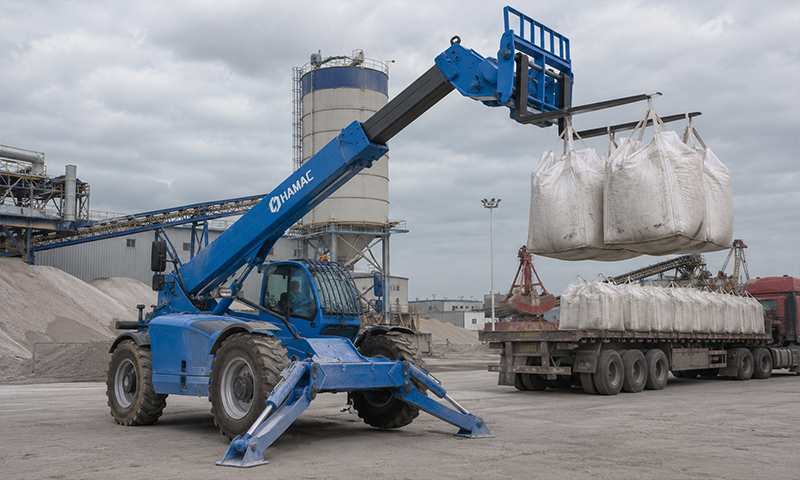
At inland port terminals, a high‑capacity telehandler is used to transfer bulk materials between tr
Free Consultation >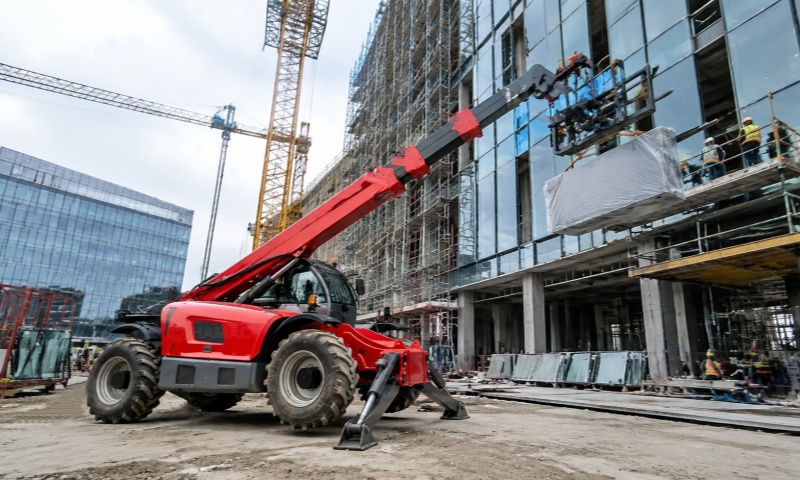
On a commercial building project, an HT4010 telehandler is used to assist facade and curtain wall ins
Free Consultation >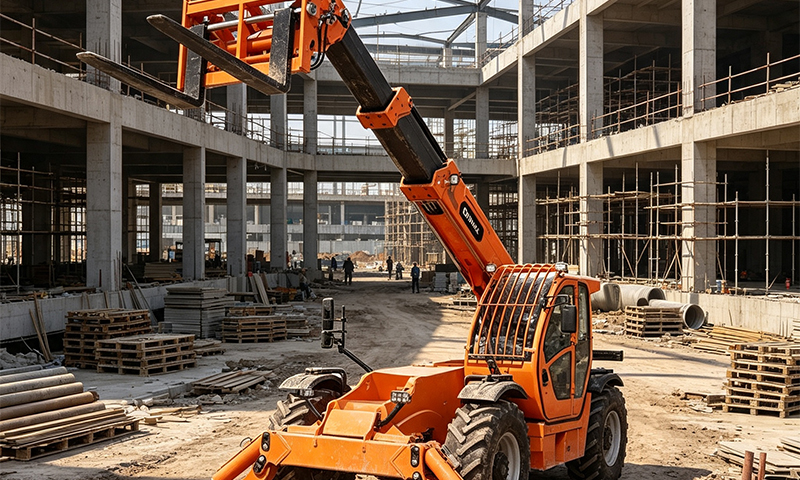
This case study describes how an HT5014 telehandler supports outdoor storage rack replenishment besid
Free Consultation >Please fill out the form, and we can satisfy any of your needs including equipment selection, scheme design, technical support, or after-sales service. We will contact you as soon as possible.