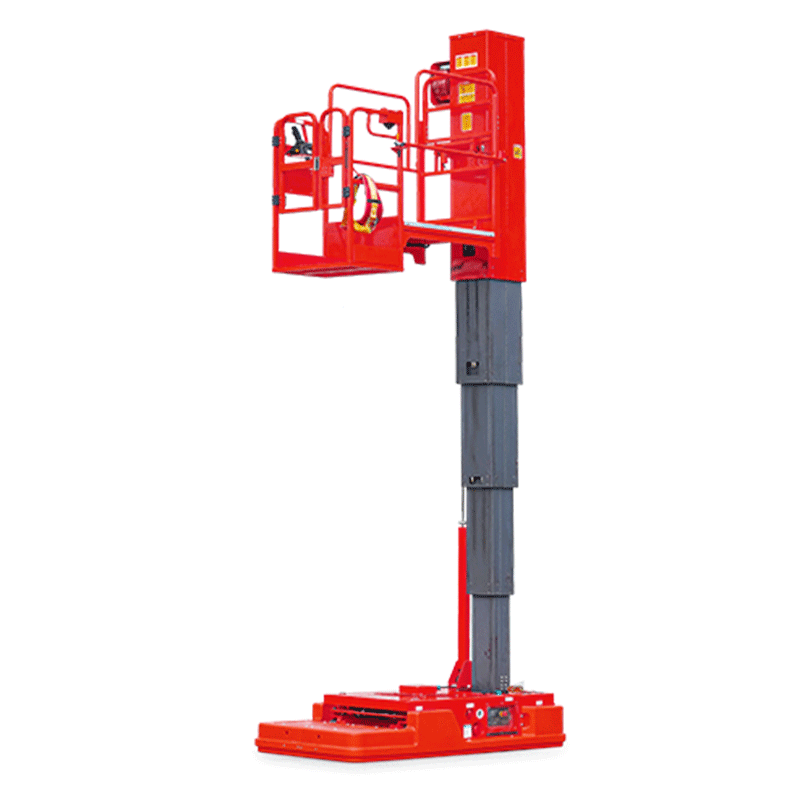
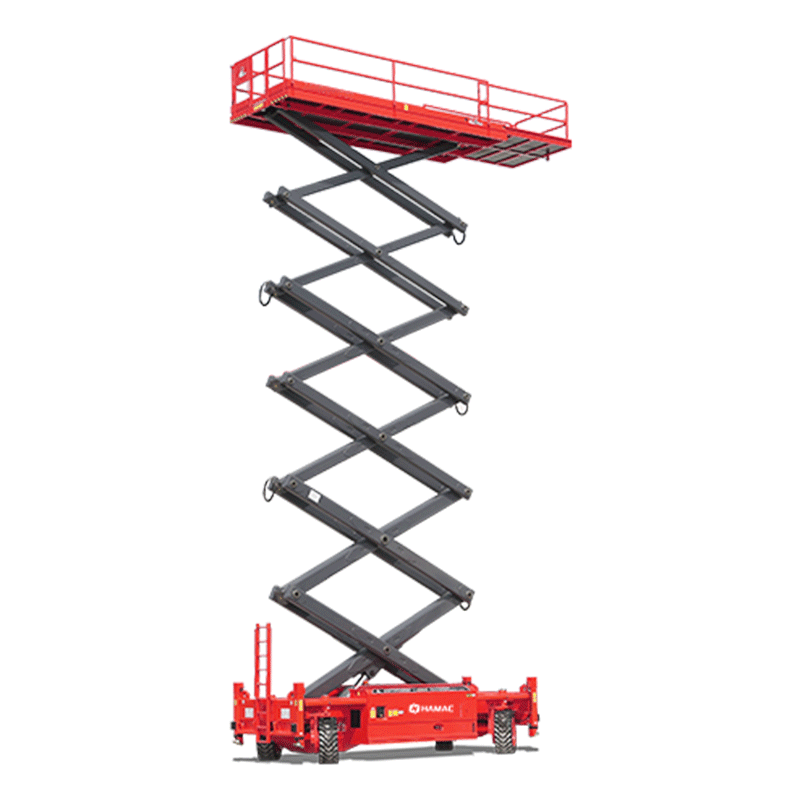
Scissor Lift
Aerial Work Platforms
Max. Working Height:6–32m
S.W.L (Safe Working Load):230-1000kg
Consult now






Buyers researching off-road material handling equipment frequently come across the term "4x4 rough terrain forklift" without a clear explanation of what makes it different from a standard forklift, or why the four-wheel drive system matters in practice. Understanding how a 4x4 rough terrain forklift actually works — not just what it is called — helps buyers evaluate whether it is the right equipment for their ground conditions.
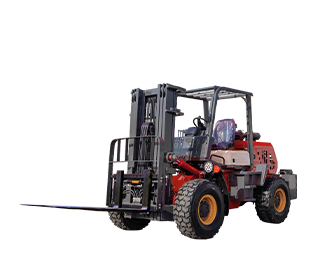
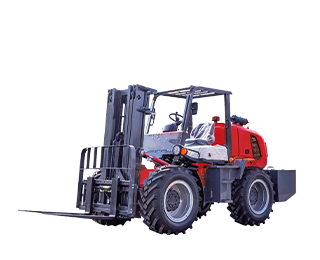
As a manufacturer of the FD-RT series 4x4 rough terrain forklifts, HAMAC frequently explains this technology to buyers comparing off-road equipment for construction, mining, agriculture and industrial sites. This guide explains the core mechanics in practical terms.
A 4x4 (four-wheel drive) rough terrain forklift delivers engine power to all four wheels simultaneously, rather than only two wheels as on a standard warehouse forklift. This doubles the surface area actively generating traction, which is critical when operating on gravel, mud, loose soil, sand or sloped ground where a two-wheel drive machine would struggle to maintain grip.
In a typical 4x4 rough terrain forklift, power from the diesel engine passes through a transmission to a transfer case, which splits torque between the front and rear axles. Each axle contains a differential, which allows the two wheels on that axle to rotate at different speeds — for example, when turning a corner, the outer wheel travels farther and must spin faster than the inner wheel.
On smooth, hard ground, this open differential design works well. However, on rough terrain, an open differential has a known weakness: if one wheel loses traction (for example, it lifts off the ground or sits on mud), the differential sends most of the engine's power to that slipping wheel, while the wheel with good grip receives very little power. The forklift can become stuck even though three of its four wheels still have traction.
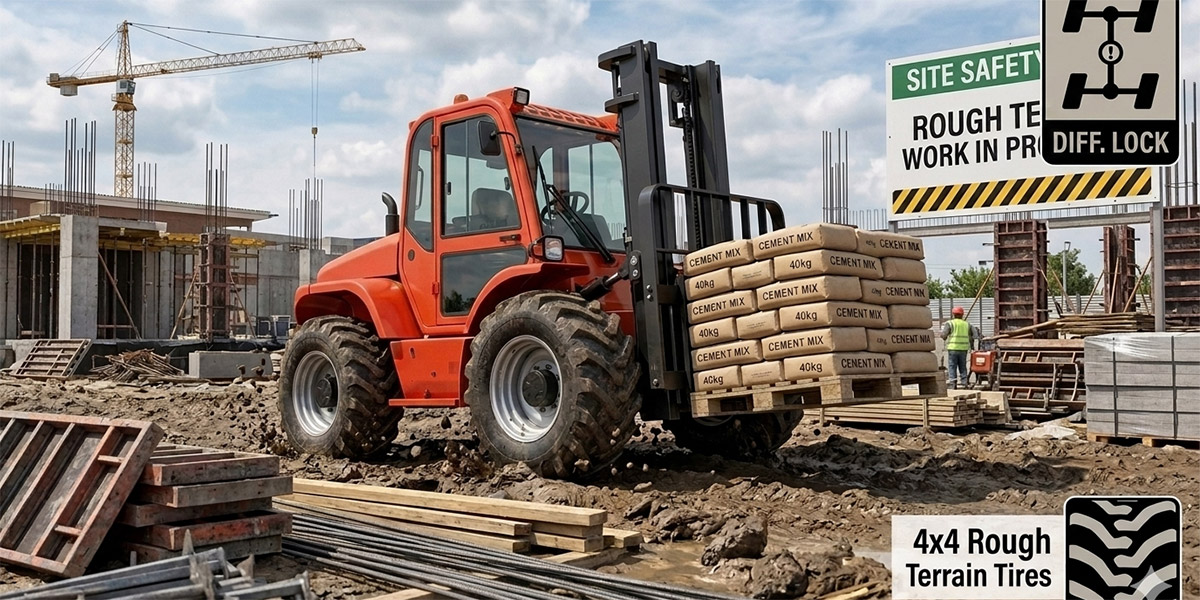
To solve this problem, many 4x4 rough terrain forklifts use limited-slip differentials (LSDs) or locking differentials. A limited-slip differential automatically redirects more torque to the wheel with better grip when it detects a difference in wheel speed, reducing the chance of getting stuck. A differential lock goes a step further by forcing both wheels on an axle to rotate at exactly the same speed once engaged, ensuring that even if one wheel is lifted off the ground or sitting on a low-traction surface, the opposite wheel continues to drive the machine forward.
This is the same core principle used in off-road trucks and 4x4 vehicles, adapted for the lifting and load-carrying demands of a forklift chassis.
| Feature | 2WD Rough Terrain Forklift | 4WD Rough Terrain Forklift |
|---|---|---|
| Driven Wheels | Two wheels (typically rear axle) | All four wheels |
| Traction on Mud/Gravel/Slopes | Limited, higher risk of wheel spin | Significantly improved, power distributed across all wheels |
| Tire Wear | Concentrated on driven wheels | More evenly distributed, generally lower overall wear |
| Fuel Consumption | Slightly lower | Slightly higher due to drivetrain losses, offset by fewer stuck situations |
| Best Use Case | Firmer, more consistent ground | Mud, loose soil, gravel, slopes and mixed terrain |
On a construction site with graded, compacted ground, the difference between 2WD and 4WD may be minor. But on a quarry access road, a muddy farm yard, a sloped mining site or a soil embankment after rain, a 4WD rough terrain forklift with a differential lock or limited-slip differential can continue working reliably where a 2WD machine would lose traction, spin its wheels and risk becoming stuck — leading to lost time and, in some cases, safety hazards from sudden loss of control.
| Ground Condition | 4WD Recommendation |
|---|---|
| Compacted gravel or paved outdoor yard | 2WD may be sufficient in low-demand cases |
| Mud, wet soil or seasonal rain-affected sites | 4WD strongly recommended |
| Sloped terrain or uneven mining/quarry access roads | 4WD strongly recommended |
| Sand or loose aggregate surfaces | 4WD strongly recommended |
| Mixed indoor-outdoor operation on firm ground | 2WD or 4WD depending on outdoor exposure |
Send us a description or photos of your working surface, along with your load weight and required lift height. Our team will confirm whether a standard 4x4 configuration or an enhanced traction option is the right fit for your site.
Q1: Is a 4x4 rough terrain forklift the same as a rough terrain forklift?
Most rough terrain forklifts are built with 4x4 drivetrains, but some manufacturers also offer 2WD variants for lighter-duty or firmer-ground applications. When buyers say "rough terrain forklift," they are usually referring to the 4x4 configuration.
Q2: What is the benefit of a differential lock on a rough terrain forklift?
A differential lock forces both wheels on an axle to rotate at the same speed, ensuring that if one wheel loses traction, the other wheel continues driving the machine forward instead of spinning uselessly.
Q3: Does 4WD increase fuel consumption significantly?
4WD systems have slightly higher drivetrain losses than 2WD, but this is generally offset by fewer stuck situations and more efficient power use on rough ground, especially in mud, slopes and loose soil.
Q4: Can a 4x4 rough terrain forklift work on steep slopes?
4x4 rough terrain forklifts are designed to handle moderate slopes found on typical construction, mining and agricultural sites, but operators should always follow the manufacturer's rated slope limits and load capacity charts for safe operation.
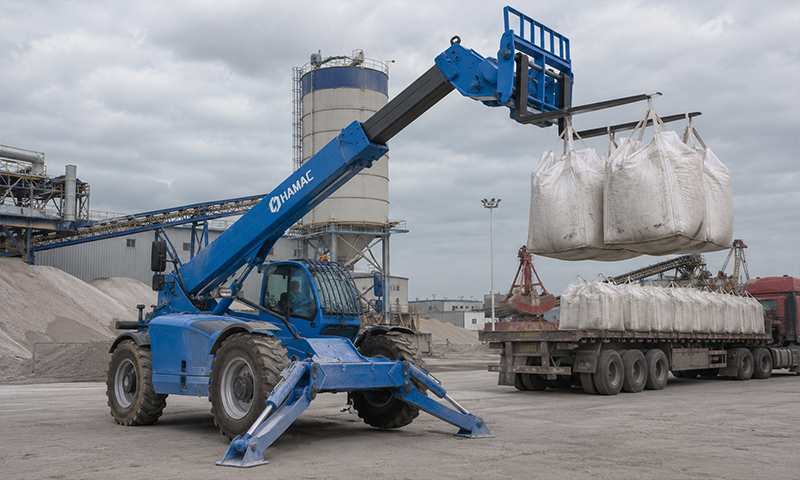
At inland port terminals, a high‑capacity telehandler is used to transfer bulk materials between tr
Free Consultation >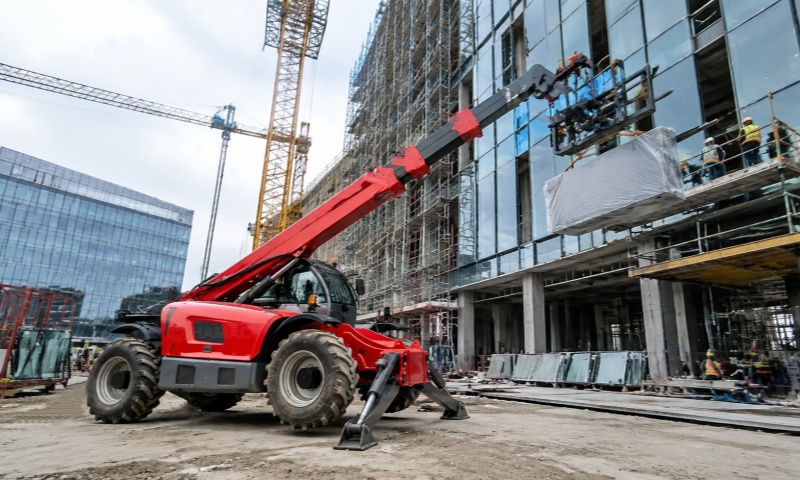
On a commercial building project, an HT4010 telehandler is used to assist facade and curtain wall ins
Free Consultation >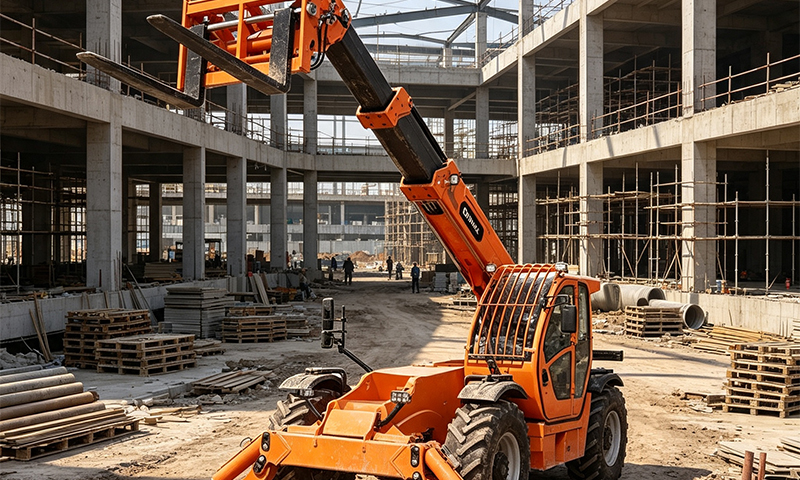
This case study describes how an HT5014 telehandler supports outdoor storage rack replenishment besid
Free Consultation >Please fill out the form, and we can satisfy any of your needs including equipment selection, scheme design, technical support, or after-sales service. We will contact you as soon as possible.