Crawler Type
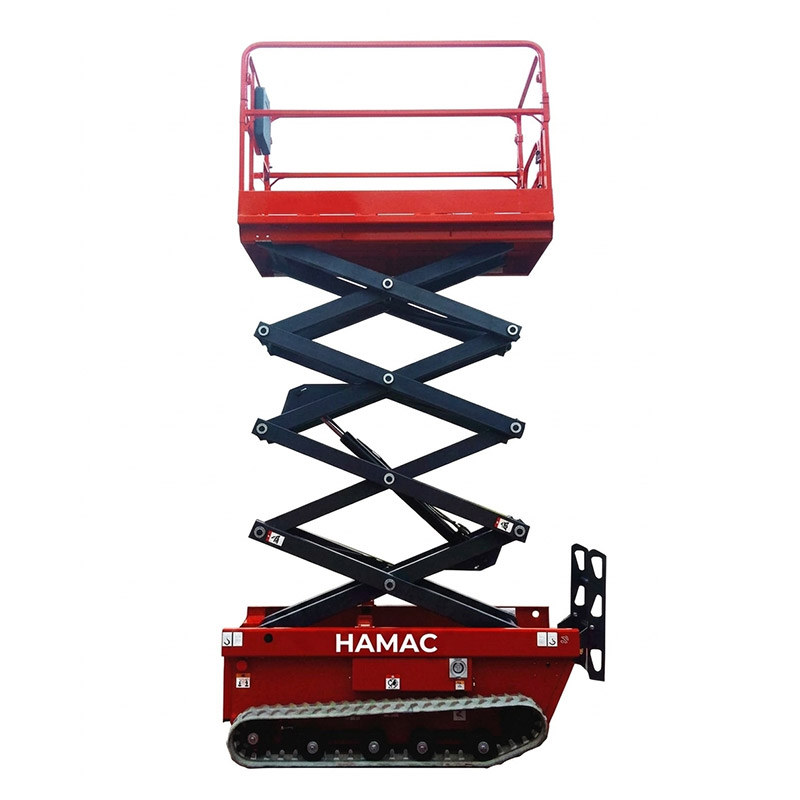
Aerial Work Platforms
Working Height:6.8-8.0m
Lifting Capacity:230kg
Consult now






Australian farms handle a wide range of materials every day, from livestock feed and fertilizer to seed pallets, hay supplies, agricultural equipment and packaged produce. These materials are often moved between storage sheds, livestock yards, loading areas and outdoor work zones.
However, farm environments are not always suitable for standard warehouse forklifts. Gravel tracks, muddy access roads, compacted soil, grass-covered yards and uneven outdoor surfaces can make daily material handling more difficult, particularly when heavy loads need to be transported across different areas of a property.
A rough terrain forklift for Australian farming operations provides a practical solution for outdoor material handling. With four-wheel drive, off-road tyres and a chassis designed for demanding ground conditions, it can help farmers move palletized supplies and heavy materials more efficiently.
In this guide, we explain how to match 4WD forklifts to Australian farm conditions, compare common agricultural applications and review HAMAC rough terrain forklift models for different farm material handling requirements.
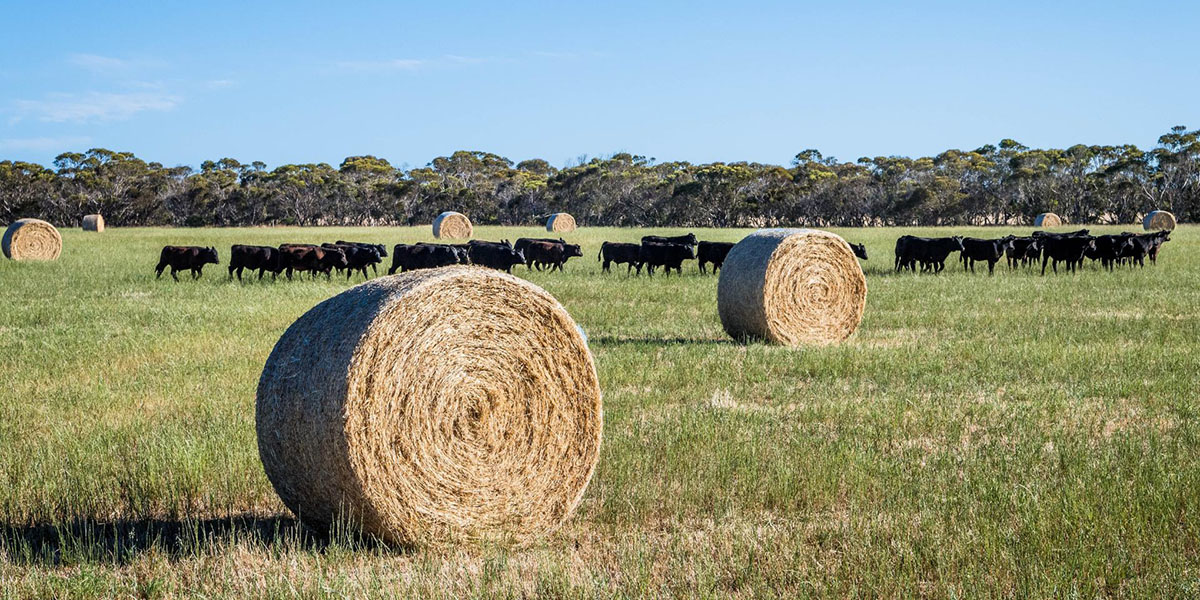
Australian agriculture includes livestock production, grain and broadacre farming, hay production, horticulture and mixed farming operations. Each type of farm has different material handling requirements, but many share one challenge: moving heavy loads across outdoor working areas.
Livestock farms regularly handle feed bags, hay supplies, fertilizer, mineral supplements, fencing materials and maintenance equipment. These materials may be stored in sheds and transported to feeding areas or livestock handling facilities.
A rough terrain forklift for livestock farms can help move palletized feed, fertilizer bags and farm supplies across gravel yards, compacted soil and other unpaved working areas. Four-wheel drive and suitable off-road tyres can improve traction when working on outdoor farm tracks.
For livestock operations, buyers should consider the weight of feed pallets, the condition of access tracks, the distance between storage and feeding areas, and whether the machine needs to enter low-clearance sheds.
Grain and broadacre farms often require the movement of seed pallets, fertilizer bags, agricultural inputs, machinery spare parts and packaged materials. During planting and harvesting periods, efficient loading and unloading can help keep farm operations organized.
A 4WD forklift for grain farms can support material handling around machinery sheds, storage buildings and outdoor loading areas. When selecting a machine, consider pallet dimensions, maximum load weight, ground conditions and available turning space.
Dust exposure is another important consideration. Grain storage and harvesting areas may expose machinery to dust and crop residue, making air filtration and cooling system maintenance important parts of the equipment selection process.
Hay and fodder businesses need to move baling supplies, feed materials, wrapped products and other agricultural goods between production areas and storage yards.
A rough terrain forklift can transport suitable palletized materials and compatible loads across outdoor storage areas. For irregularly shaped bales, the correct bale-handling attachment must be selected according to bale size, weight and machine compatibility.
For frequent high-level stacking of large hay bales or placing feed over fences, a telehandler may be a more suitable option because of its telescopic boom and extended reach. Explore HAMAC telehandlers for agricultural bale handling and feed storage.
Nurseries and horticultural operations move plant trays, growing media, fertilizer, pots, packaged products and other supplies between greenhouses, outdoor growing areas and storage facilities.
A farm forklift for nursery operations can support pallet handling on suitable gravel paths, compacted ground and outdoor working areas. Operators should consider aisle width, turning space, surface protection and the dimensions of plant pallets before choosing a forklift.
Learn more about rough terrain forklift applications in horticulture and greenhouse supply operations.
| Farm Type | Typical Materials | Forklift Applications |
|---|---|---|
| Livestock Farms | Feed bags, hay supplies, fertilizer, fencing materials | Moving feed and farm supplies around outdoor yards |
| Grain and Broadacre Farms | Seed pallets, fertilizer, spare parts, packaged materials | Loading, unloading and transporting agricultural supplies |
| Hay and Fodder Operations | Baled products, feed materials, palletized supplies | Moving suitable loads around storage and loading areas |
| Horticulture and Nurseries | Plant trays, growing media, pots, fertilizer | Moving pallets between growing and storage areas |
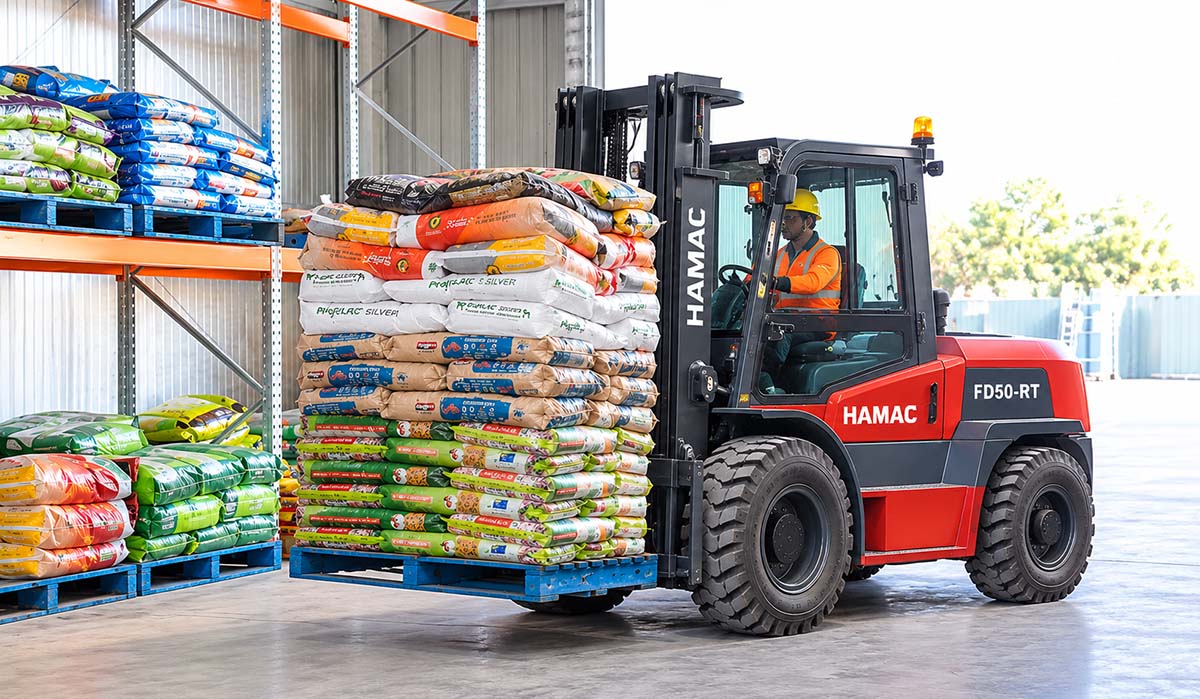
Choosing a rough terrain forklift for an Australian farm requires more than comparing rated load capacities. Farm operators should evaluate ground conditions, traction requirements, ground clearance, tyre configuration, lifting height, load center and turning space before selecting a machine.
A forklift designed for outdoor material handling should match the actual farm environment, including seasonal changes in soil conditions and the distance between storage sheds, livestock yards and loading areas.
Livestock farms and mixed farming properties may have unpaved access roads, soft soil, grass-covered yards and muddy sections after rainfall. These surfaces can reduce tyre grip and make it difficult for a conventional warehouse forklift to travel safely with a load.
For these conditions, a 4WD rough terrain forklift is worth considering. Four-wheel drive distributes traction across all four wheels and can improve mobility on loose or uneven surfaces when used with suitable off-road tyres.
When comparing agricultural forklifts, check:
For example, the HAMAC FD35-RTS uses a 4WD articulated configuration and lists approximately 300–350 mm of central ground clearance. Its listed front tyre specification is 16/70-20, with 10.0/75-15 rear tyres. These specifications provide useful reference points when evaluating an outdoor farm handling application.
However, 4WD does not mean that a forklift can operate safely in every muddy field. Deep mud, waterlogged soil and weak ground may still require a different route or a more suitable machine.
Farm tracks may contain wheel ruts, stones, compacted soil, drainage channels and changes in ground level. Ground clearance determines how much space is available between the machine's lowest components and the ground.
A forklift with insufficient clearance may contact raised ground or obstacles when travelling across uneven surfaces. Tyre dimensions and tread design also affect traction, rolling resistance and the machine's ability to travel over rough ground.
| Parameter | Why It Matters on Farms | What Buyers Should Check |
|---|---|---|
| Ground clearance | Helps reduce contact with ruts, stones and raised ground | Lowest chassis point and mast clearance |
| Tyre size | Affects ground contact, clearance and travel characteristics | Front and rear tyre dimensions |
| Tread pattern | Influences grip on gravel, soil and muddy surfaces | Off-road tread design and tyre condition |
| Drive system | Determines how traction is delivered to the wheels | Permanent or selectable 4WD configuration |
| Machine operating weight | Influences ground pressure and soil disturbance | Service weight and tyre load specifications |
For farms with narrow access routes or uneven storage yards, buyers should also check the overall machine width, wheelbase and turning radius. These dimensions determine whether the forklift can move around buildings, feed storage areas and farm equipment without excessive repositioning.
Engine power is an important consideration when a rough terrain forklift regularly transports heavy materials over outdoor routes. Diesel engines provide power for travel, hydraulic lifting and other machine functions.
However, engine power alone does not determine whether a forklift can safely operate on a particular slope. Buyers should also evaluate the manufacturer's gradeability rating, load condition, tyre traction, braking system, ground surface and operating direction.
Do not interpret a maximum gradeability figure as a recommended operating slope for every farm. A loaded forklift travelling across a side slope presents different stability risks from a machine travelling straight up or down a slope.
For farms with sloping access roads, operators should obtain the manufacturer's operating guidance and assess the actual route before use.
Dry farm tracks, grain storage yards and harvesting areas can expose machinery to airborne dust, chaff and crop residues. These materials may accumulate around air intake systems, radiators and other cooling components.
When selecting a diesel forklift for agricultural use, check:
For farms with heavy dust exposure, a suitable maintenance schedule is just as important as the initial machine specification.
Farm buildings, machinery sheds, feed storage areas and loading zones do not always provide the same turning space as a large industrial yard. A forklift that can handle the required load may still be unsuitable if it cannot turn or reposition safely in the available space.
Before selecting a model, compare overall width, wheelbase, turning radius, fork length and aisle dimensions. Short-wheelbase articulated models may be worth considering for compact yards, while larger machines may require wider turning areas.
| Site Condition | Important Machine Dimensions | Selection Consideration |
|---|---|---|
| Narrow shed entrance | Overall width and overhead height | Confirm clear door dimensions and machine clearance |
| Compact outdoor yard | Wheelbase and turning radius | Consider a compact or short-wheelbase model |
| Uneven farm track | Ground clearance and tyre size | Check obstacles, ruts and ground surface |
| High storage racks | Mast height and residual capacity | Check load chart at the required lifting height |
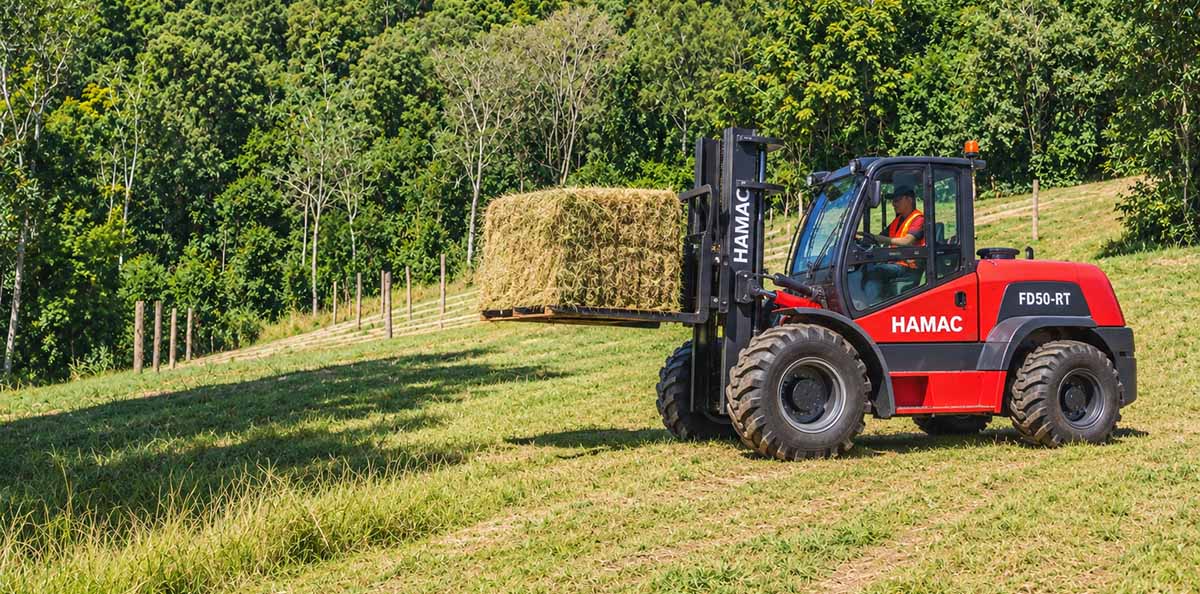
HAMAC offers several rough terrain forklift configurations for different outdoor load-handling requirements. The following models provide a practical starting point for comparing agricultural applications.
The HAMAC FD30-RT 3 ton rough terrain forklift is a model to evaluate for routine farm material handling where the main tasks involve feed pallets, fertilizer bags, seed supplies and general agricultural materials.
| Specification | FD30-RT |
|---|---|
| Rated load capacity | 3,000 kg |
| Maximum lift height | 4,500 mm |
| Drive configuration | 4WD rough terrain |
| Power type | Diesel |
Recommended farm applications:
The FD30-RT is worth considering when the heaviest regular loads fall within its rated capacity and the required lifting configuration has been confirmed through the manufacturer's load chart.
View HAMAC FD30-RT 3 Ton Rough Terrain Forklift
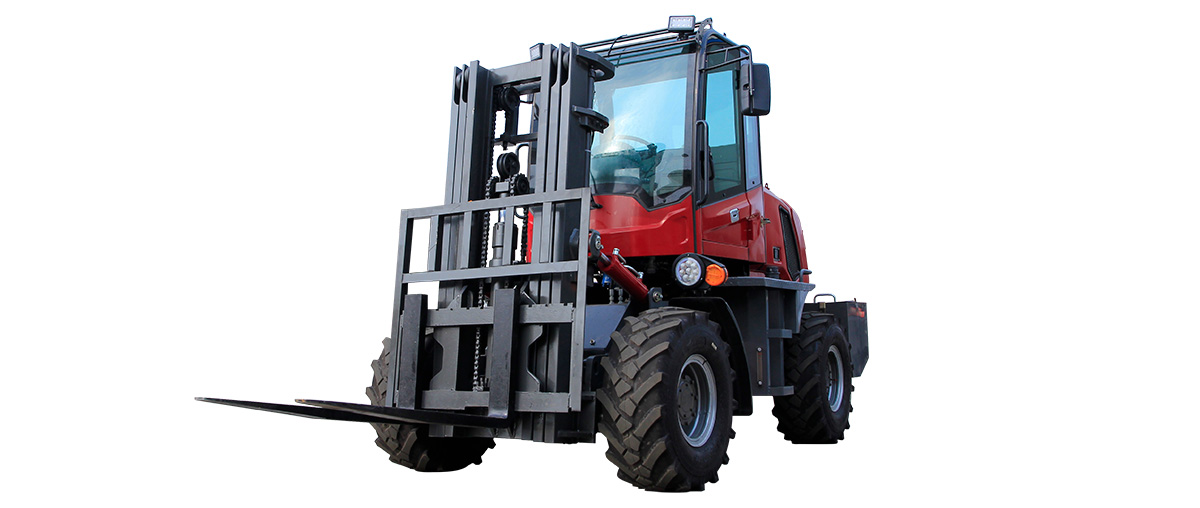
The HAMAC FD35-RTS 3.5 ton rough terrain forklift is designed for outdoor material handling where load capacity and manoeuvrability are both important.
Its short-wheelbase articulated configuration is particularly relevant to farms with restricted access between buildings, machinery, storage areas and loading zones.
| Specification | FD35-RTS |
|---|---|
| Rated load capacity | 3,500 kg |
| Load center | 500 mm |
| Maximum lift height | 4,500 mm |
| Engine power | 48 kW diesel |
| Drive configuration | 4WD articulated |
| Central ground clearance | Approx. 300–350 mm |
| Front tyre size | 16/70-20 |
| Rear tyre size | 10.0/75-15 |
| Wheelbase | Approx. 1,900–2,000 mm |
| Service weight | Approx. 5,200–5,500 kg |
Recommended farm applications:
The FD35-RTS is worth evaluating when a farm needs a higher rated capacity than a 3 ton machine while also requiring a compact operating layout. Buyers should confirm turning clearance and aisle requirements using the actual site dimensions.
View HAMAC FD35-RTS 3.5 Ton Rough Terrain Forklift
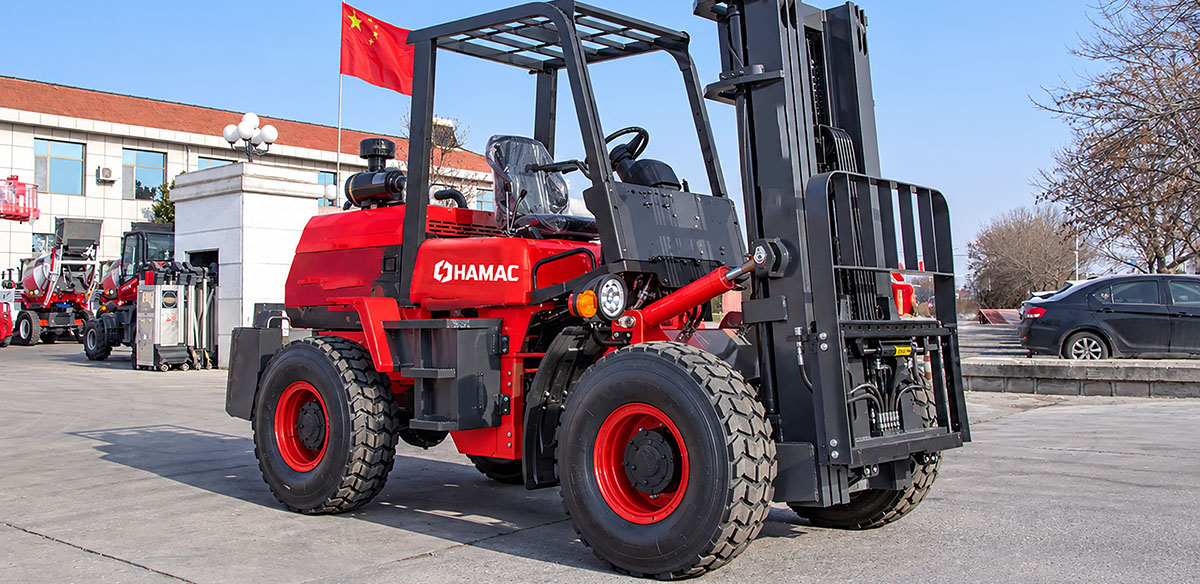
Some farms need to move materials between outdoor yards and storage buildings with restricted overhead clearance. In these applications, mast height and machine overall height become important selection factors.
The HAMAC FD35-RTL is a 3.5 ton rough terrain forklift with a low-mast configuration and a published maximum lift height of 3,000 mm. It can be considered for suitable farm operations where a lower mast arrangement is more practical.
| Specification | FD35-RTL |
|---|---|
| Rated load capacity | 3,500 kg |
| Load center | 500 mm |
| Maximum lift height | 3,000 mm |
| Collapsed mast height | Approx. 2,300–2,400 mm |
| Engine power | 48 kW diesel |
| Drive configuration | 4WD articulated |
| Central ground clearance | Approx. 300–350 mm |
| Front tyre size | 16/70-20 or similar off-road tyre |
| Rear tyre size | 10.0/75-15 or similar off-road tyre |
Recommended farm applications:
Before ordering, compare the machine's overall height with the clear opening height of the shed door. Also check the mast's lowered height, overhead guard clearance and required stacking height.
View HAMAC FD35-RTL 3.5 Ton Low-Mast Rough Terrain Forklift
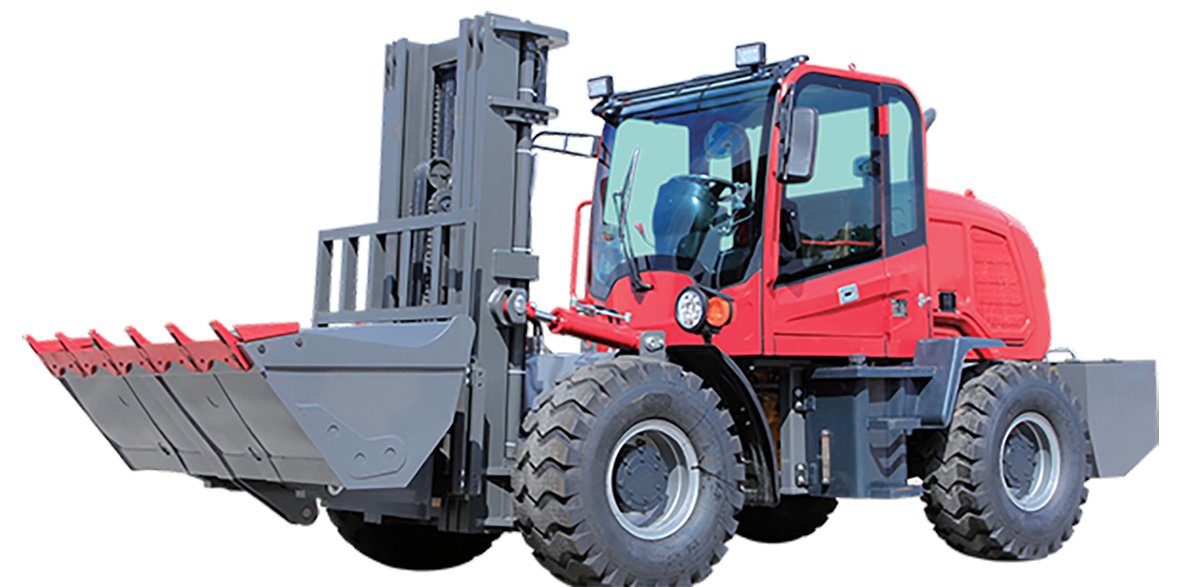
Large farms, agricultural contractors and machinery service yards may regularly handle heavier loads that exceed the practical operating range of smaller forklifts.
The HAMAC FD50-RT 5 ton rough terrain forklift is designed for heavy outdoor material handling and can be considered for large agricultural pallets, machinery components and other heavy packaged materials, subject to the approved load chart.
| Specification | FD50-RT |
|---|---|
| Rated load capacity | 5,000 kg |
| Load center | 500–600 mm |
| Maximum lift height | Approx. 3,000–4,500 mm |
| Engine power | Approx. 75–80 kW diesel |
| Drive configuration | 4WD rough terrain |
| Central ground clearance | Approx. 250–320 mm |
| Front tyre size | 18.00-25 or similar off-road tyre |
| Rear tyre size | 12.00-20 or similar off-road tyre |
| Service weight | Approx. 8,000–8,500 kg |
Recommended farm applications:
The FD50-RT is a more appropriate model to evaluate when the farm's regular loads approach the 5 ton capacity class. However, its higher service weight should also be considered when operating on soft ground or sensitive farm surfaces.
View HAMAC FD50-RT 5 Ton Rough Terrain Forklift
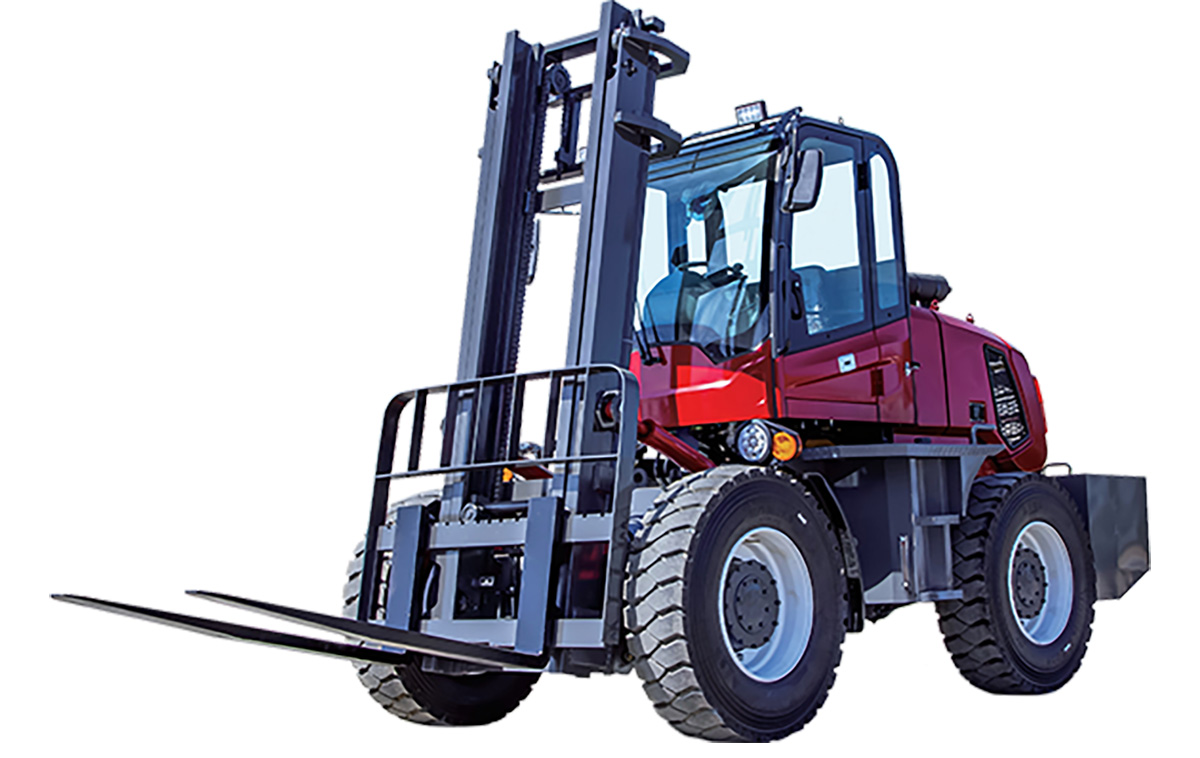
| Farm Requirement | Suggested Model | Why Consider This Model? | Key Checks |
|---|---|---|---|
| Routine feed, fertilizer and seed pallets | FD30-RT | 3,000 kg rated capacity and 4,500 mm maximum lift height | Actual load weight and load chart |
| Heavier pallets in compact farm yards | FD35-RTS | 3,500 kg capacity and short-wheelbase articulated design | Turning clearance and load center |
| Storage sheds with lower door clearance | FD35-RTL | 3,500 kg capacity and 3,000 mm maximum lift height | Overall machine height and shed clearance |
| Heavy agricultural machinery and large pallets | FD50-RT | 5,000 kg rated capacity and higher-power diesel engine | Load chart, ground bearing conditions and attachment weight |
These model recommendations are starting points for equipment selection, not a substitute for a site assessment. Final configuration should be confirmed against the load chart, mast option, attachment weight and actual farm operating conditions.
Explore the complete HAMAC rough terrain forklift range to compare additional lifting capacities and configurations.
The attachment determines how a forklift interacts with different materials. Choosing an unsuitable attachment can affect load stability, rated capacity and operating safety.
| Attachment | Possible Farm Application | Important Checks |
|---|---|---|
| Pallet Forks | Feed bags, fertilizer pallets and seed supplies | Fork length, spacing and rated capacity |
| Bale Fork | Moving compatible hay and fodder bales | Bale weight, tine configuration and load center |
| Grapple Attachment | Handling suitable irregular or loose materials | Hydraulic compatibility and clamping force |
| Bucket | Handling compatible loose materials | Material density, bucket capacity and load chart |
For high-level hay stacking, long forward reach or placing bales over fences, a telehandler may be more suitable than a conventional mast forklift. Compare the available HAMAC telehandler range for these applications.
The main specifications include rated load capacity, load center, lifting height, 4WD configuration, tyre size, ground clearance, turning radius, engine power and attachment compatibility. These should be matched to the actual farm surface and material handling tasks.
4WD is worth considering when the forklift regularly travels across gravel, loose soil, muddy access tracks and uneven outdoor yards. It can improve traction, but it does not make every soft or waterlogged surface suitable for loaded forklift operation.
There is no single ground-clearance figure suitable for every farm. The required clearance depends on the depth of ruts, size of obstacles, tyre configuration and the lowest point of the machine. Buyers should compare actual site conditions with the machine's published clearance dimensions.
No. Rated capacity applies to a specified lifting configuration and load center. Actual capacity can decrease with a longer load center, greater lifting height or additional attachment weight. Always check the load chart for the complete machine configuration.
The FD30-RT is worth considering for routine feed and fertilizer pallet handling. The FD35-RTS may suit heavier loads and compact farm yards, while the FD50-RT is an option for heavier agricultural materials. Final selection depends on load weight, load center, lifting height and ground conditions.
A 4WD rough terrain forklift with suitable off-road tyres can provide improved traction on some muddy and uneven surfaces. However, performance depends on soil conditions, tyre selection, load weight, ground clearance and operating technique. Deep mud or very soft ground may still be unsuitable.
It may handle suitable bales when fitted with a compatible and approved bale attachment. Check the bale dimensions, weight, attachment rating and machine load chart. For high-level stacking or long-reach bale placement, a telehandler may be a better choice.
Common options include pallet forks and compatible bale-handling attachments. Other attachments may be available depending on the machine configuration. Always confirm attachment compatibility, rated capacity and safe operating requirements with the manufacturer.
Check rated capacity, load center, lifting height, 4WD configuration, tyre specifications, ground clearance, turning radius, engine and filtration arrangements, maintenance access and attachment compatibility. Also consider the actual farm routes and surface conditions throughout the year.
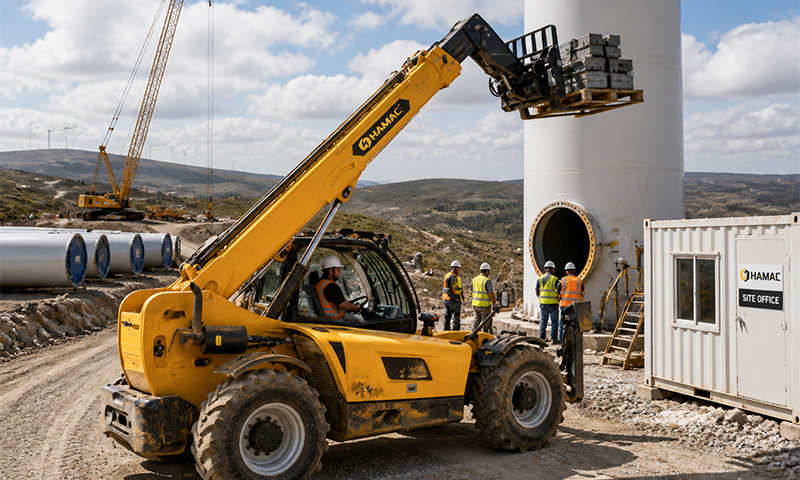
On a wind farm construction site, a HAMAC HT5010 5 ton 10 m telehandler is used to handle pallets, to
Free Consultation >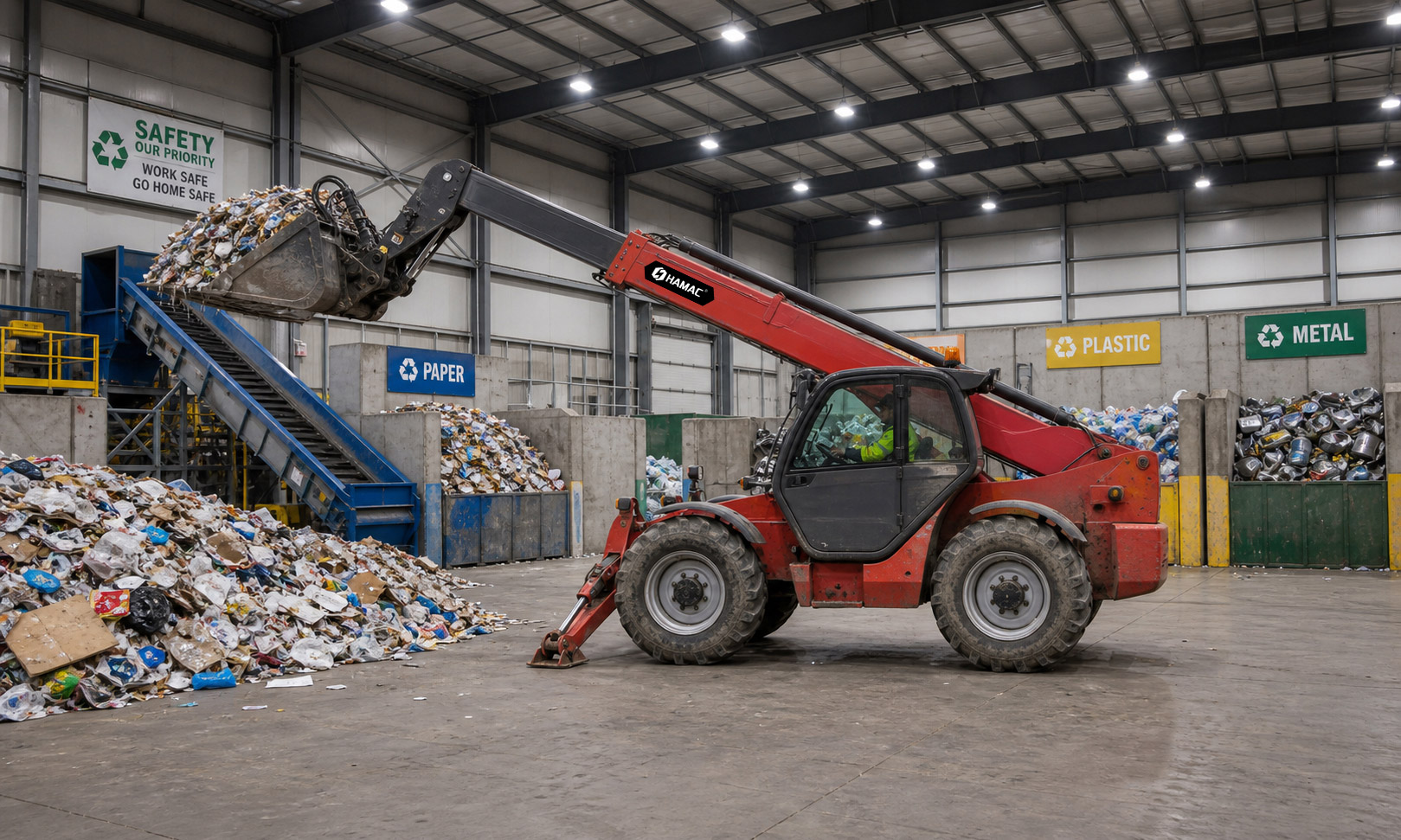
At a hazardous waste transfer station, an HT4014 telehandler and FD35-RT rough terrain forklifts hand
Free Consultation >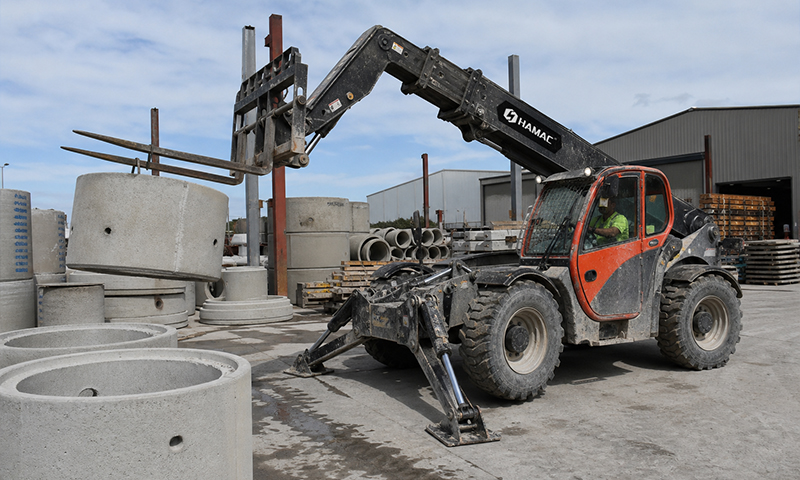
In a precast yard, an HT4010 telehandler is used to handle concrete pipes and manhole components, mov
Free Consultation >Please fill out the form, and we can satisfy any of your needs including equipment selection, scheme design, technical support, or after-sales service. We will contact you as soon as possible.